
SPIDER Automation | 1.8-Inch SPI TFT LCD Display Module – 128×160, ST7735R, 262K Colours | Compact Colour Graphics & microSD Support
Product Overview & Display Technology
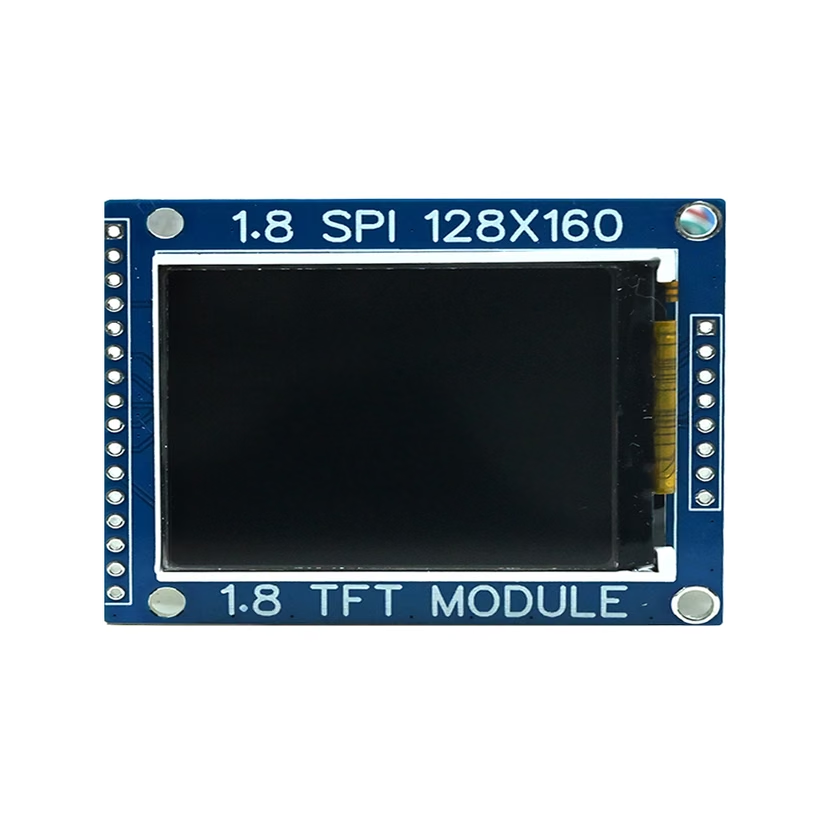
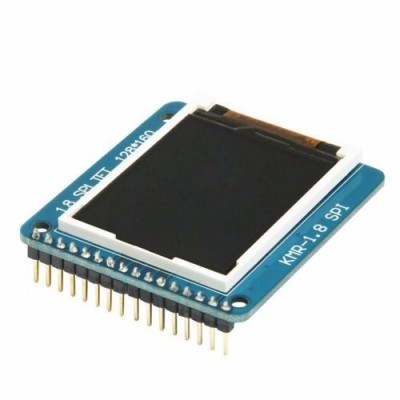
The 1.8-Inch SPI TFT LCD Display Module with PCB is a compact graphical display designed for Arduino and other microcontroller-based embedded applications. Its 128×160 pixel resolution provides a practical display area for text, icons, menus, status information, sensor readings and graphical interfaces.
Unlike conventional CSTN-type colour LCD displays, this module uses TFT (Thin-Film Transistor) display technology for colour image reproduction. The integrated ST7735R display driver supports 18-bit colour capability, providing up to 262,144 colour shades for detailed graphical output.
The display communicates through a 4-wire SPI serial interface, reducing the number of microcontroller I/O connections needed compared with parallel display interfaces. Its pixel-addressable frame buffer and dedicated display controller allow microcontrollers with limited available pins and memory resources to drive the display.
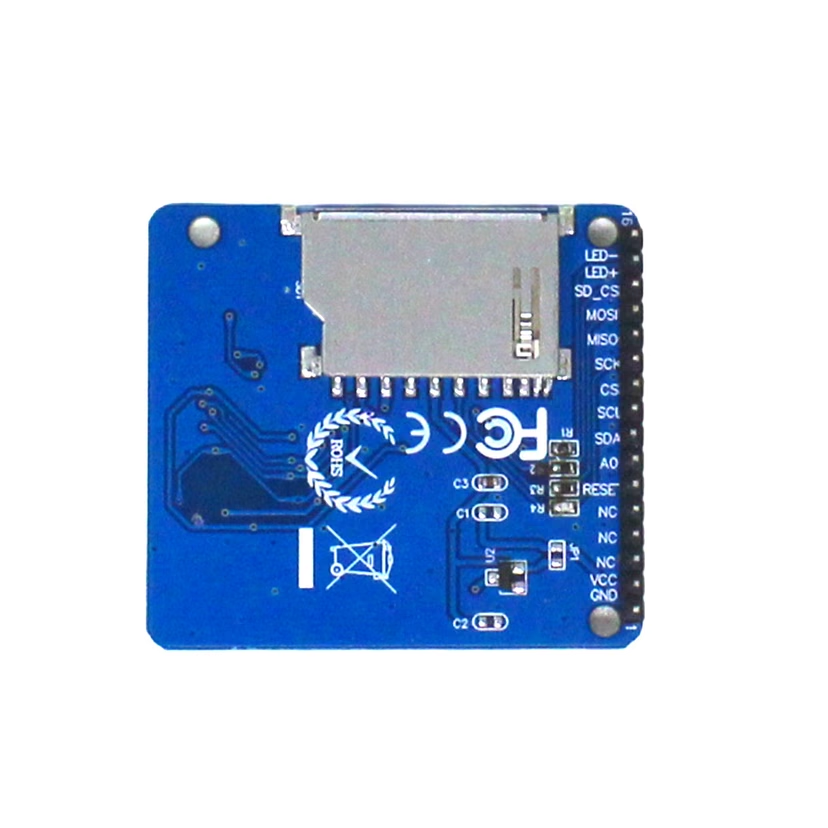
The display is soldered onto the breakout PCB through a delicate flex-circuit connection. The board also integrates a 3.3V voltage regulator, 3.3V/5V logic level shifter, backlight control circuit and microSD card socket. These onboard features simplify integration with compatible 3.3V and 5V development platforms.
Technical Features & Display Characteristics
- 1.8-Inch TFT LCD: Compact colour display suitable for embedded interfaces, instrumentation and microcontroller-based projects.
- 128×160 Resolution: Provides 128 horizontal and 160 vertical pixels for displaying text, graphics, icons and interface elements.
- ST7735R Driver IC: Uses the ST7735R display controller for managing display communication and graphical output.
- 18-Bit Colour Support: Supports up to 262,144 colour shades for colourful graphical representation.
- 4-Wire SPI Communication: Uses a serial peripheral interface requiring a minimum of four I/O connections as specified in the supplied product information.
- Pixel-Addressable Display: Supports control of individual display pixels through the display controller and compatible software libraries.
- Integrated 3.3V Regulator: Includes an onboard ultra-low-dropout voltage regulator for the display power arrangement.
- 3.3V/5V Logic Level Shifter: Supports interfacing with compatible microcontrollers using 3.3V or 5V logic levels.
- MicroSD Card Socket: Allows bitmap image files to be loaded from a compatible microSD card.
- FAT16/FAT32 File-System Support: Supports bitmap loading from microSD cards formatted with FAT16 or FAT32.
- Backlight Control Circuit: Includes onboard circuitry for controlling the display backlight.
- PCB Breakout Construction: Provides a mounted display and supporting circuitry on a compact PCB for easier system integration.
Performance Advantages
- Colourful Graphical Output: TFT technology and 18-bit colour capability provide a broad range of colour shades for graphical interfaces.
- Reduced I/O Requirements: SPI communication helps conserve microcontroller pins for sensors, controls and other peripherals.
- Flexible Logic-Level Integration: Integrated level shifting supports compatible 3.3V and 5V logic systems.
- Convenient Bitmap Loading: The microSD socket provides a method for loading supported bitmap images without requiring every image to be stored in microcontroller memory.
- Integrated Display Electronics: The onboard regulator, level shifter and backlight control circuit reduce the need for separate supporting circuitry.
- Consistent Display Controller: The specified ST7735R driver provides a consistent controller platform for compatible display code and libraries.
Embedded Systems, Instrumentation & Development Applications
- Arduino Display Projects: For adding colour graphical output to compatible Arduino-based development systems.
- Microcontroller Interfaces: For displaying operating status, menu selections, sensor values and system information.
- Embedded Instrumentation: For compact measurement instruments and electronic monitoring interfaces.
- IoT Device Interfaces: For displaying local device status, readings and graphical information in compatible IoT systems.
- Portable Electronic Equipment: For compact battery-powered devices requiring a small graphical display.
- Bitmap Image Display: For applications that load supported bitmap graphics from a FAT16/FAT32-formatted microSD card.
- Educational Electronics: For learning SPI communication, display control and embedded graphical interface development.
- Custom Embedded Prototypes: For testing and developing graphical interfaces in compact electronic systems.
Package Contents
- 1 × 1.8-Inch SPI 128×160 TFT LCD Display Module with PCB
Product Specifications
| Parameter | Specification |
|---|---|
| Product Type | TFT LCD Display Module with PCB |
| Display Size | 1.8 Inches |
| Display Technology | TFT LCD |
| Resolution | 128 × 160 Pixels |
| Display Driver IC | ST7735R |
| Colour Capability | 18-Bit Colour, up to 262,144 Shades |
| Interface Type | SPI (Serial Peripheral Interface) |
| Communication | 4-Wire SPI |
| Logic-Level Compatibility | 3.3V / 5V (through onboard level shifter) |
| Voltage Regulation | Integrated 3.3V ultra-low-dropout regulator |
| Memory Card Socket | MicroSD Card Socket |
| Supported File Systems | FAT16 / FAT32 |
| Backlight Control | Built-In Backlight Control Circuit |
| PCB Length | 56mm |
| PCB Width | 44mm |
| Shipping Weight | 0.04kg |
| Shipping Dimensions | 8 × 6 × 4cm |
Connection & Operating Recommendations
- Check SPI Pin Assignments: Identify the module’s actual pin labels and connect SPI signals to the corresponding microcontroller pins.
- Verify Logic-Level Compatibility: Use the onboard level shifter with supported 3.3V or 5V logic systems.
- Use the Appropriate Display Driver: Configure compatible software for the ST7735R controller and 128×160 display resolution.
- Prepare the microSD Card: Use a compatible microSD card formatted with FAT16 or FAT32 when loading bitmap images.
- Check Power Requirements: Confirm the module’s required supply voltage and current before connecting it to the development board.
- Handle the Display Carefully: Avoid applying excessive mechanical pressure to the TFT panel and its delicate flex-circuit connection.