
SPIDER Automation | RS2205 2300KV Brushless Motor | FPV Racing Propulsion, 5-Inch Propeller & 3S–4S LiPo Systems
Description
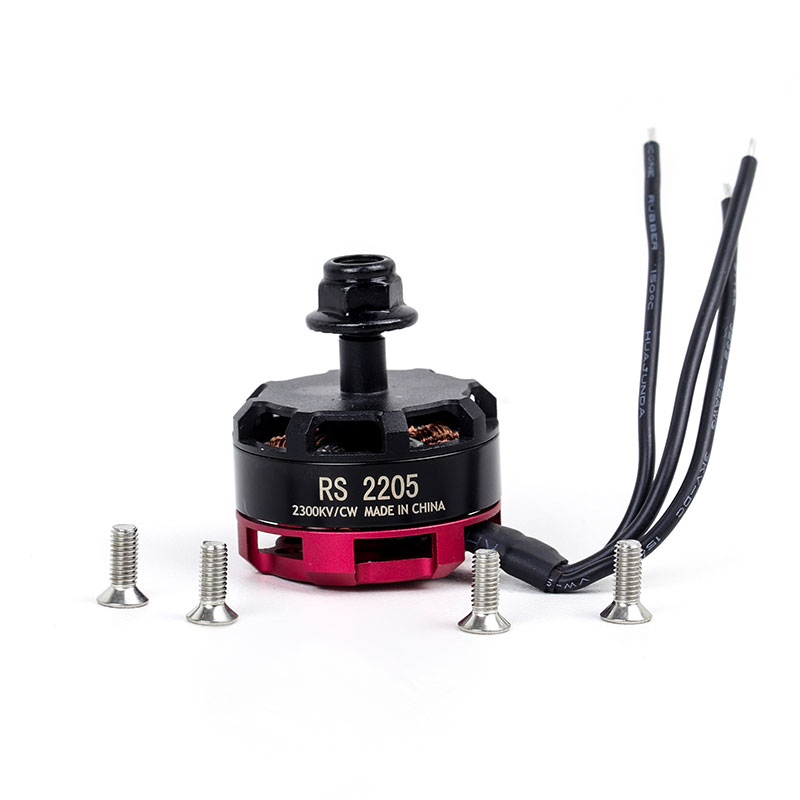
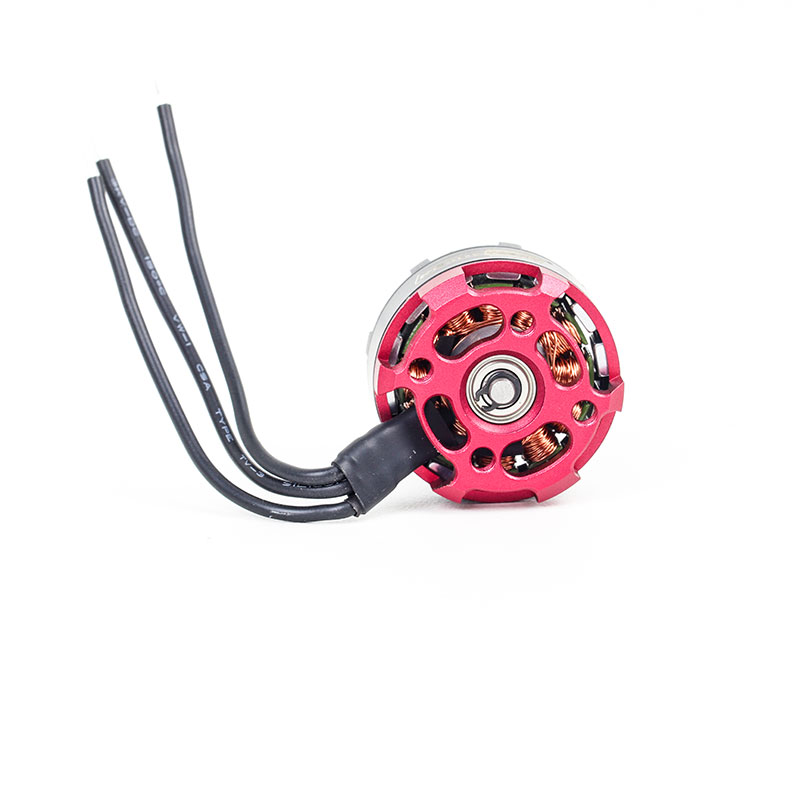
The RS2205 2300KV Brushless DC Outrunner Motor is designed for compact multirotor propulsion systems, particularly FPV racing aircraft using compatible 5-inch propellers. Its 2300KV speed constant and 12N14P electromagnetic configuration support high-speed propulsion designs operating with 3S–4S LiPo batteries. The motor incorporates N52 neodymium magnets and Japanese NMB bearings as part of its magnetic and mechanical construction.
The motor features external cooling fins intended to improve heat dissipation during operation. Its enhanced anti-off U-ring provides an additional rotating-assembly retention feature, while the low-centre-of-gravity design supports compact multirotor integration. A maximum thrust value of 1024g is listed, although actual thrust depends on the selected propeller, battery voltage, ESC configuration and test conditions.
The RS2205 motor has a 5mm shaft and measures 27.9 × 27.9 × 31.7mm, with a listed motor weight of 30g. The supplied motor is identified as clockwise rotating, with a counter-clockwise propeller nut thread designation. The package includes one motor and one mounting screw set.
RS2205 Motor Architecture & Electromagnetic Design
The RS2205 uses a brushless outrunner configuration with a 12N14P electromagnetic arrangement, comprising 12 stator slots and 14 rotor poles. Its 2300KV rating defines the nominal motor speed constant and makes it suitable for propulsion systems engineered around high-speed, compact multirotor operation.
- RS2205 Format: Compact brushless outrunner motor architecture for compatible multirotor platforms.
- 2300KV Rating: Nominal speed constant of 2300 RPM per volt under no-load reference conditions.
- 12N14P Configuration: Electromagnetic arrangement with 12 stator slots and 14 rotor poles.
- N52 Neodymium Magnets: High-strength permanent magnets form part of the rotor’s magnetic assembly.
- Outrunner Construction: Rotating outer motor assembly designed for brushless propulsion applications.
- High-Speed Propulsion Design: Intended for compatible 5-inch propeller systems and 3S–4S LiPo configurations.
Active Cooling Fins & Thermal Management
The motor incorporates external cooling fins intended to increase the surface area available for heat dissipation. Airflow around the motor during operation supports heat transfer from the motor body. The cooling arrangement is particularly relevant in compact propulsion installations where motor temperature can be affected by sustained high-speed operation, propeller loading and available airflow.
- External Cooling Fins: Finned motor construction promotes heat dissipation from the motor body.
- Airflow-Assisted Cooling: Moving air around the motor supports thermal management during operation.
- High-Speed Operating Considerations: Propeller loading and operating duration influence motor temperature.
- Compact Thermal Design: Cooling features are integrated into the motor’s compact RS2205 structure.
Bearing Assembly & Rotating-Component Retention
The RS2205 incorporates Japanese NMB bearings to support the rotating assembly. An enhanced anti-off U-ring is also included in the motor design to help retain the rotating components during operation. Proper mechanical condition, secure mounting and propeller balance remain important for controlling vibration and maintaining reliable operation.
- Japanese NMB Bearings: Bearing assembly specified for the motor’s rotating mechanism.
- Anti-Off U-Ring: Retention feature designed to help prevent unwanted movement of the rotating assembly.
- Rotor Support: Bearing-supported construction for controlled motor rotation.
- Mechanical Inspection: Check for bearing noise, shaft play and abnormal vibration during maintenance.
Electrical Configuration & Propulsion Performance
The motor is specified for 3S–4S LiPo battery systems and compatible 5-inch propellers. Its 2300KV rating should be considered alongside battery voltage and propeller loading when selecting an ESC and configuring the propulsion system. The listed maximum thrust is 1024g, but this value should not be treated as a guaranteed thrust output across all battery and propeller combinations.
- Battery Chemistry: LiPo.
- Battery Configuration: 3S–4S.
- Motor Speed Constant: 2300KV.
- Maximum Listed Thrust: 1024g.
- Propeller Diameter: 5 inches.
- ESC Selection: Select an ESC compatible with the battery voltage and the motor’s actual current demand.
- Propeller Loading: Verify current draw and motor temperature with the selected propeller.
- Performance Matching: Evaluate motor, ESC, battery and propeller as one propulsion system.
Shaft Interface, Rotation & Mounting Configuration
The motor features a 5mm shaft and a compact body measuring 27.9 × 27.9 × 31.7mm. The supplied configuration is identified as CW motor rotation, while the specification lists a CCW nut type. Motor rotation direction and propeller nut thread direction are separate mechanical and electrical characteristics and should not be confused during installation.
- Motor Shaft Diameter: 5mm.
- Motor Rotation: Clockwise (CW), as supplied.
- Propeller Nut Thread Direction: Counter-clockwise (CCW), as listed.
- Mounting Hardware: One motor mounting screw set included.
- Length: 27.9mm.
- Width: 27.9mm.
- Height: 31.7mm.
- Motor Weight: 30g.
Applications
The RS2205 2300KV motor is intended for compact, high-speed multirotor propulsion systems. Its application suitability depends on the aircraft frame, motor mounting arrangement, propeller configuration, battery voltage and ESC capacity.
- FPV Racing Drones: Brushless propulsion integration in compatible FPV racing aircraft.
- QAV250 Racing Frames: Motor installation in compatible QAV250-style frames with matching mounting and propulsion requirements.
- QAV300 Racing Frames: Propulsion integration in compatible QAV300-style multirotor platforms.
- Compact Quadcopter Systems: Four-motor propulsion configurations designed around the RS2205 format.
- 5-Inch Propeller Platforms: Motor integration in aircraft designed for compatible 5-inch propellers.
- 3S LiPo Propulsion Systems: Use in compatible aircraft designed around three-cell LiPo power.
- 4S LiPo Propulsion Systems: Use in compatible aircraft designed around four-cell LiPo power.
- FPV Freestyle Aircraft: Propulsion integration in compatible compact freestyle multirotors.
- Multirotor Flight-Control Integration: Use with compatible ESCs and flight-control systems.
- UAV Propulsion Prototyping: Evaluation of motor, ESC and propeller combinations during aircraft development.
- Motor Performance Testing: Controlled assessment of thrust, current draw, temperature and vibration.
- Brushless Motor Replacement: Replacement of compatible RS2205-format motors after verifying shaft, mounting and rotation configuration.
- Compact Aerial Camera Platforms: Propulsion integration in suitable lightweight camera-carrying multirotors.
- Engineering Development Platforms: Testing of compact brushless propulsion and electronic speed-control systems.
Package Includes
- 1 × RS2205 2300KV Brushless DC Outrunner Motor
- 1 Set Motor Mounting Screws
Product Specifications
| Parameter | Specification |
|---|---|
| Product Type | Brushless DC Outrunner Motor |
| Motor Model | RS2205 |
| KV Rating | 2300KV |
| Nominal Speed Constant | 2300 RPM/V (no-load reference) |
| Electromagnetic Configuration | 12N14P (12 stator slots, 14 rotor poles) |
| Magnet Material | N52 Neodymium |
| Bearing Brand | Japanese NMB |
| Cooling Design | External cooling fins |
| Rotor Retention Feature | Enhanced anti-off U-ring |
| Compatible Battery Chemistry | LiPo |
| Compatible Battery Configuration | 3S–4S |
| Maximum Listed Thrust | 1024g |
| Compatible Propeller Diameter | 5 inches |
| Shaft Diameter | 5mm |
| Motor Rotation | CW (clockwise) |
| Propeller Nut Thread Direction | CCW (counter-clockwise), as listed |
| Length | 27.9mm |
| Width | 27.9mm |
| Height | 31.7mm |
| Motor Weight | 30g |
| Mounting Hardware | One mounting screw set included |
Installation & Operating Recommendations
- Verify Battery Voltage: Use a compatible 3S–4S LiPo battery and confirm the ESC supports the selected cell configuration.
- Select a Compatible ESC: Check the ESC’s continuous and peak current ratings against measured motor current with the selected propeller.
- Match the Propeller: Use a compatible 5-inch propeller and verify current draw under controlled test conditions.
- Check Shaft Compatibility: Confirm that the propeller mounting hardware is compatible with the 5mm shaft.
- Confirm Nut Thread Direction: Check the CCW nut thread designation before tightening or loosening the propeller retention hardware.
- Verify Motor Rotation: The supplied motor is identified as CW. Confirm required rotation and propeller orientation before installation.
- Secure Motor Mounting: Use the included screw set with compatible frame mounting holes and appropriate screw engagement.
- Maintain Cooling Airflow: Keep the external cooling fins unobstructed and allow adequate airflow around the motor.
- Inspect Bearings and Rotor: Check for abnormal bearing noise, shaft play or signs of rotor-retention damage.
- Monitor Temperature: Check motor temperature during initial testing, especially with high-load propeller configurations.
- Check Propeller Balance: Use a properly balanced propeller to help reduce vibration and mechanical loading.
- Perform Controlled Testing: Verify motor operation, vibration and electrical load in a controlled test setup before flight operation.