
SPIDER Automation | 5.8GHz RHCP Skew Planar Wheel FPV Antenna | SMA Male for RC & FPV Systems
Description
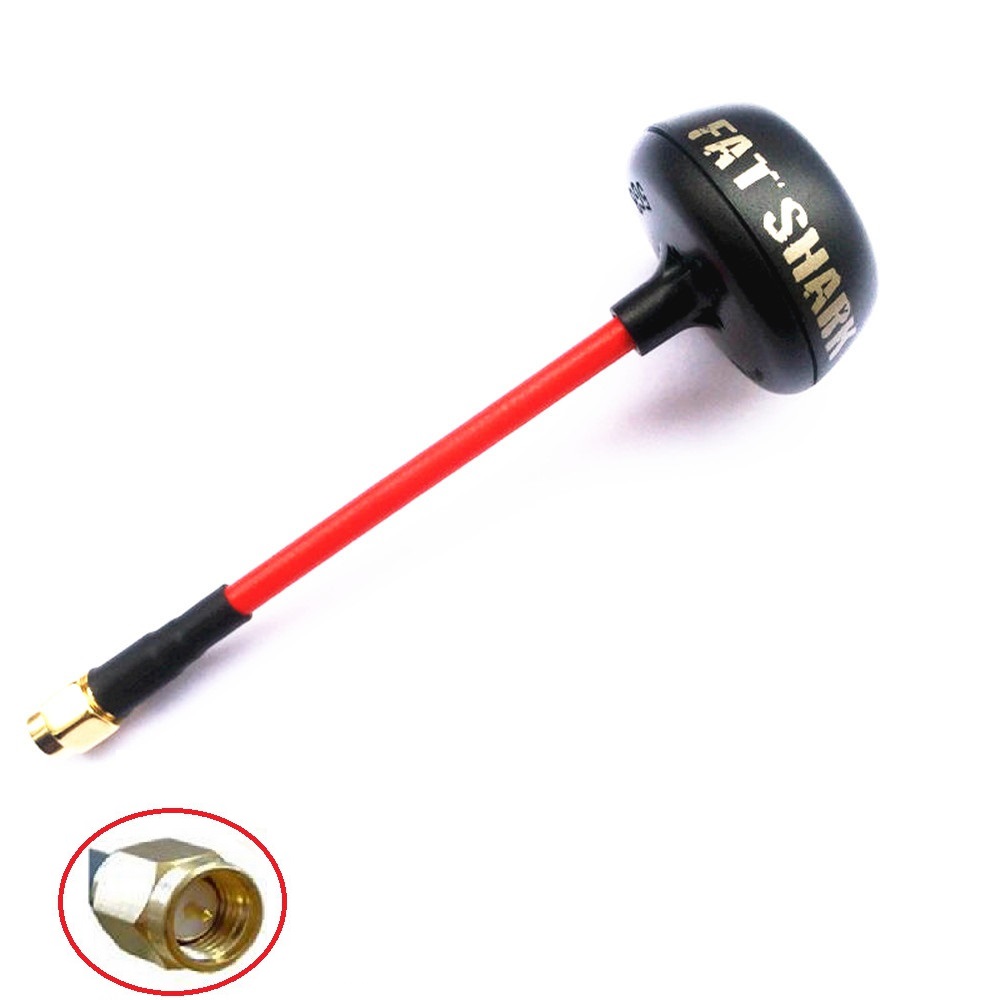
The SPIDER Automation 5.8GHz RHCP Skew Planar Wheel Antenna is designed for compatible FPV video transmission and reception systems operating in the 5.8GHz frequency band. It uses a Skew Planar Wheel (SPW) circularly polarized antenna configuration with Right-Hand Circular Polarization (RHCP), making it suitable for FPV installations using matching RHCP antennas.
The Skew Planar Wheel geometry is intended to provide a more consistent radiation pattern across changing antenna orientations compared with conventional linear whip antennas. This characteristic is relevant to RC racing drones and multirotor aircraft, where aircraft movement continuously changes the relative orientation between the airborne antenna and the ground-based receiver.
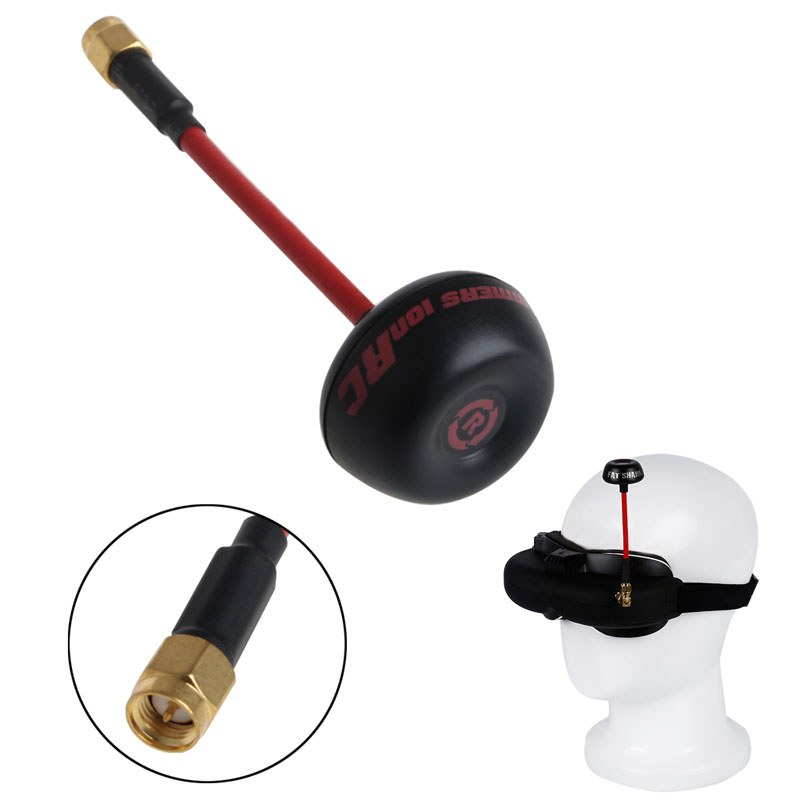
The antenna incorporates an SMA male connector, a flexible positioning cable, an improved red wire stem and a protective hard-case enclosure. Its flexible cable can be positioned through approximately 90°, making it suitable for compatible FPV goggles and equipment with horizontally oriented SMA antenna ports. The specified overall length is 110mm.
Technical Features & Design Characteristics
- Skew Planar Wheel Antenna Geometry: Uses a circularly polarized SPW design intended to provide useful radiation coverage across different antenna orientations.
- 5.8GHz RF Operation: Designed for FPV equipment operating in the 5.8GHz band.
- Right-Hand Circular Polarization: RHCP polarization supports compatible circularly polarized FPV antenna links.
- Radiation Pattern Optimization: The antenna design focuses on improving radiation-pattern characteristics for changing aircraft orientations.
- VSWR Optimization: The design is described as optimized for VSWR performance; no numerical VSWR value is supplied.
- Improved Red Wire Stem: The reinforced stem provides greater rigidity for maintaining the antenna’s intended position.
- Flexible Cable Construction: The cable allows the antenna to be angled to suit different mounting and equipment configurations.
- 90° Positioning Capability: The cable can be bent through approximately 90° for installations with horizontally oriented antenna ports.
- Protective Hard-Case Enclosure: The enclosure helps protect the antenna structure from bending and physical deformation during handling.
- TX/RX Interchangeable Design: The same antenna configuration can be used for compatible transmitter and receiver applications without separate TX and RX versions.
Connector & Installation Configuration
The antenna is equipped with an SMA male connector for connection to compatible FPV transmitters, receivers and goggles fitted with an SMA female antenna port. The flexible cable allows the antenna to be positioned at an angle rather than remaining restricted to a straight installation.
For FPV goggles with horizontally oriented SMA outputs, the cable can be bent through approximately 90° to provide a more suitable antenna orientation. The improved red wire stem supports positioning, while the hard-case enclosure helps protect the antenna structure during handling.
Applications
This antenna is intended for compatible 5.8GHz FPV video systems requiring RHCP circular polarization and an SMA male connection. Its flexible cable and protective enclosure make it suitable for a range of airborne and ground-based FPV installations.
- FPV Racing Drones: For compatible 5.8GHz video links on racing quadcopters.
- RC Quadcopters: For airborne FPV antenna installations requiring RHCP polarization.
- FPV Multirotor Aircraft: Suitable for compatible multirotor video systems where aircraft orientation changes during flight.
- FPV Video Transmitters: Can be used with compatible transmitters having an SMA female antenna interface.
- FPV Video Receivers: Suitable for compatible ground-based or airborne receivers with an SMA female port.
- FPV Goggles: For compatible goggles with SMA female antenna ports, including horizontally oriented outputs.
- Ground-Based FPV Stations: For compatible 5.8GHz video reception equipment.
- RC Aircraft Video Systems: For compatible fixed-wing aircraft using 5.8GHz FPV equipment.
Package Includes
1 × 5.8GHz RHCP Skew Planar Wheel FPV Antenna with SMA Male Connector and Protective Hard-Case Enclosure
Product Specifications
| Parameter | Specification |
|---|---|
| Product Type | Skew Planar Wheel FPV Antenna |
| Operating Frequency | 5.8GHz |
| Polarization | RHCP (Right-Hand Circular Polarization) |
| Antenna Design | Skew Planar Wheel (SPW) |
| Connector Type | SMA |
| Connector Gender | Male |
| Overall Length | 110mm |
| Cable Configuration | Flexible positioning cable |
| Cable Positioning | Can be bent through approximately 90° |
| Stem Colour | Red |
| Enclosure | Protective hard-case enclosure |
| TX/RX Configuration | Interchangeable; no separate TX and RX variants required |
Connection & Operating Recommendations
Before installation, verify the connector interface and polarization requirements of the connected FPV equipment. Proper antenna matching and positioning are important for maintaining the intended RF link performance.
- Verify SMA Compatibility: Confirm that the connected equipment has an SMA female antenna port. SMA and RP-SMA interfaces are different and should not be assumed interchangeable.
- Match RHCP Polarization: Use a corresponding RHCP antenna at the other end of the FPV link where the system is configured for RHCP operation.
- Confirm Frequency Compatibility: Use with FPV equipment designed for the 5.8GHz frequency band.
- Position the Flexible Cable Carefully: Use the cable’s positioning flexibility to accommodate the equipment layout without excessive bending or mechanical stress.
- Support the Antenna During Installation: Ensure that the antenna is securely mounted and that its cable is not exposed to unnecessary pulling or vibration.
- Protect the Enclosure: Avoid crushing, impact or unnecessary mechanical force that could damage the protective housing or internal antenna structure.
- Maintain Suitable RF Clearance: Where practical, position the antenna away from conductive structures and other components that may obstruct or influence RF radiation.