
SPIDER Automation | 3x 18650 Battery Holder | 11.1V 3S Series Battery Assembly
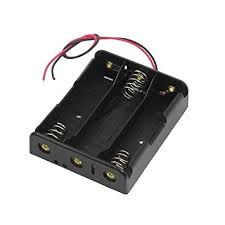
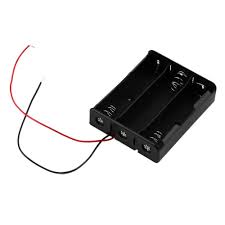
The SPIDER Automation 3x 18650 Battery Holder provides a structured mounting arrangement for three 18650 lithium-ion cells connected in series. It is designed for assembling a 3S battery pack with a nominal voltage of 11.1V when used with conventional 3.7V lithium-ion cells.
Integrated wire leads provide an electrical connection interface for custom battery-powered equipment. The open-frame construction allows direct access to the cell positions, making the holder suitable for battery-pack development, electronic prototypes and portable power applications.
Technical Features & Functional Design
- Three-Cell Mounting Arrangement: Holds three 18650 cylindrical cells within one battery assembly.
- 3S Series Electrical Configuration: Combines the voltage of three individual cells to form a higher-voltage battery supply.
- Open-Frame Construction: Provides direct access to the battery positions without a separate protective cover.
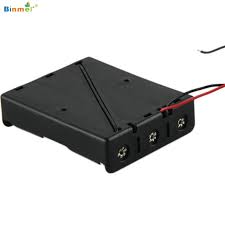
- Integrated Wire Connection: Pre-attached leads support soldered integration into an external circuit.
- Compact Plastic Housing: Keeps the battery cells organized within a defined mounting structure.
- Switch-Free Design: Uses a direct wired connection without an integrated ON/OFF switching mechanism.
Applications
This holder is suitable for custom electronic and portable equipment designed around a three-cell 18650 lithium-ion battery supply. The completed battery pack can be integrated into applications that support the pack’s voltage and discharge requirements.
- Portable Electronic Equipment: Battery mounting for devices designed around a compatible 3S lithium-ion supply.
- Embedded Control Systems: External battery integration for suitable microcontroller and control projects.
- DIY Robotics: Three-cell battery assemblies for compatible mobile robotic platforms.
- Custom Battery Packs: Mechanical cell mounting for 3S lithium-ion battery-pack construction.
- Electronics Prototyping: Battery integration during development and testing of higher-voltage circuits.
- Portable Instrumentation: Battery mounting for compatible measurement and monitoring equipment.
- LED Projects: Battery supply integration for lighting circuits designed for the pack’s voltage range.
- Backup Power Projects: Cell mounting for custom backup-power assemblies using suitable charging and protection circuitry.
Package Contents
- 1 × 3x 18650 Battery Holder with Wire Leads (Without Cover)
Product Specifications
| Parameter | Specification |
|---|---|
| Product Type | 18650 Battery Holder |
| Compatible Battery Type | 18650 Lithium-Ion Cell |
| Number of Battery Slots | 3 Cells |
| Internal Electrical Connection | Series (3S) |
| Nominal Pack Voltage | 11.1V (3 × 3.7V) |
| Fully Charged Pack Voltage | 12.6V (3 × 4.2V) |
| Housing Material | Plastic |
| Colour | Black |
| Holder Design | Open Frame / Without Cover |
| Connection Type | Integrated Wire Leads |
| Cable Length | 15cm (150mm) |
| ON/OFF Switch | No |
| Length | 76mm |
| Width | 60mm |
| Height | 20mm |
| Overall Dimensions (L × W × H) | 76 × 60 × 20mm |
| Weight | Approximately 18g |
| Package Quantity | 1 Holder |
Connection & Operating Recommendations
Use this holder with three compatible 18650 lithium-ion cells to assemble a 3S battery supply. A completed battery pack requires appropriate charging and protection arrangements selected for the cells and the connected equipment.
- Cell Matching: Use three cells of the same chemistry, capacity and model, preferably with similar age and condition.
- Cell Polarity: Insert each cell according to the holder’s polarity markings and contact arrangement.
- 3S Protection: Use a suitable 3S battery management system (BMS) when cell-level overcharge, over-discharge and overcurrent protection are required.
- Correct Charging: Use a dedicated 12.6V CC/CV charger designed for conventional 3S lithium-ion battery packs.
- Load Compatibility: Select the connected equipment and wiring according to the cells’ discharge capabilities and the application’s operating-current requirements.
- Wire Integration: Connect the leads to the correct circuit terminals and insulate soldered joints to prevent accidental short circuits.
- Voltage Regulation: Add a suitable DC-DC converter if the connected electronics require a regulated supply voltage.
- Mechanical Mounting: Secure the open-frame holder within the equipment and prevent exposed cell contacts from touching conductive surfaces.