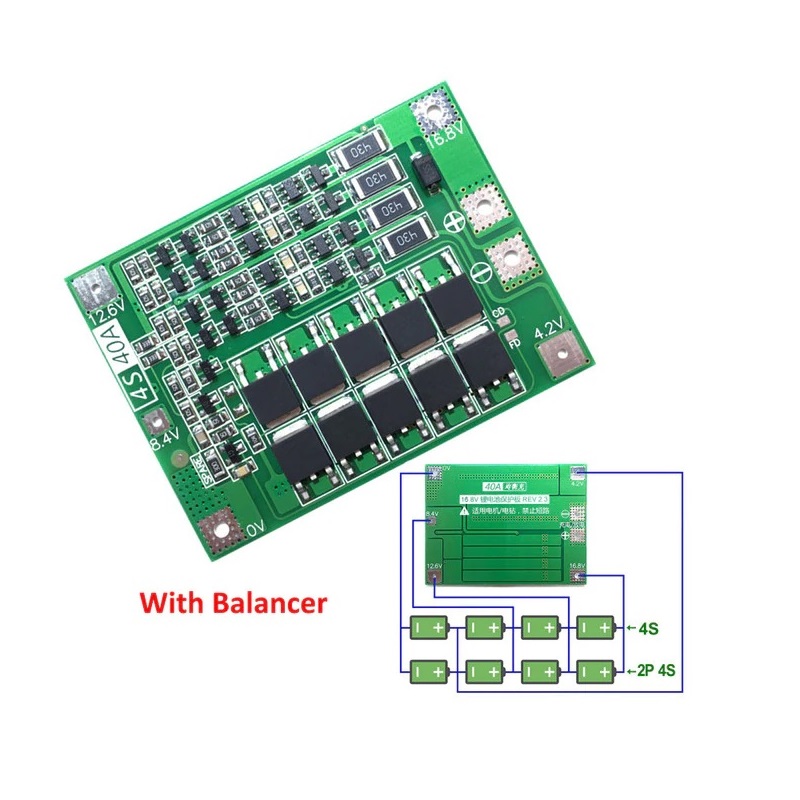
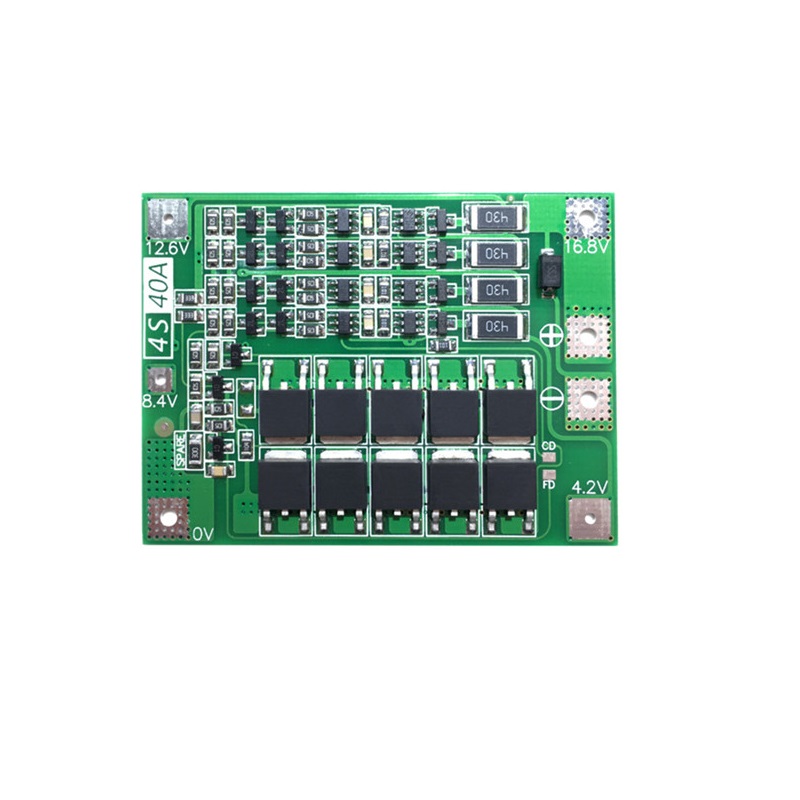
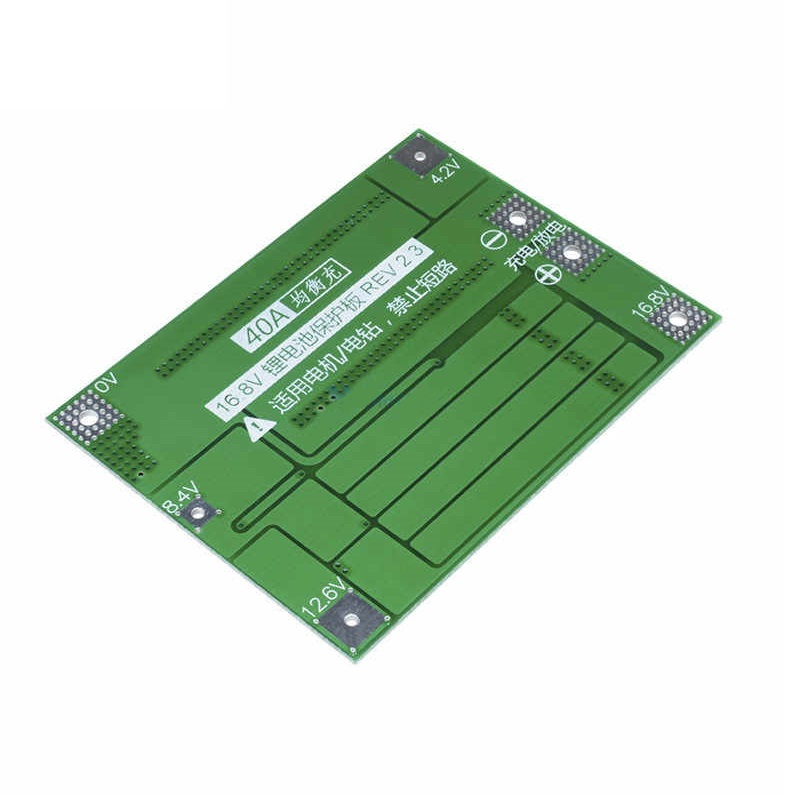

SPIDER Automation | 4S 40A 18650 Li-ion Battery Protection Board with Balancing | 14.8V 16.8V
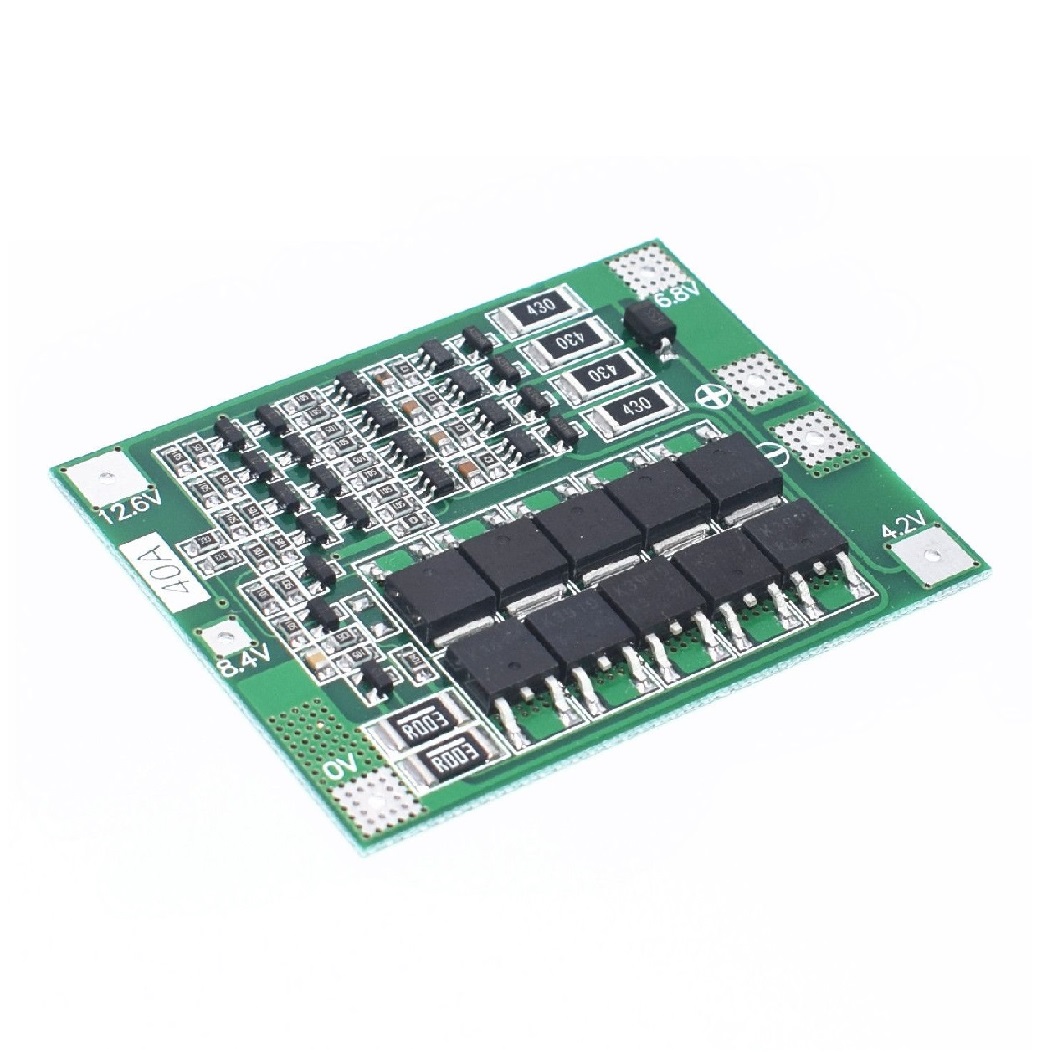
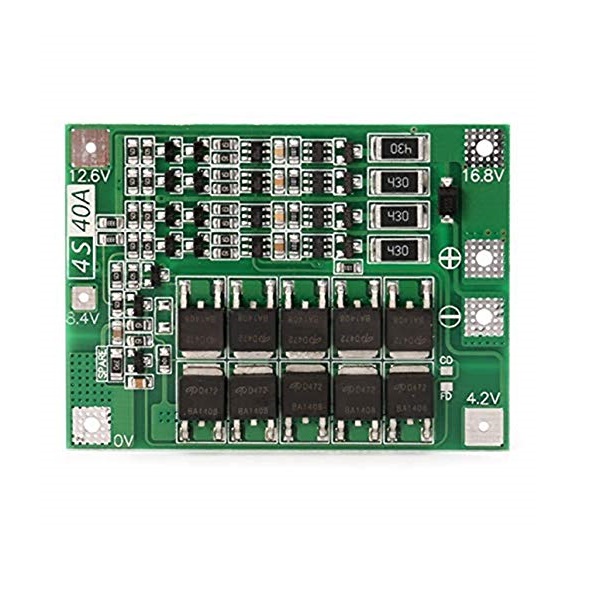
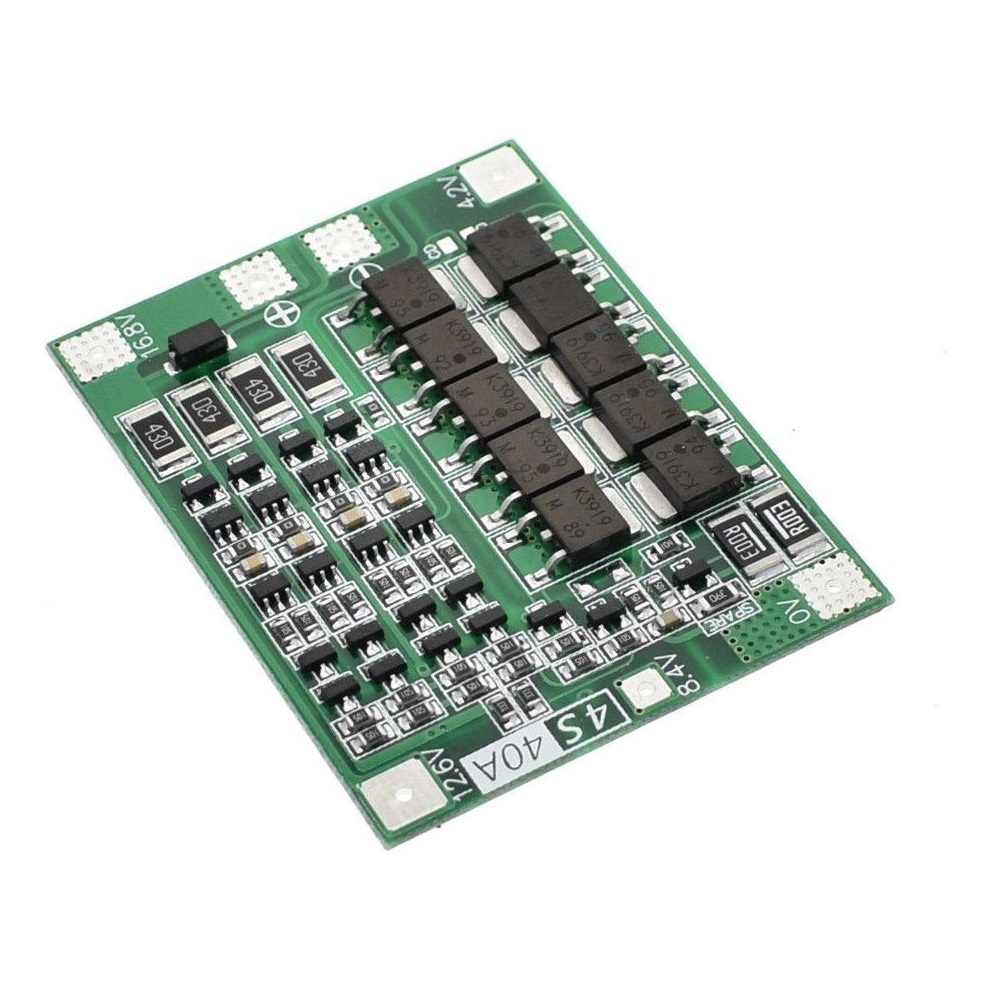
The SPIDER Automation 4S 40A Lithium-Ion Battery Protection Board with Cell Balancing is designed for four-cell series-connected lithium-ion battery packs used in compatible power tools, drill motors and other high-current battery-powered equipment. It combines battery protection functions, automatic recovery and cell balancing in a compact PCB assembly.
The board uses an integrated arrangement of 10 low-resistance MOSFETs for battery current switching. Its protection circuitry monitors battery operating conditions, while the balancing function helps manage voltage differences between individual cells in the series-connected pack.
Designed for conventional 3.6V/3.7V nominal lithium-ion cells, including compatible 18650, 26650 and lithium-polymer cells, this module can be incorporated into appropriately designed 4S battery assemblies.
Technical Features & Protection Functions
- 4S Lithium-Ion Battery Protection: Designed for battery packs containing four cells connected in series.
- Overcharge Protection: Detects excessive individual cell voltage and provides protection against overcharging.
- Over-Discharge Protection: Monitors cell voltage and protects against excessive battery discharge.
- Overcurrent Protection: Provides protection against excessive current conditions within the board’s specified operating characteristics.
- Automatic Recovery: Includes an automatic recovery function that allows the protection circuit to resume operation after supported fault conditions have cleared.
- Cell Balancing Circuit: Helps reduce voltage differences between the four series-connected battery cells.
- Low-Resistance MOSFET Arrangement: Integrates 10 MOSFETs for battery current switching.
- Thermal Considerations: High-current operation requires suitable cooling and thermal management. Reduce the load when heat dissipation is insufficient.
Cell Balancing & Battery Configuration
The board incorporates a 100mA cell-balancing function to help manage voltage differences between individual cells in a 4S battery pack. Cell balancing is particularly relevant in series-connected battery assemblies because variations in individual cell voltage can affect the usable capacity and charging behaviour of the complete pack.
For proper operation, use four compatible lithium-ion cells with consistent specifications and a suitable state of charge. The individual cell groups should have closely matched voltage levels before being assembled into the series configuration.
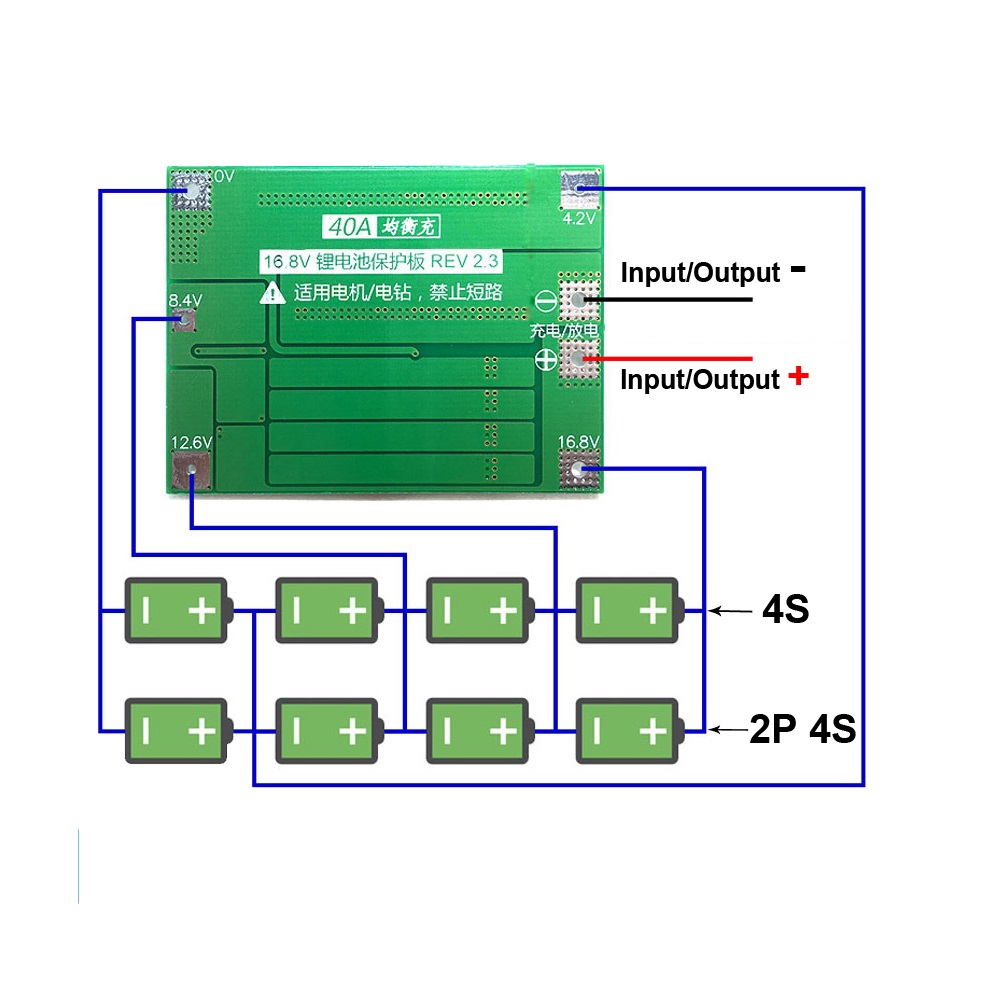
The supported battery arrangement is:
- Cell Group 1: First series-connected cell group.
- Cell Group 2: Second series-connected cell group.
- Cell Group 3: Third series-connected cell group.
- Cell Group 4: Fourth series-connected cell group.
The balancing function is intended to help maintain more consistent cell voltages during charging. It does not replace the need for properly matched cells or a compatible charging system.
High-Current Operation & Power Tool Compatibility
The board is intended for compatible high-current battery applications, including selected handheld drill and motor assemblies. However, power tools can draw substantial startup and load-dependent current, which means battery-cell discharge capability is just as important as the protection board’s current rating.
- Continuous Discharge: The specified upper continuous discharge rating is intended for suitable operating conditions and adequate heat dissipation.
- Charging Capability: The board supports a specified upper continuous charging-current rating for compatible battery-pack configurations.
- Motor Startup Demand: Drill motors can produce high startup-current peaks, so the selected cells must support the actual current demand.
- Cell Discharge Rating: Use high-discharge lithium-ion cells appropriate for the connected motor or power tool.
- Thermal Management: Provide suitable airflow and heat dissipation when the board is used under demanding load conditions.
The supplier describes the balancing version as suitable for drill applications with startup current below 80A and power below 135W. These are application-specific conditions, not a universal compatibility guarantee for all drills or motors.
Applications
This 4S battery protection and balancing board is suitable for compatible rechargeable battery packs used in power tools, motor-driven equipment and other battery-powered electronic systems.
- Handheld Electric Drills: Battery protection and cell balancing for compatible 4S drill battery packs.
- Drill Motor Assemblies: Suitable for battery-powered motor systems designed around a compatible 4S lithium-ion supply.
- Electric Sprayers: Can be integrated into compatible rechargeable sprayer battery packs.
- Portable LED Lighting: Battery protection for suitable 4S-powered LED lighting assemblies.
- Low-Power Inverters: Suitable for compatible inverter battery configurations within the board’s electrical ratings.
- Rechargeable Power Tools: Intended for selected battery-powered tools using four series-connected lithium-ion cells.
- Custom Lithium-Ion Battery Packs: Suitable for custom-built 4S battery assemblies requiring protection and balancing functions.
- Portable Motor Equipment: Can be incorporated into compatible battery-powered motor applications.
Package Contents
- 1 × 4S 40A 18650 Lithium-Ion Battery Protection Board with Cell Balancing
Note: Battery cells, charger, connecting wires and other accessories are not included unless separately specified.
Product Specifications
| Parameter | Specification |
|---|---|
| Product Type | Lithium-Ion Battery Protection Board with Cell Balancing |
| Battery Configuration | 4S (4 Cells Connected in Series) |
| Compatible Battery Chemistry | Conventional Lithium-Ion / Compatible Lithium-Polymer |
| Compatible Cell Formats | 18650, 26650 and compatible lithium-polymer cells |
| Nominal Cell Voltage | 3.6V / 3.7V per cell |
| Nominal Battery Pack Voltage | 14.4V / 14.8V, depending on cell nominal voltage |
| Fully Charged Pack Voltage | 16.8V |
| Overcharge Detection Voltage | 4.25V ± 0.025V per cell |
| Over-Discharge Detection Voltage | 2.50V ± 0.08V per cell |
| Upper Continuous Discharge Current | 40A (subject to adequate cooling) |
| Upper Continuous Charging Current | 20A |
| Cell Balancing Current | 100mA |
| Automatic Recovery | Supported |
| MOSFET Configuration | 10 Integrated Low-Resistance MOSFETs |
| Overcurrent Protection Value | 40A (as specified; protection threshold characteristics not separately detailed) |
| Operating Temperature | -40°C to +85°C (specified) |
| PCB Length | 60mm |
| PCB Width | 45mm |
| PCB Height | 3.5mm |
Connection & Operating Recommendations
For reliable operation, assemble the battery pack using four compatible lithium-ion cell groups connected in series and follow the connection sequence marked on the protection board. The individual cell-group voltages should be closely matched before connecting the pack. Use a dedicated 16.8V CC/CV charger and select cells, interconnections and load wiring appropriate for the intended discharge demand.
- 4S Battery Assembly: Connect four compatible lithium-ion cell groups in series to establish the required battery-pack configuration.
- Cell Voltage Matching: Bring the individual cell groups to closely matched voltage levels before assembling them into the series pack.
- Board Wiring Sequence: Connect the battery negative, intermediate cell junctions and battery positive in the exact sequence indicated by the PCB markings.
- Charging Arrangement: Use a dedicated 16.8V CC/CV lithium-ion charger suitable for a conventional 4S battery pack.
- High-Current Load Selection: Choose cells with sufficient discharge capability for the connected drill motor, sprayer or other equipment.
- Motor Noise Suppression: For brushed DC motor applications, a suitable non-polar capacitor connected across the motor terminals can help suppress electrical interference and voltage spikes. Select the capacitor according to the motor and circuit requirements.
- Thermal Management: Provide adequate heat dissipation around the protection board during demanding discharge operation.
- Battery Pack Maintenance: Use compatible cells with consistent specifications and replace weak or damaged cells to maintain balanced battery-pack performance.