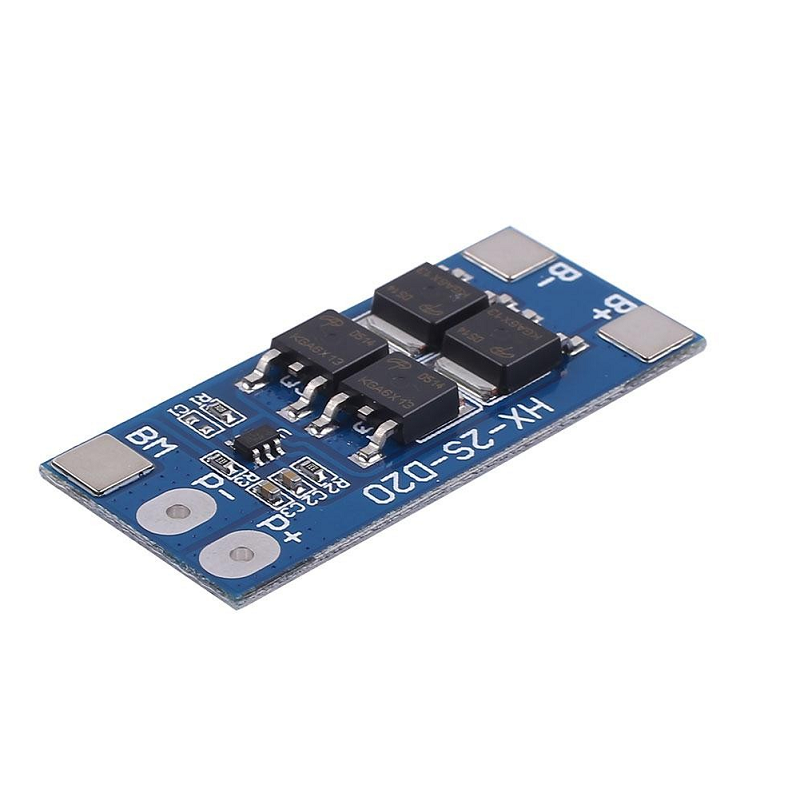

SPIDER Automation | HX-2S-D20 2S Li-ion Battery Protection Board | 13A Operating Current
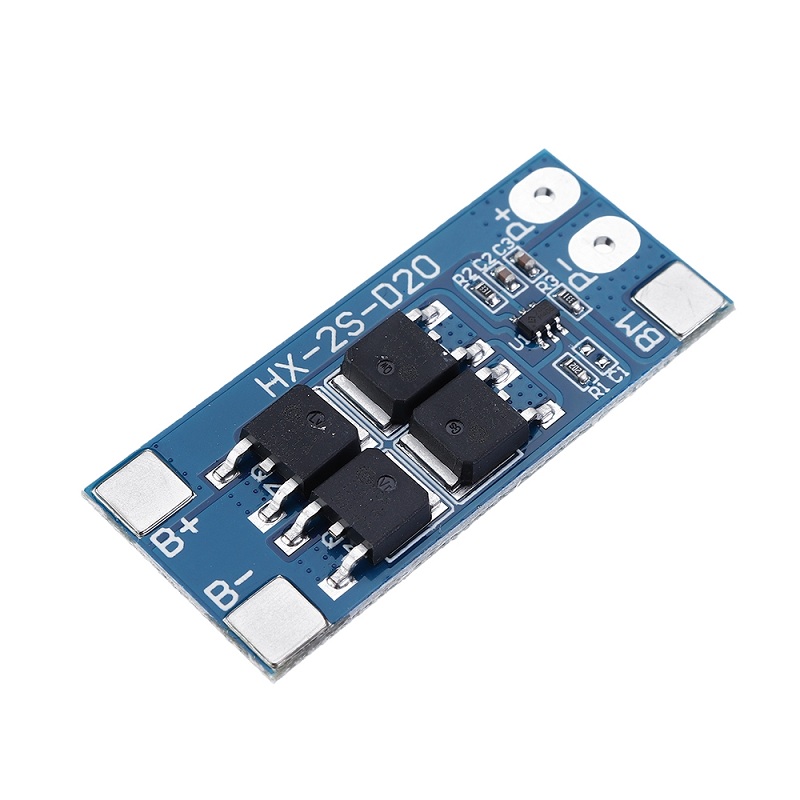
The SPIDER Automation HX-2S-D20 Battery Protection Board is designed for two-cell series-connected lithium-ion battery packs. It monitors battery voltage and current conditions and provides protective circuit control against specified abnormal operating conditions.
The module uses a five-terminal connection arrangement, including a dedicated midpoint connection for the series battery assembly and separate protected terminals for the external charging and load circuit. Its compact PCB construction makes it suitable for integration into compatible portable electronics and custom battery-powered equipment.
Technical Features & Protection Functions
- Overcharge Protection: Monitors individual cell voltage and helps prevent continued charging when the specified upper protection threshold is reached.
- Over-Discharge Protection: Helps prevent excessive battery discharge by disconnecting the protected circuit when the lower voltage threshold is reached.
- Overcurrent Protection: Provides protective switching when current exceeds the circuit’s specified operating conditions.
- Short-Circuit Protection: Helps interrupt the protected circuit when a short-circuit condition is detected.
- Cell Voltage Monitoring: Uses the battery midpoint connection to monitor the two sections of the series-connected pack.
- Low Standby Consumption: Designed to keep quiescent current low when the battery pack is idle.
Electrical Configuration & Output Details
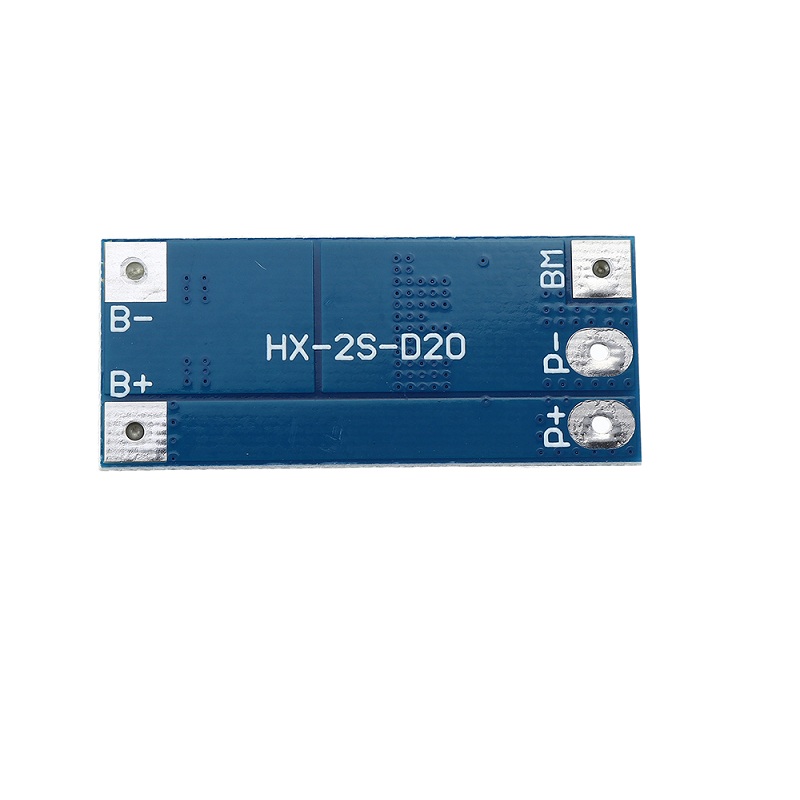
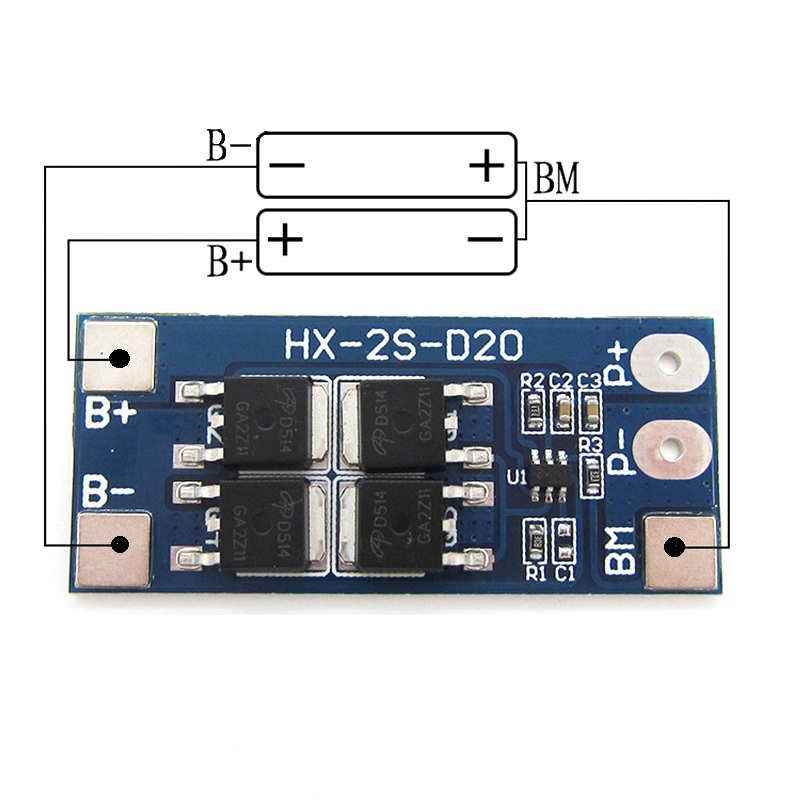
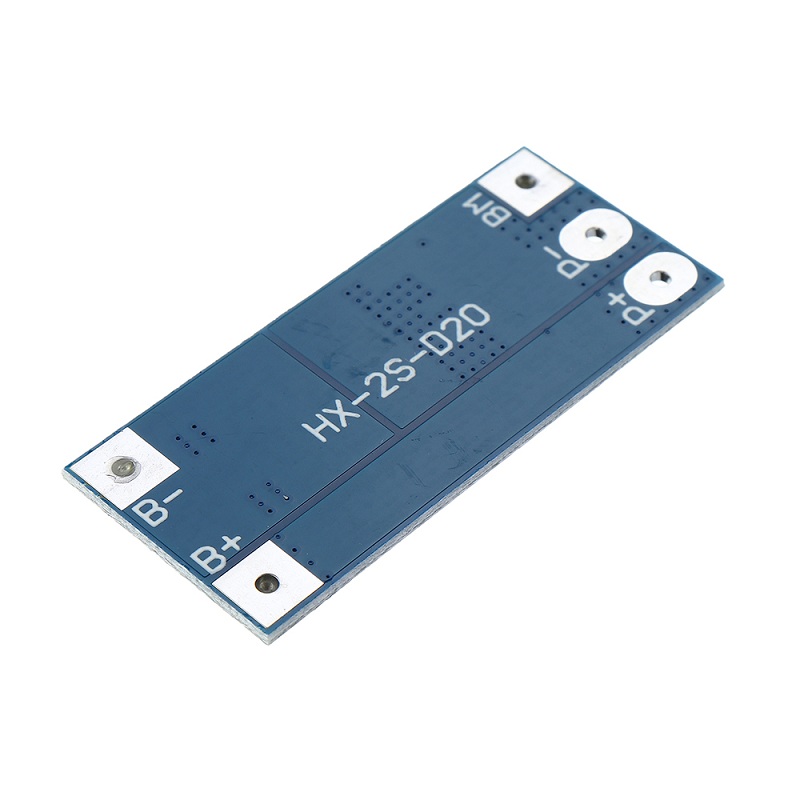
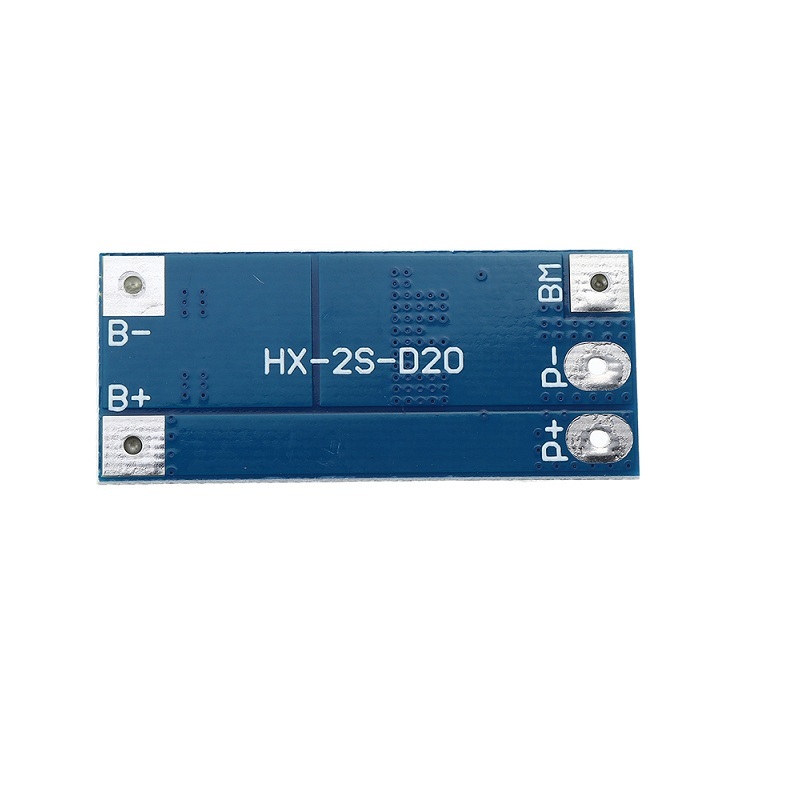
The HX-2S-D20 uses separate battery-side and protected circuit terminals. The B+, B− and BM connections interface with the series-connected battery cells, while P+ and P− provide the protected positive and negative connections for the external charger and load.
For conventional lithium-ion cells with a nominal voltage of 3.6V or 3.7V per cell, a 2S pack has a nominal voltage of 7.2V or 7.4V and a full-charge voltage of 8.4V. Use a dedicated 2S Li-ion CC/CV charger with an 8.4V charge-voltage limit.
This module is not a battery charger. It does not replace the external charging circuit or regulate the charging current. A suitable charger with the correct voltage and current settings must be used.
Battery Connection & Pin Details
The board provides five connection terminals for the battery pack and the external protected circuit.
- B+ – Battery Positive: Connects to the positive terminal of the complete 2S battery pack.
- B− – Battery Negative: Connects to the negative terminal of the complete battery pack.
- BM – Battery Midpoint: Connects to the junction between the two series-connected cells.
- P+ – Protected Positive: Positive terminal for the external charger and load.
- P− – Protected Negative: Negative terminal for the external charger and load.
Typical connection arrangement: Connect B− to the negative end of the first cell, BM to the junction between the two cells, and B+ to the positive end of the second cell. Connect the external charger and load through P+ and P−. Always follow the actual PCB terminal markings and verify polarity before applying power.
Functional Advantages
- Integrated Protection Circuit: Combines essential battery protection functions on a compact PCB.
- Dedicated Midpoint Terminal: Supports voltage monitoring of the two series-connected battery sections.
- Protected External Connections: Provides designated terminals for connecting the charger and load.
- Compact Integration: Suitable for battery assemblies installed inside compact electronic enclosures.
- Low Quiescent Consumption: Helps reduce standby current draw from the connected battery pack.
Applications
The HX-2S-D20 can be integrated into compatible two-cell lithium-ion battery assemblies used in portable and embedded electronic equipment, provided the connected load and charging arrangement remain within the board’s electrical limits.
- DIY 18650 Battery Packs: Protection circuitry for custom two-cell series battery assemblies.
- Portable Electronic Equipment: Battery protection for compatible portable devices.
- Embedded Electronics: Integration into compact battery-powered electronic systems.
- LED Lighting Projects: Protection for suitable 2S battery-powered lighting assemblies.
- Microcontroller Projects: Battery protection for compatible embedded development systems.
- Wireless Sensor Systems: Battery pack protection for suitable low-power monitoring devices.
- Portable Instrumentation: Protection for compatible battery-operated testing and measuring equipment.
- Communication Electronics: Battery protection for suitable portable communication devices.
- Compact Backup Power: Protection for compatible small battery backup assemblies.
- Custom Electronic Products: Integration into battery-powered products requiring a 2S protection circuit.
Package Contents
- 1 × HX-2S-D20 2S Li-ion Battery Protection Board
Product Specifications
| Parameter | Specification |
|---|---|
| Model | HX-2S-D20 |
| Product Type | Li-ion Battery Protection Board / BMS |
| Battery Configuration | 2S – Two cells connected in series |
| Compatible Battery Chemistry | Conventional Li-ion / LiPo |
| Nominal Pack Voltage | 7.2V / 7.4V, depending on cell nominal voltage |
| Full-Charge Pack Voltage | 8.4V |
| Recommended Charger Voltage | 8.4V CC/CV |
| Maximum Operating Current | 13A |
| Maximum Pulse Current | 20A |
| Overcharge Voltage Threshold | 4.28V ±0.05V per cell (reference datasheet value) |
| Over-Discharge Voltage Threshold | 2.9V ±0.08V per cell (reference datasheet value) |
| Quiescent Current | <10µA |
| Protection Functions | Overcharge, over-discharge, overcurrent and short-circuit protection |
| Protection Controller | HY2120-CB |
| Cell Balancing | Not provided |
| Connection Terminals | B+, B−, BM, P+, P− |
| Operating Temperature | −40°C to +50°C |
| PCB Length | 44.77mm (listed dimensions) |
| PCB Width | 18.85mm (listed dimensions) |
| PCB Height / Thickness | 3.5mm (listed dimensions) |
| Board Weight | 4g |
Connection & Operating Recommendations
- Use Matched Cells: Select compatible cells with matching chemistry, capacity, voltage characteristics and condition.
- Connect the Midpoint Correctly: Ensure BM is connected to the junction between the two series-connected cells.
- Use a Dedicated Charger: Use an appropriate 2S lithium-ion CC/CV charger. The protection board does not regulate charging current.
- Observe Current Ratings: Keep the continuous operating load within the specified operating current. The pulse rating is not a continuous current rating.
- Verify Terminal Polarity: Check B+, B−, BM, P+ and P− markings before soldering or connecting the battery pack.
- Prevent Short Circuits: Insulate exposed terminals and solder joints to prevent accidental contact with conductive surfaces.
- Check the Load: Consider motor startup and other transient current demands before selecting this board for a project.
- Verify Connections Before Use: Check cell voltages, wiring and polarity before connecting the charger or external load.