
SPIDER Automation | 1S 1A 18650 Li-ion Battery Protection Board | 3.7V BMS
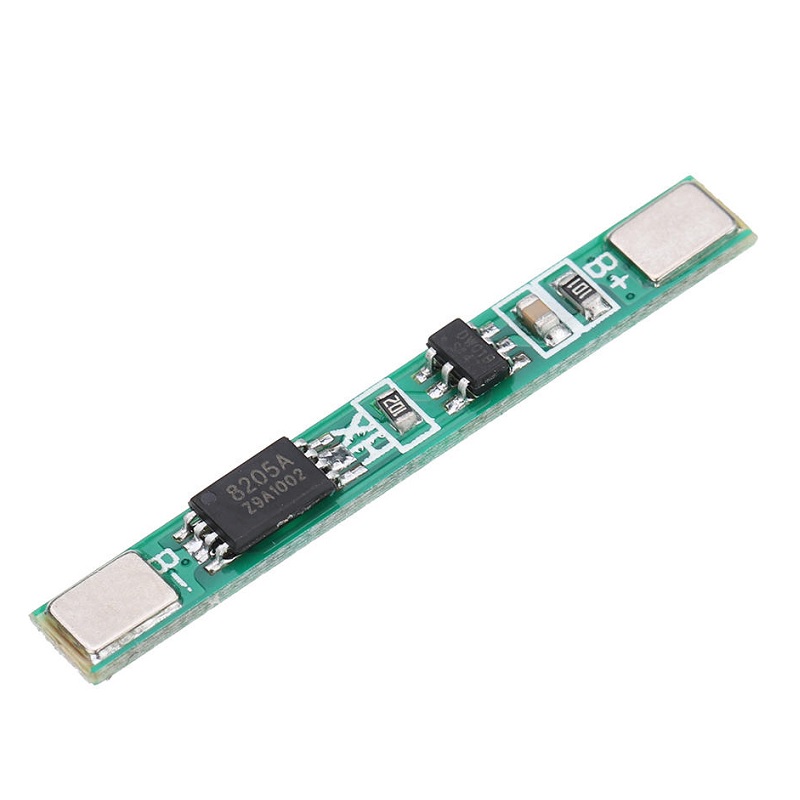
The SPIDER Automation 1S Li-ion Battery Protection Board is designed to provide essential electrical protection for single-cell lithium-ion battery packs. It uses a voltage detection circuit and MOSFET switching arrangement to control the protected battery circuit during charging and discharging.
The module features separate battery-side and protected power terminals, allowing straightforward integration into compatible rechargeable battery-powered electronics. Its compact PCB format is suitable for low-current portable devices, embedded electronics and custom single-cell battery assemblies.
Technical Features & Protection Functions
- Overcharge Protection: Monitors battery voltage and helps prevent the cell from exceeding the specified upper protection threshold.
- Over-Discharge Protection: Helps protect the battery against excessive discharge by disconnecting the protected circuit at the specified lower voltage threshold.
- Overcurrent Protection: Detects excessive current conditions and controls the MOSFET switching circuit to protect the battery and connected circuit.
- Short-Circuit Protection: Provides protective switching during a short-circuit condition.
- Voltage Detection Circuit: Uses a voltage-sensing circuit for monitoring the battery’s operating voltage.
- MOSFET-Based Control: Controls the battery charging and discharging paths through electronic switching.
- Multi-Stage Current Detection: Incorporates a three-stage detection arrangement for overcurrent and load short-circuit conditions.
Battery & Electrical Configuration
This protection board is intended for a single-cell conventional lithium-ion battery. A standard 3.6V/3.7V nominal Li-ion cell reaches approximately 4.2V at full charge.
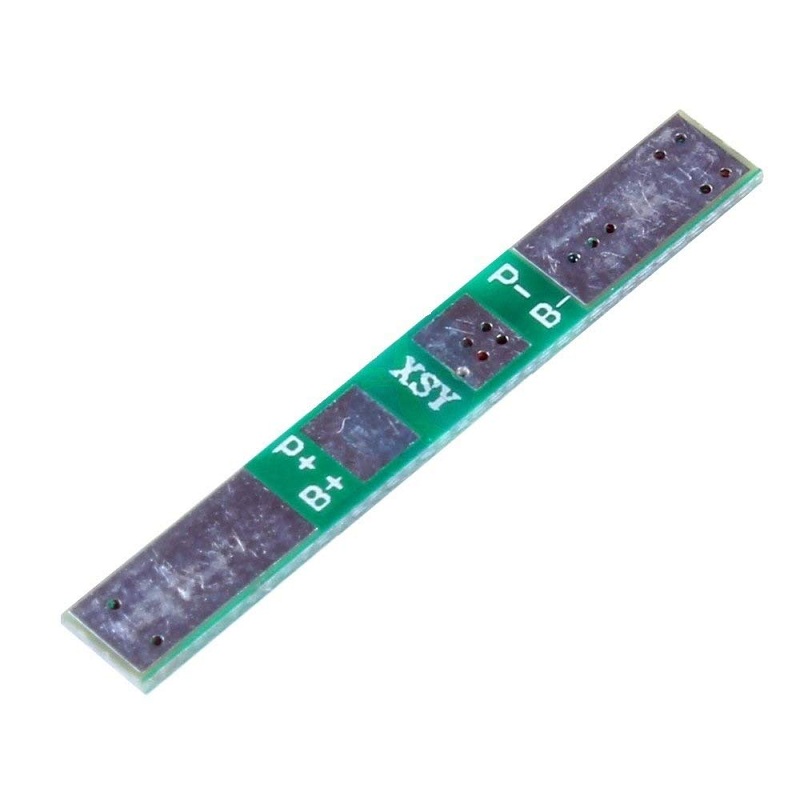
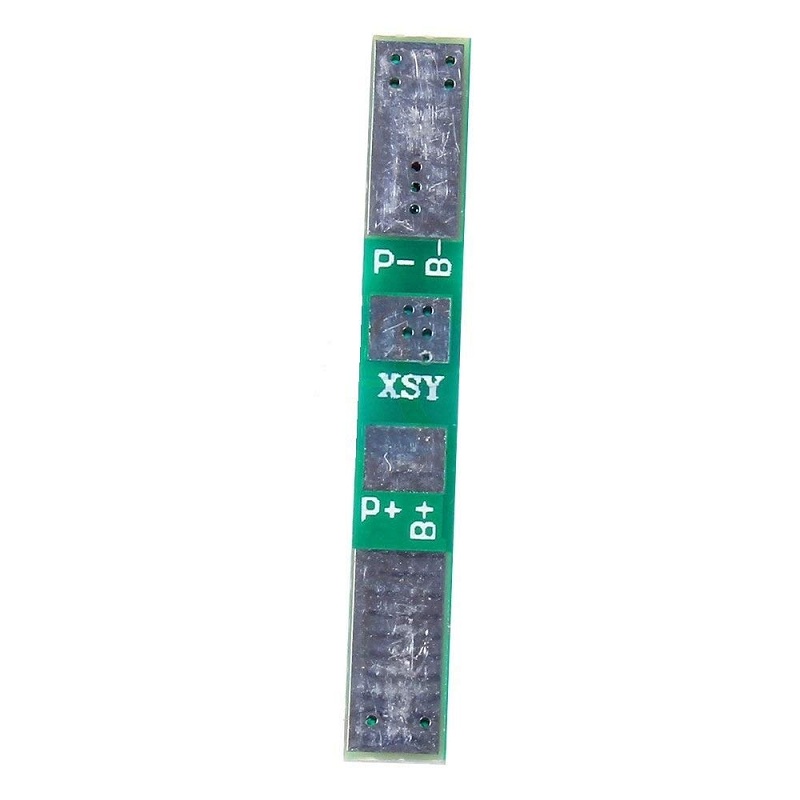
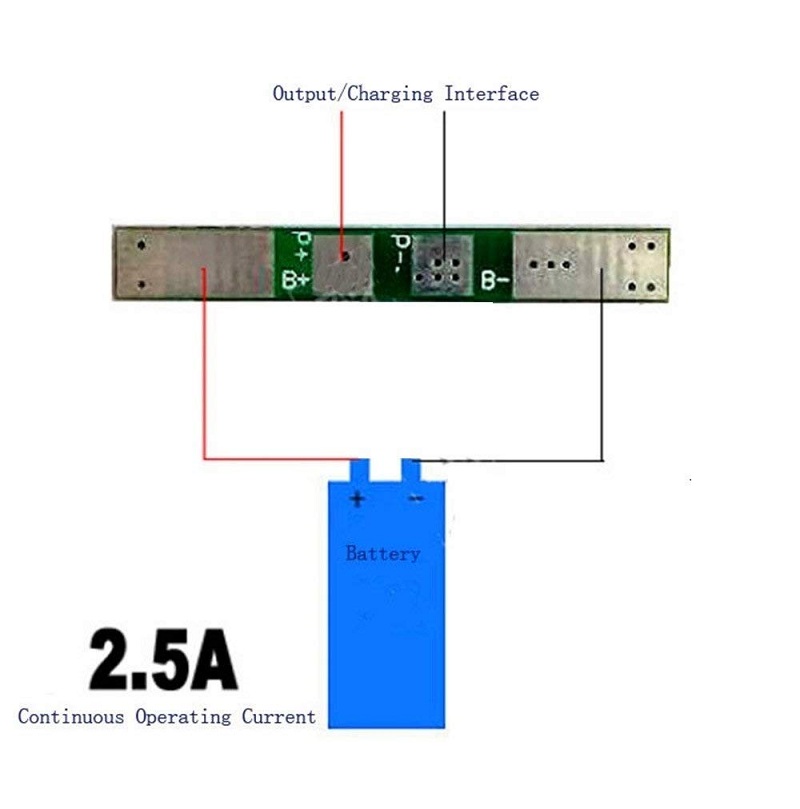
The board provides separate battery connections and protected power connections. The battery connects to B+ and B−, while the charger and external load connect through P+ and P−. This arrangement allows the protection circuit to control the external charging and discharging paths.
Note: This is a battery protection module, not a standalone battery charger. Use a compatible single-cell Li-ion charging circuit with the appropriate charging voltage and current limits.
Battery & Power Connection Details
- B+ – Battery Positive: Connects to the positive terminal of the lithium-ion cell.
- B− – Battery Negative: Connects to the negative terminal of the lithium-ion cell.
- P+ – Protected Positive: Positive power connection for the external charger and load.
- P− – Protected Negative: Protected negative connection for the external charger and load.
Connect the battery to the B+ and B− terminals and use P+ and P− for the external circuit. Verify the polarity and physical PCB markings before soldering or applying power.
Functional Advantages
- Compact Protection Circuit: Combines essential single-cell battery protection functions on a small PCB.
- Separate Battery and Load Connections: Provides dedicated terminals for battery wiring and the protected external circuit.
- Electronic Switching: Uses MOSFET-based control rather than relying on mechanical switching.
- Multiple Fault Detection: Supports voltage and current-related protection functions.
- Easy Integration: Suitable for incorporation into compatible low-current battery-powered electronic designs.
Applications
This protection board is suitable for compatible single-cell lithium-ion battery applications where the operating current remains within the specified electrical limits.
- 18650 Battery Packs: Protection for compatible single-cell 18650 battery assemblies.
- 14500 Battery Applications: Protection for suitable single-cell 14500 lithium-ion batteries.
- Portable Electronics: Battery protection for compatible low-current portable devices.
- Microcontroller Projects: Protected battery supply for suitable embedded development systems.
- Wireless Sensor Nodes: Battery protection for low-power sensing and monitoring electronics.
- LED Electronics: Protection for compatible single-cell battery-powered LED circuits.
- DIY Battery Projects: Integration into custom single-cell rechargeable battery assemblies.
- Small Electronic Instruments: Battery protection for compatible portable measuring and testing devices.
- Embedded Control Systems: Protection for suitable low-current control electronics.
- Compact Backup Supplies: Protection for compatible single-cell standby power assemblies.
Package Contents
- 1 × 1S 18650 Li-ion Battery Protection Board
Product Specifications
| Parameter | Specification |
|---|---|
| Product Type | Li-ion Battery Protection Board / BMS |
| Battery Configuration | 1S – Single cell |
| Compatible Battery Chemistry | Conventional Li-ion |
| Compatible Cell Formats | 18650, 14500 (subject to electrical compatibility) |
| Nominal Battery Voltage | 3.6V / 3.7V |
| Full-Charge Battery Voltage | 4.2V |
| Overcharge Detection Voltage | 4.25V ±0.05V |
| Overcharge Release Voltage | 4.23V ±0.05V |
| Over-Discharge Detection Voltage | 2.54V ±0.1V |
| Maximum Working Current | 1A |
| Overcurrent Detection Threshold | 3A |
| Protection Functions | Overcharge, over-discharge, overcurrent and short-circuit protection |
| Protection Circuit | Voltage detection and MOSFET switching circuit |
| Connection Terminals | B+, B−, P+, P− |
| Charging / Discharging Port | Common protected power terminals (P+ and P−) |
Connection & Operating Recommendations
- Use a Compatible Cell: Select a conventional lithium-ion cell compatible with the board’s single-cell configuration.
- Observe Current Limits: Keep the continuous load current within the specified working current. The overcurrent detection threshold is a protection trigger, not a normal operating-current rating.
- Use a Dedicated Charger: Connect a compatible single-cell Li-ion charging circuit with the correct full-charge voltage.
- Check Terminal Polarity: Verify B+, B−, P+ and P− markings before connecting the battery or external circuit.
- Insulate Connections: Prevent exposed terminals and solder joints from touching conductive surfaces.
- Check Load Requirements: Avoid motors and other loads with startup current that may exceed the board’s operating capability.
- Verify Before Use: Check battery voltage, wiring and polarity before connecting the charger or load.