
SPIDER Automation | 3S 100A Lithium-Ion Battery Management System (BMS) | Cell Balancing & Dual-Port Protection
Product Overview
The SPIDER Automation 3S Lithium-Ion Battery Management System (BMS) is a battery protection board designed for battery packs consisting of three lithium-ion cells connected in series. It integrates essential electronic protection functions to help manage charging and discharging operations while protecting individual cells against abnormal voltage and fault conditions.
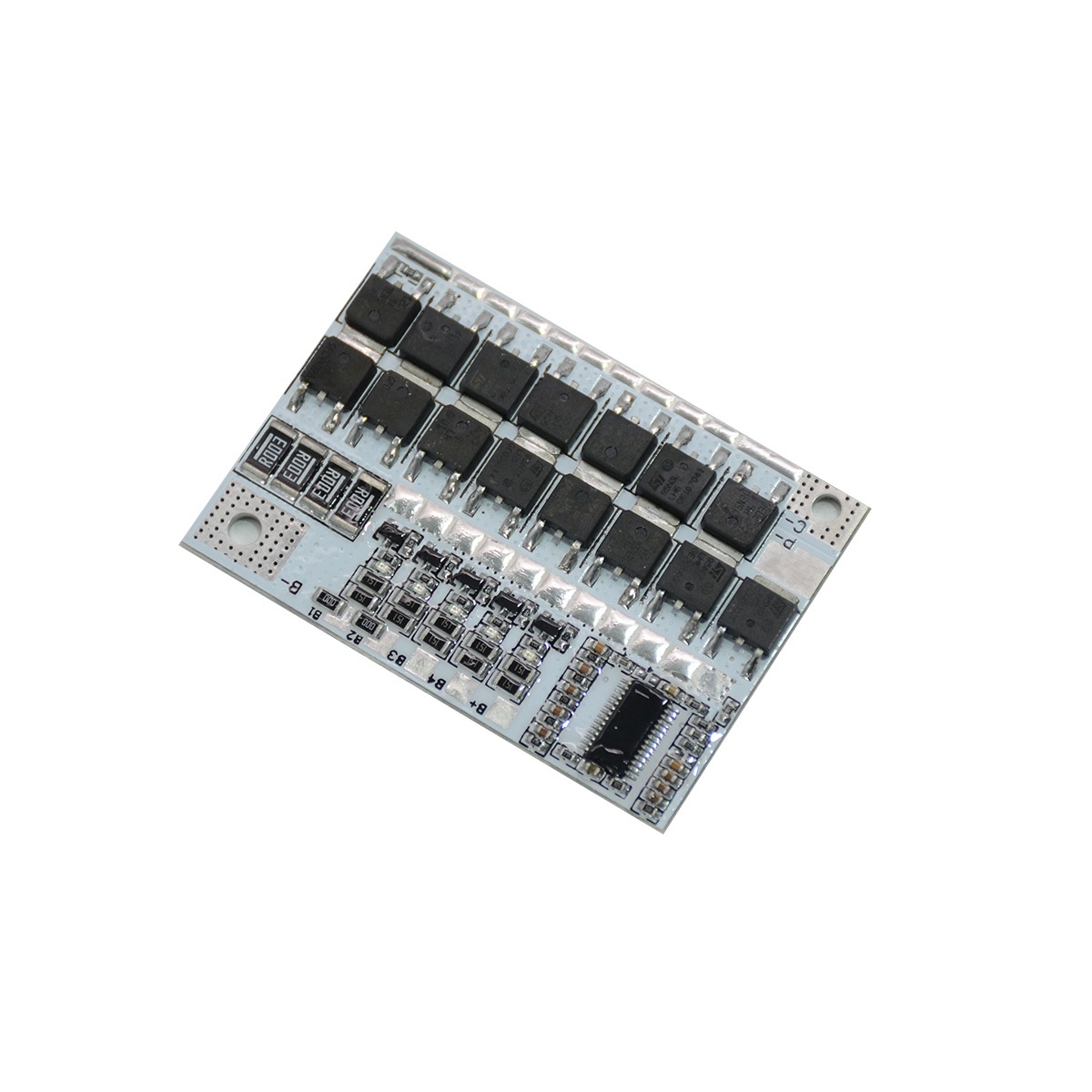
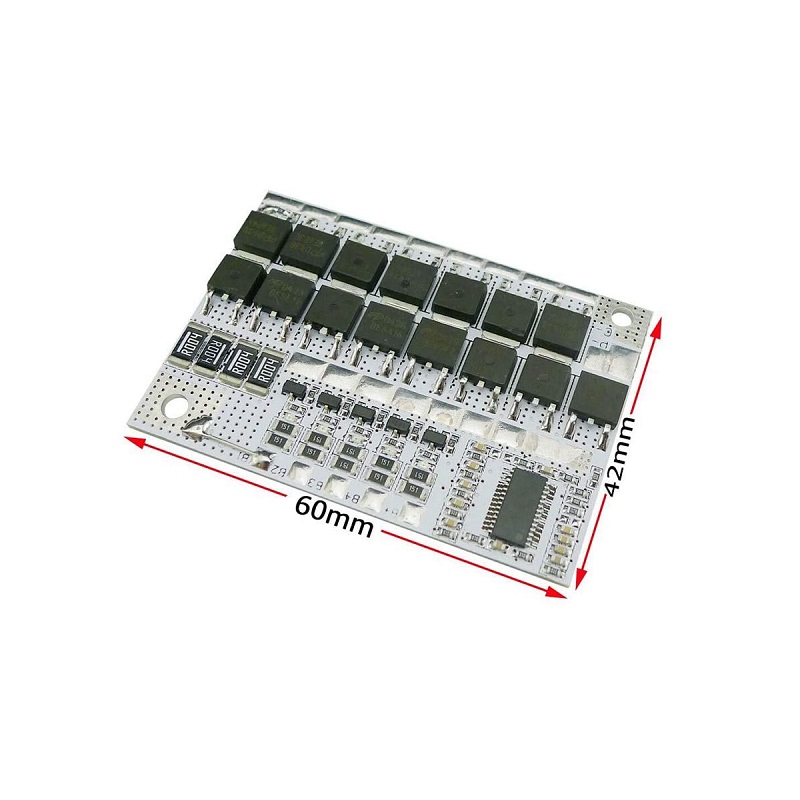
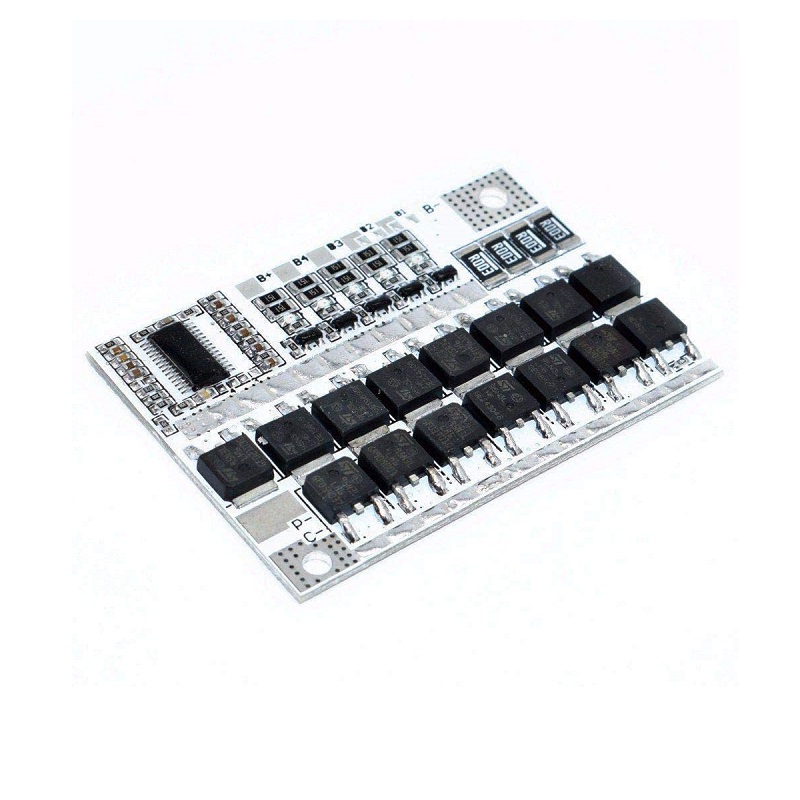
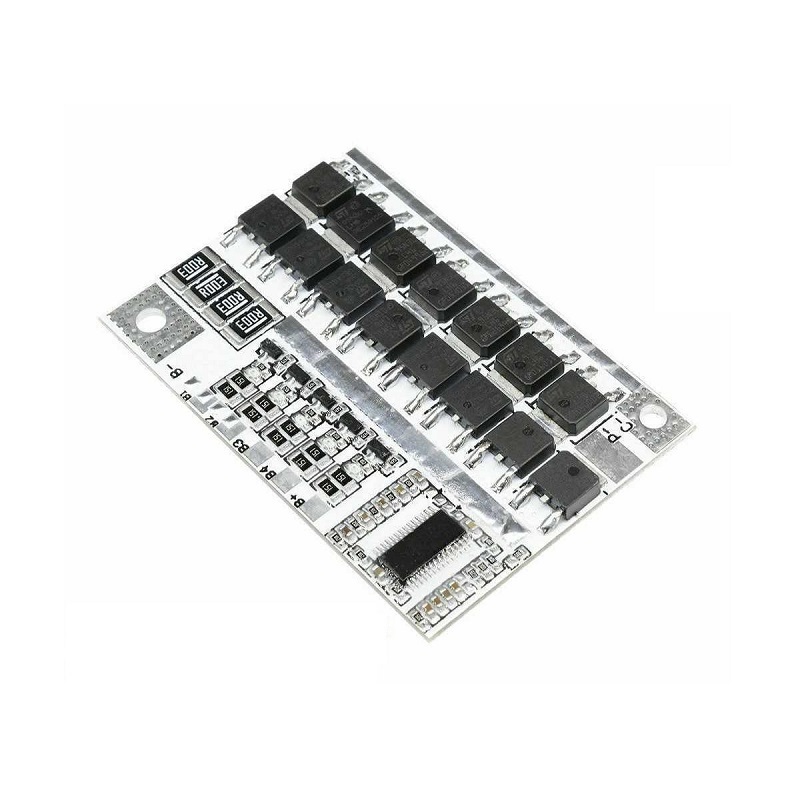
The board incorporates 15 high-power, ultra-low-resistance MOSFETs, arranged as 8 discharge MOSFETs and 7 charging MOSFETs. It supports both common-port (same-port) and separate-port (different-port) configurations, allowing the charging and discharging connections to be arranged according to the selected wiring configuration.
Additional integrated functions include cell balancing, short-circuit protection, temperature protection and disconnection protection. With a specified 60mA balancing current, the board supports voltage-balancing functionality for compatible three-cell lithium-ion battery assemblies.
Technical Features & Protection Functions
- 3S Battery Configuration: Designed for three series-connected lithium-ion cells.
- High-Power MOSFET Architecture: Integrates 15 high-power, ultra-low-resistance MOSFETs for charging and discharging paths.
- Discharge MOSFET Arrangement: Uses 8 MOSFETs in the discharge section.
- Charging MOSFET Arrangement: Uses 7 MOSFETs in the charging section.
- Common-Port Operation: Supports a shared charging and discharging connection, with a specified discharge current of 60A.
- Separate-Port Operation: Supports independent charging and discharging connections, with a specified discharge current of 80A.
- Charging Current: Supports a specified charging current of 60A.
- Overcharge Protection: Monitors individual cell voltage and provides protection when the overcharge threshold is reached.
- Over-Discharge Protection: Helps prevent individual cells from discharging below the specified protection threshold.
- Overcurrent Protection: Provides protection against excessive current conditions.
- Short-Circuit Protection: Incorporates a fast-response short-circuit protection function with a specified delay of 100–600µs.
- Cell Balancing: Supports cell voltage balancing with a specified balancing current of 60mA.
- Temperature Protection: Includes temperature-related protection functionality.
- Disconnection Protection: Provides protection against specified battery connection/disconnection fault conditions.
- Short-Circuit Recovery: Includes a short-circuit protection recovery function.
Electrical Configuration & Current Ratings
The protection board supports common-port and separate-port wiring configurations. These configurations determine how the charging and discharging connections are arranged within the battery system.
- Common-Port Configuration: Uses a shared connection for charging and discharging, with a specified discharge current of 60A.
- Separate-Port Configuration: Uses independent charging and discharging connections, with a specified discharge current of 80A.
- Charging Current: The specified charging current is 60A.
- MOSFET Arrangement: Eight MOSFETs are allocated to the discharge path and seven to the charging path.
- 3S Pack Voltage: For conventional 3.6V/3.7V nominal lithium-ion cells, the battery pack has a nominal voltage of approximately 10.8V–11.1V.
- Approximate Full-Charge Voltage: With a 4.2V-per-cell charging profile, a fully charged 3S pack reaches approximately 12.6V.
Electrical compatibility: The charger, battery cells, wiring, connectors and connected load must be selected according to the battery chemistry and intended operating current. The stated 100A protection-current figures should not be interpreted as continuous charging or discharging ratings.
Cell Voltage Protection & Balancing Parameters
The board provides individual cell-voltage monitoring with overcharge and over-discharge protection. It also incorporates a cell-balancing function to support voltage equalisation across the series-connected battery cells.
| Protection / Balancing Parameter | Specification |
|---|---|
| Single-Cell Overcharge Protection Voltage | 4.21–4.29V |
| Single-Cell Overcharge Recovery Voltage | 4.14–4.24V |
| Overcharge Protection Delay | 1.5–2.5 seconds |
| Single-Cell Over-Discharge Protection Voltage | 2.72–2.88V |
| Over-Discharge Protection Delay | 0.5–1.5 seconds |
| Short-Circuit Protection Delay | 100–600 microseconds (µs) |
| Short-Circuit Recovery | Recovery function supported |
| Cell Balancing Current | 60mA |
| Voltage Balancing Range | 4.14–4.24V |
Applications
This 3S lithium-ion battery protection board can be integrated into compatible battery-powered systems requiring individual cell-voltage protection, charging/discharging management and cell balancing.
- Custom 3S Lithium-Ion Battery Packs: Protection and management circuitry for three-cell series battery assemblies.
- Portable Power Systems: Battery protection for compatible portable equipment operating from a 3S lithium-ion supply.
- DIY Battery Pack Projects: Integration into custom-built 3S lithium-ion battery assemblies.
- Robotics Power Systems: Battery management for compatible mobile robots and robotic development platforms.
- Electric Mobility Prototypes: Protection circuitry for suitable 3S battery-powered mobility projects.
- DC Backup Power Units: Battery protection in compatible low-voltage DC backup systems.
- Portable Electronic Equipment: Battery management for electronic devices designed around a compatible 3S power source.
- Embedded Power Systems: Protection integration for embedded controllers and electronic systems using 3S battery packs.
- Industrial Portable Instruments: Battery protection for suitable portable measurement and instrumentation equipment.
- Custom Energy Storage Assemblies: Cell protection and balancing for compatible three-cell lithium-ion battery modules.
- High-Current DC Projects: Battery management for compatible systems designed around the board’s specified current configuration.
- Electronic Prototyping: Battery protection integration in engineering development and custom electronic projects.
Product Specifications
| Parameter | Specification |
|---|---|
| Product Type | Lithium-Ion Battery Management System (BMS) |
| Battery Configuration | 3S – 3 cells connected in series |
| Supported Cell Voltage Profile | 3.6V / 3.7V nominal lithium-ion cells |
| Nominal Pack Voltage | Approximately 10.8V–11.1V |
| Maximum Pack Charging Voltage | Approximately 12.6V for a 4.2V-per-cell charging profile |
| Common-Port Discharge Current | 60A |
| Common-Port Charging Current | 60A |
| Separate-Port Discharge Current | 80A |
| Separate-Port Charging Current | 60A |
| MOSFET Quantity | 15 high-power, ultra-low-resistance MOSFETs |
| Discharge MOSFETs | 8 |
| Charging MOSFETs | 7 |
| Cell Balancing | Yes |
| Cell Balancing Current | 60mA |
| Voltage Balancing Range | 4.14–4.24V |
| Overcharge Protection | Yes |
| Over-Discharge Protection | Yes |
| Overcurrent Protection | Yes |
| Short-Circuit Protection | Yes |
| Temperature Protection | Yes |
| Disconnection Protection | Yes |
| PCB Colour | White |
| Package Contents | 1 × 3S Lithium-Ion Battery Protection Board |
Connection & Operating Recommendations
- Cell Configuration: Connect three compatible lithium-ion cells in series according to the designated battery connection sequence.
- Port Configuration: Identify the common-port or separate-port connection arrangement before wiring the charger and load.
- Charger Selection: Use a compatible 3S lithium-ion charger with an appropriate charging voltage for the selected cell chemistry.
- Current Compatibility: Ensure that the battery cells, conductors, connectors and charging equipment are suitable for the intended operating current.
- Cell Matching: Use cells with compatible chemistry, capacity and electrical characteristics within the same battery pack.
- Temperature Protection: Follow the designated temperature-protection connection arrangement when integrating the board into the battery system.
- Electrical Insulation: Protect exposed conductive areas and battery connections against accidental short circuits.
- Thermal Management: Provide suitable heat dissipation and mechanical protection within the battery enclosure.