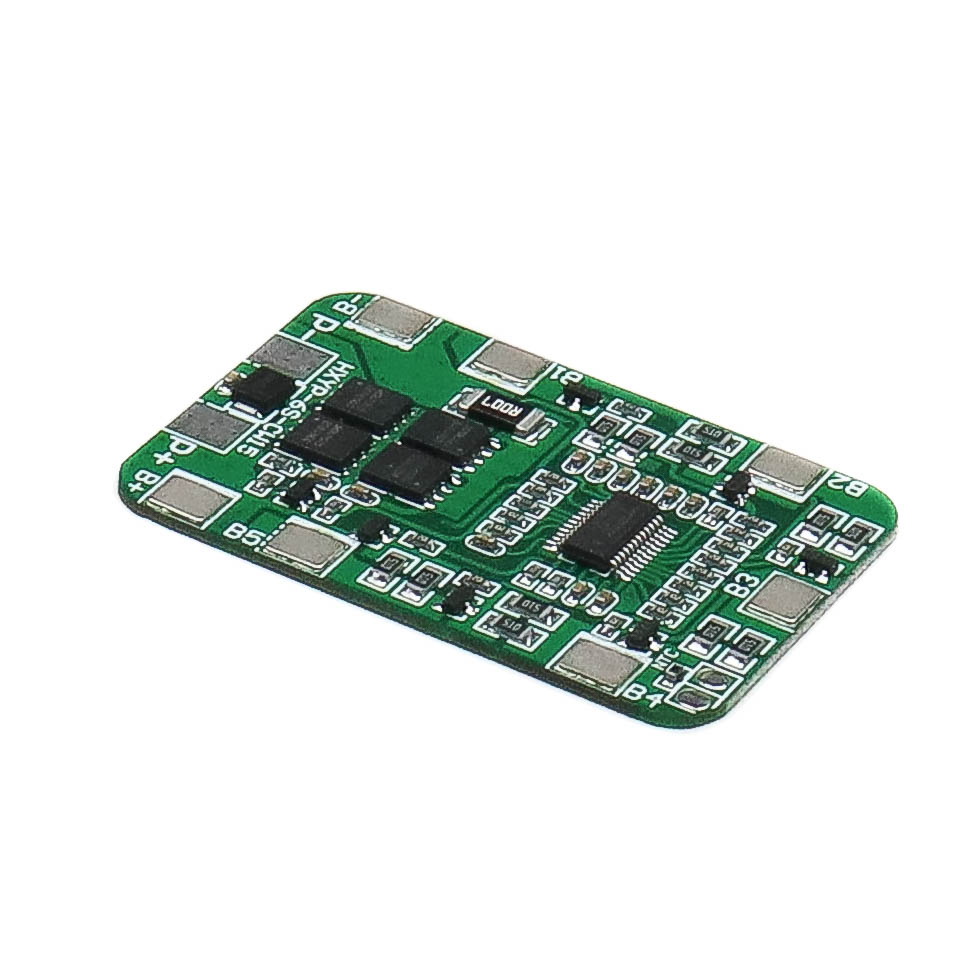

SPIDER Automation | 6S 22.2V Lithium-Ion Battery Protection Board | 15A BMS for 18650 Packs
The SPIDER Automation 6S Lithium-Ion Battery Protection Board is designed to provide essential electrical protection for six-cell series-connected rechargeable lithium-ion battery packs. Its monitoring and switching circuitry helps protect the battery assembly against abnormal voltage and current conditions during charging and discharging.
The module incorporates dedicated protection functions and battery sensing connections for integration into custom 6S battery packs. Its compact PCB construction makes it suitable for battery-powered equipment, portable electronics, robotics and custom power supply projects that require a protected lithium-ion battery assembly.
Technical Features & Protection Functions
- Overcharge Protection: Monitors individual cell voltage and interrupts the charging path when the configured overcharge threshold is reached.
- Over-Discharge Protection: Helps prevent excessive cell discharge by disconnecting the protected battery path when the low-voltage threshold is detected.
- Overcurrent Protection: Detects excessive current conditions and controls the battery output path to protect the circuit.
- Short-Circuit Protection: Provides a protective response when a short circuit is detected at the protected output.
- Cell-Level Voltage Monitoring: Uses battery sensing connections to monitor the series-connected cells individually.
- Protected Charge/Discharge Path: Provides a common protected connection arrangement for the external charger and load.
- Low Standby Consumption: Designed to minimize current consumption when the battery pack is idle.
Battery Configuration & Voltage Compatibility
This board is intended for a 6S conventional lithium-ion battery configuration, with six compatible cells connected in series. A series arrangement increases the overall pack voltage while the ampere-hour capacity remains determined by the individual cell capacity and the parallel arrangement, if any, within each series group.
- Battery Chemistry: Conventional 3.7V nominal lithium-ion cells.
- Series Configuration: Six cells connected in series.
- Pack Voltage: 22.2V nominal and 25.2V at full charge.
- Cell Compatibility: Use cells with compatible chemistry, capacity, voltage and condition throughout the battery pack.
Battery & Output Connection Details
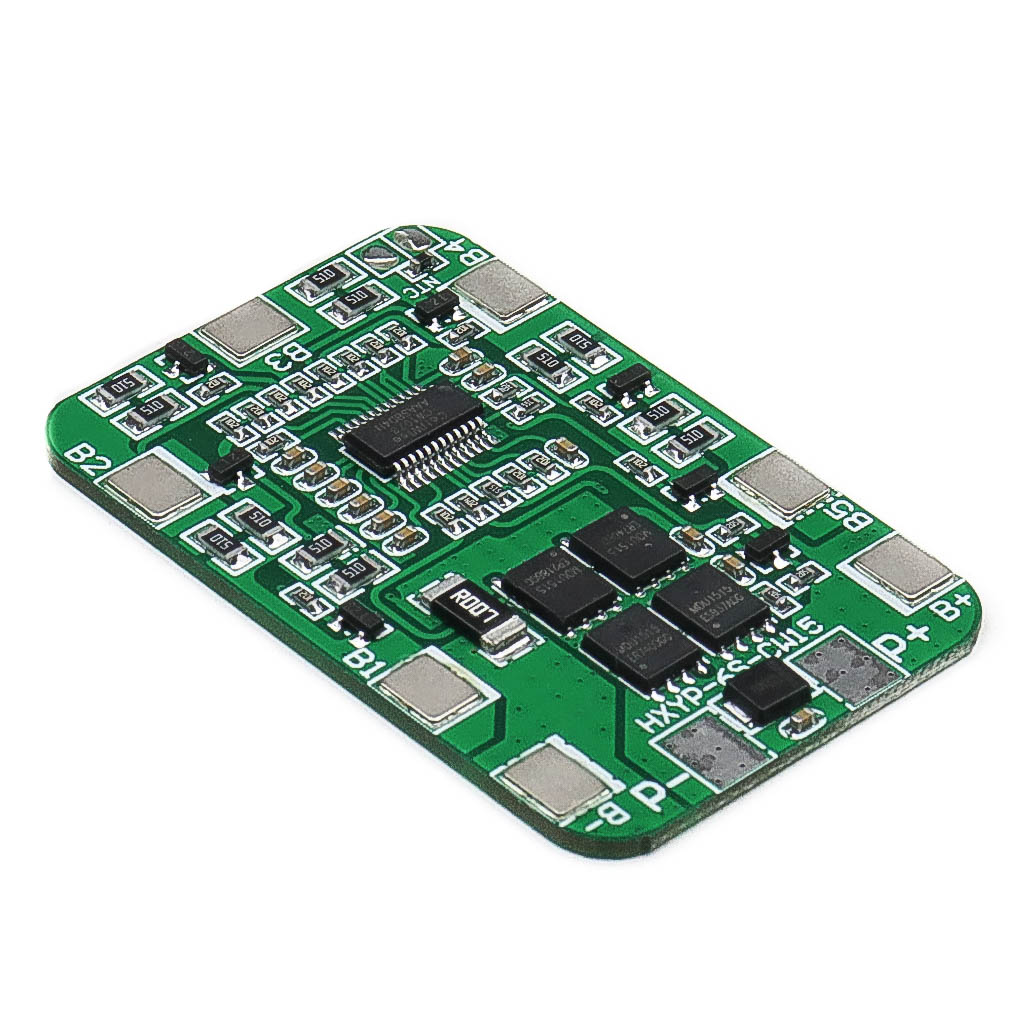
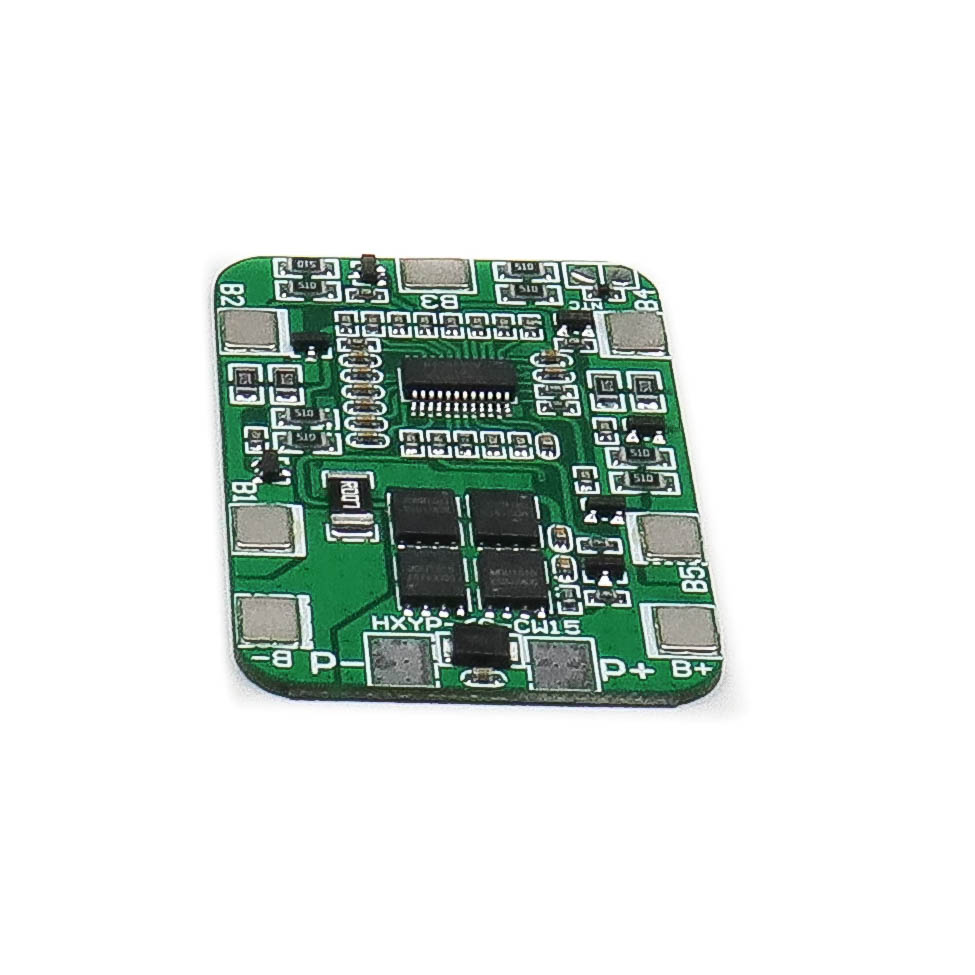
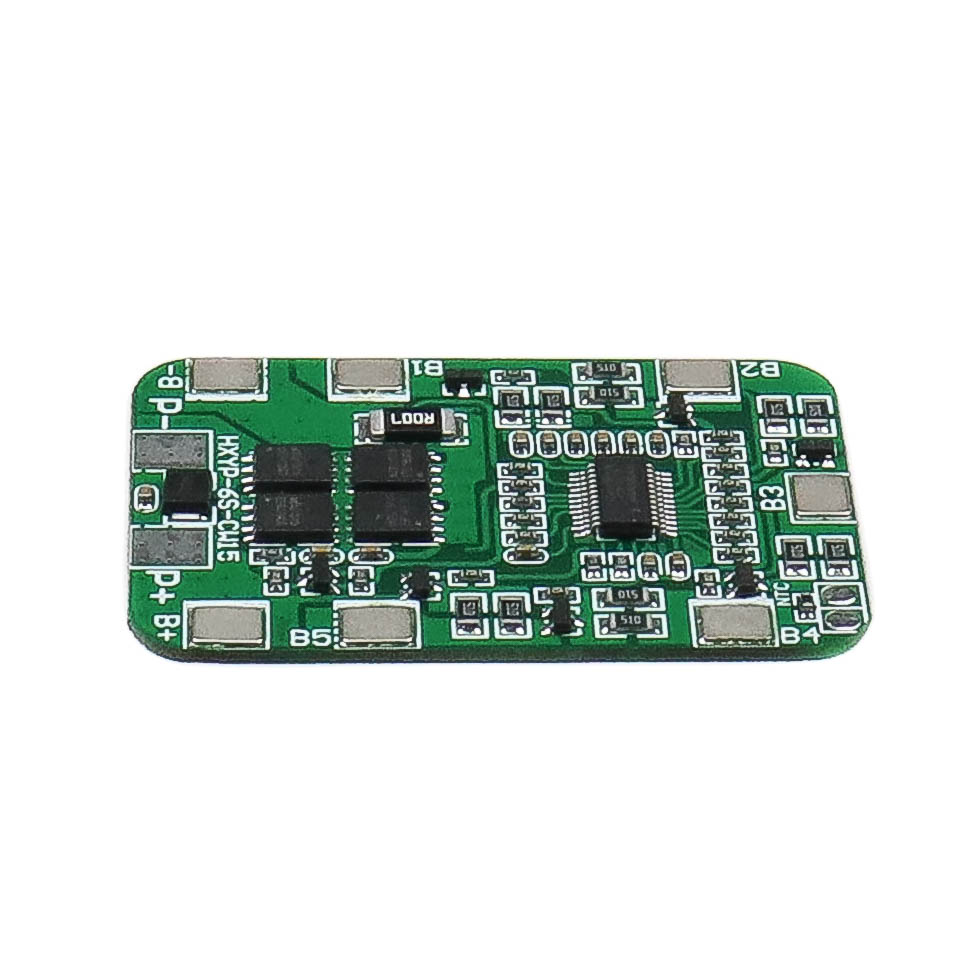
The board provides battery-side and protected output connections for integration into a 6S battery assembly. The battery terminals connect to the pack, while the protected output terminals connect to the external charging and discharging circuit.
| Terminal | Connection Description |
|---|---|
| B+ | Battery pack positive connection. |
| B- | Battery pack negative connection. |
| MB | Intermediate battery connection point. Confirm its exact cell-junction position from the PCB markings before wiring. |
| P+ | Positive connection for the external charger and load. |
| P- | Protected negative connection for the external charger and load. |
Important wiring note: The supplied connection information identifies MB only as a common battery connection point and does not provide a complete cell-by-cell terminal sequence. Confirm the actual PCB terminal layout and wiring diagram before connecting the six series cell groups. Incorrect cell-tap wiring can damage the BMS or battery pack.
Applications
The 6S protection board can be integrated into compatible lithium-ion battery assemblies used in a range of portable and custom electronic power systems.
- 18650 Battery Packs: Protection for six-series-cell lithium-ion battery assemblies.
- DIY Battery Systems: Protection circuitry for custom 6S rechargeable battery projects.
- Portable Power Equipment: Battery protection in compatible portable power systems.
- Robotics Projects: Integration into suitable battery-powered robotic platforms.
- Electric Mobility Prototypes: Protection for compatible 6S battery assemblies used in development projects.
- Embedded Systems: Battery protection for custom electronic equipment requiring a 6S supply.
- Portable Instrumentation: Use in compatible rechargeable measuring and monitoring equipment.
- Backup Power Projects: Protection for appropriately designed 6S battery backup assemblies.
- Wireless Equipment: Battery protection in suitable rechargeable wireless devices.
- Electronic Prototyping: Integration into custom battery-powered development platforms.
Package Contents
- 1 × 6S Lithium-Ion Battery Protection Board
Product Specifications
| Parameter | Specification |
|---|---|
| Product Type | Lithium-Ion Battery Protection Board (BMS) |
| Battery Configuration | 6S (Six cells in series) |
| Compatible Battery | Conventional Lithium-Ion / 18650 cells |
| Nominal Pack Voltage | 22.2V |
| Full-Charge Pack Voltage | 25.2V |
| Maximum Operating / Discharge Current | 15A |
| Maximum Charging Current | 20A |
| Instantaneous Discharge Current | 25A |
| Overcharge Detection Voltage | 4.28V ±0.05V per cell |
| Overcharge Protection Delay | 0.1s |
| Overcharge Release Voltage | 4.08V ±0.05V per cell |
| Over-Discharge Detection Voltage | 2.55V ±0.08V per cell |
| Over-Discharge Detection Delay | 0.1s |
| Over-Discharge Release Voltage | 2.9V ±0.1V per cell |
| Overcurrent Detection Voltage | 150mV |
| Overcurrent Detection Delay | 9ms |
| Overcurrent Protection Threshold | 30A ±3A |
| Short-Circuit Detection Delay | 250µs |
| Main Circuit Conduction Resistance | ≤20mΩ |
| Working Current | ≤30µA |
| Sleep Current | ≤10µA (battery over-discharge condition) |
| Operating Temperature | -30°C to +80°C |
| PCB Dimensions | 50 × 32 × 4mm |
| Weight | 8g |
Connection & Operating Recommendations
- Use the Correct Battery Chemistry: This board is intended for conventional lithium-ion cells. Do not use it with LiFePO4 or other battery chemistries.
- Build a Compatible 6S Pack: Connect six compatible cell groups in series and verify the voltage of each group before wiring the protection board.
- Verify Every Cell Connection: Identify the correct cell junctions and confirm the PCB terminal sequence before soldering. Do not guess the MB connection position.
- Use a Compatible Charger: Select a dedicated 6S lithium-ion CC/CV charger designed for the correct full-charge voltage.
- Observe Current Ratings: Keep normal discharge operation within the specified operating current. The instantaneous discharge and overcurrent protection values are not continuous operating ratings.
- Use Appropriate Wiring: Select wire gauge, connectors and solder joints according to the intended charging and load current.
- Provide Electrical Insulation: Prevent exposed PCB terminals and solder joints from contacting conductive enclosures or other battery connections.
- Allow Heat Dissipation: Install the board with suitable ventilation and avoid operating the battery assembly outside its specified temperature range.