
SPIDER Automation | 720 Magnetic Micro Coreless Brushed DC Motor & 55mm Propeller Combo | 3.7V Mini Quadcopter Propulsion
Description
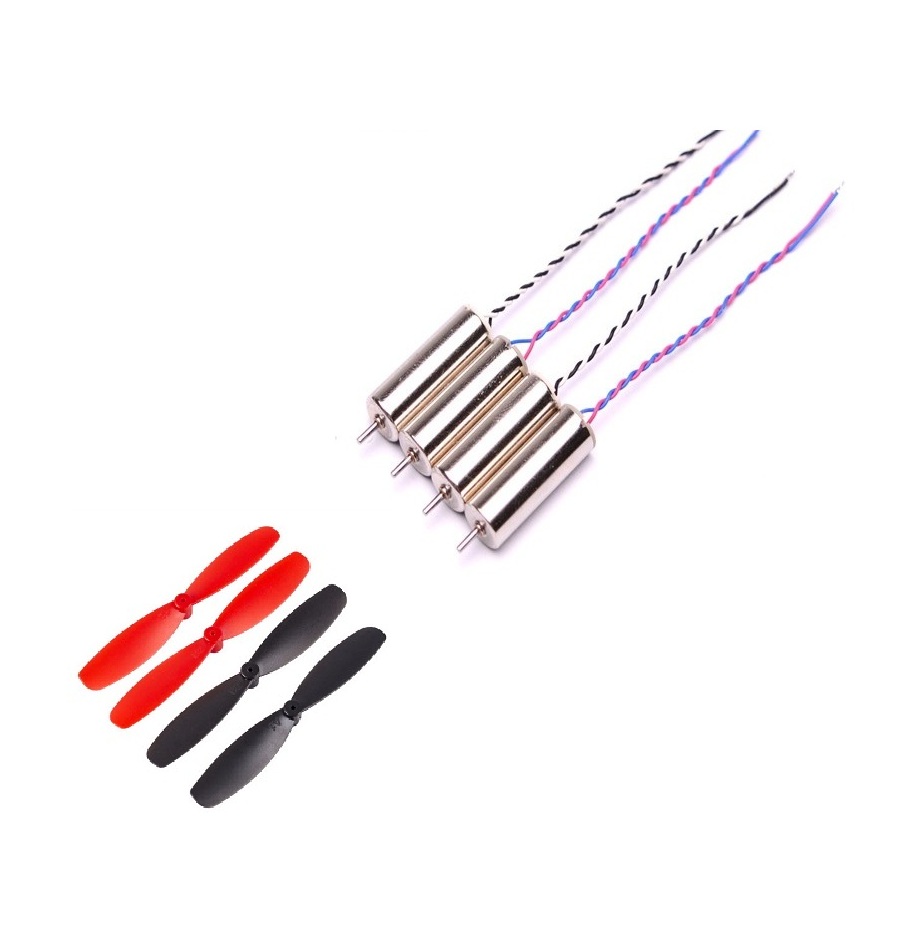
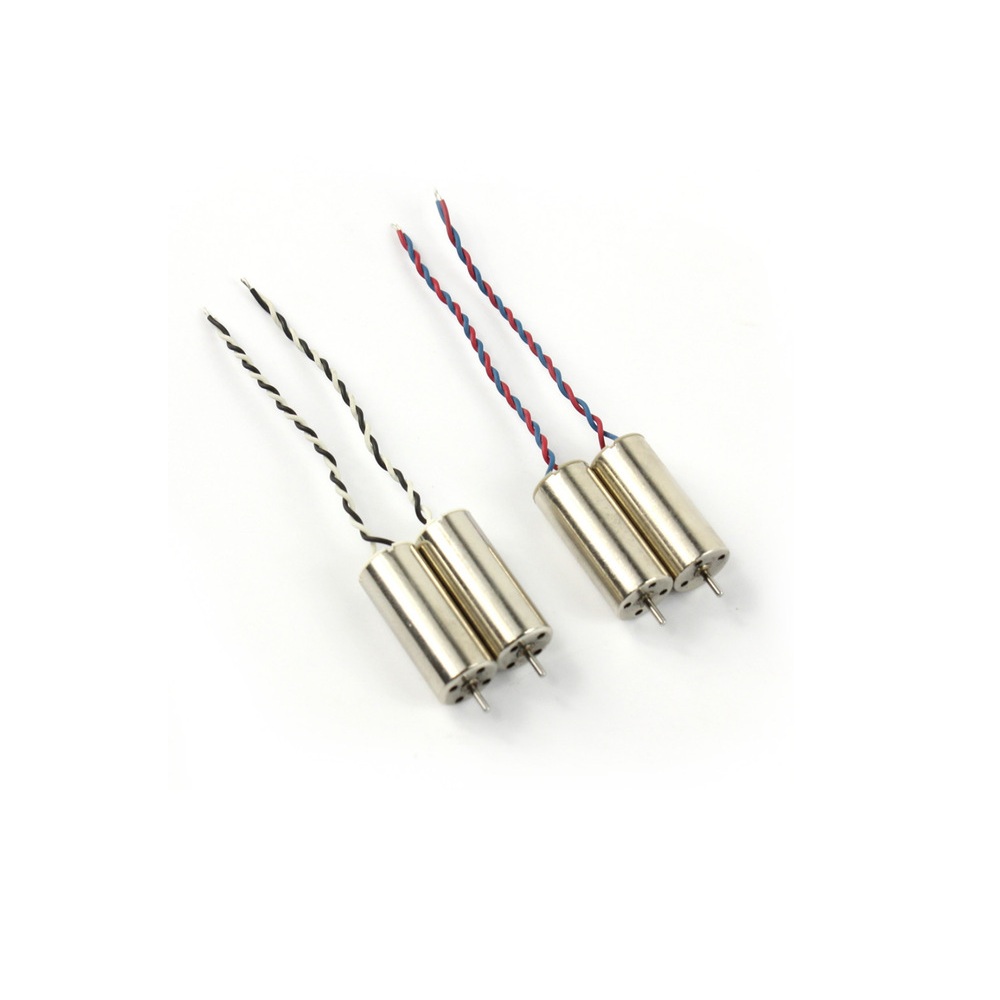
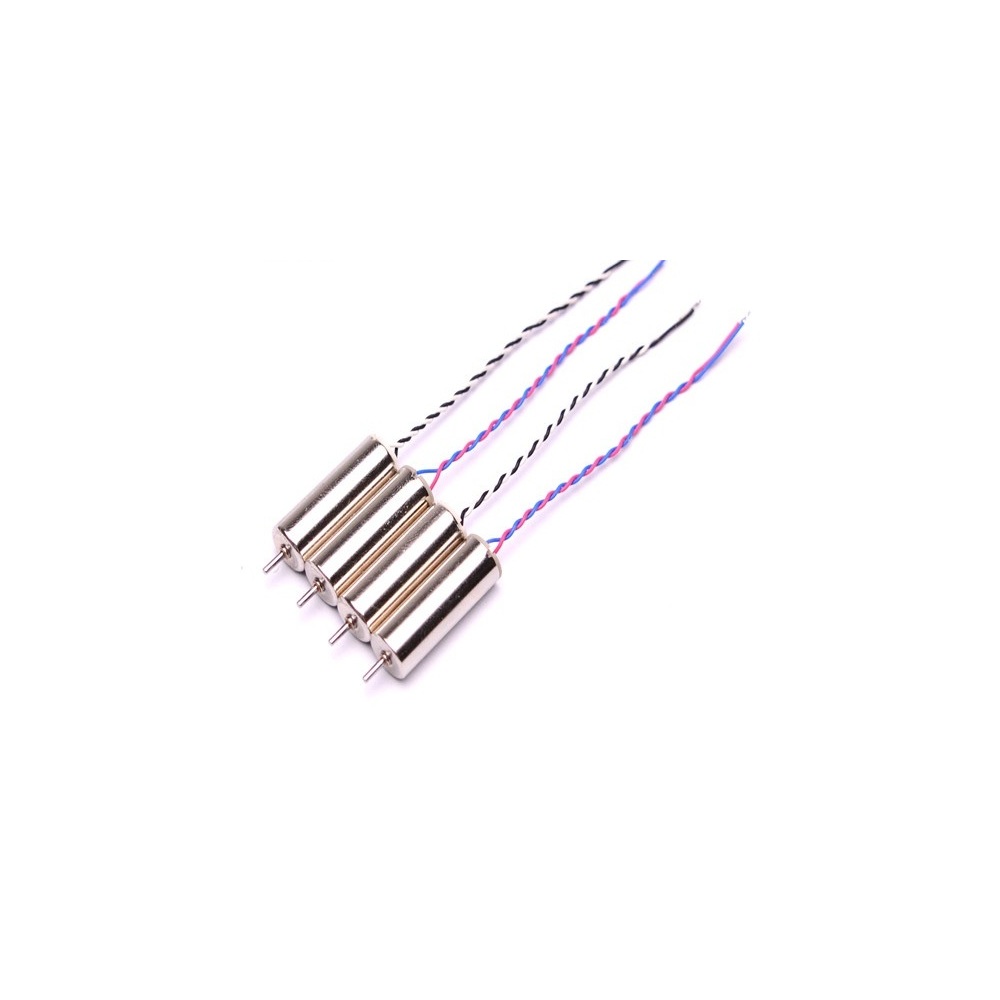
The 720 Magnetic Micro Coreless Brushed DC Motor & 55mm Propeller Combo Set is designed for compact multirotor propulsion systems, including indoor racing drones and small quadcopter platforms. The package contains four 720 coreless brushed motors in two rotation directions, together with two 55mm propeller blades. This configuration provides the basic motor and propeller components for developing a small brushed multirotor propulsion assembly.
The motors operate at a rated voltage of 3.7V and have a listed rotational speed of 48,000–50,000 RPM. Their coreless construction is characterized by high rotational speed and relatively low torque, making them intended for lightweight micro-aircraft applications. Each motor has a compact metal body, a 1mm shaft and a small form factor for integration into compatible micro multirotor frames.
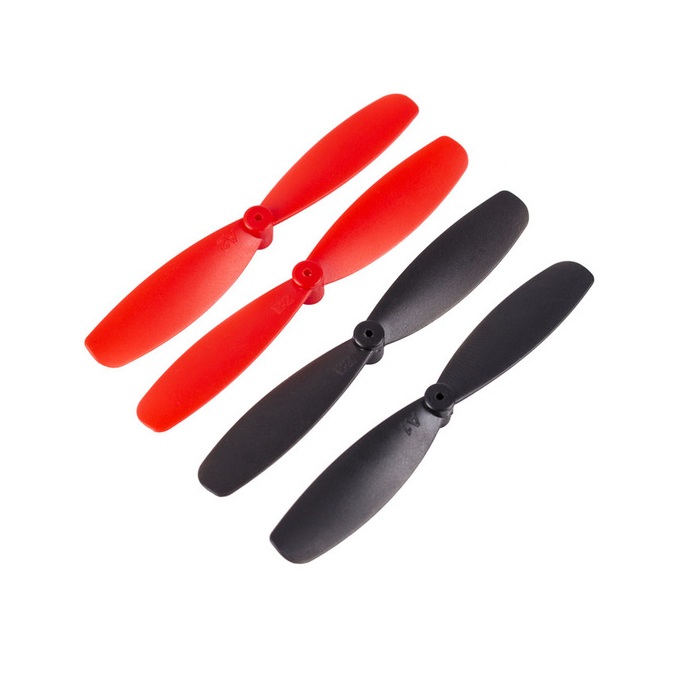
The included 55mm propeller blades are described as high-tenacity plastic components with a smooth surface intended to reduce aerodynamic resistance during rotation. They are stated to be compatible with 720, 8520 and 615 coreless motors. Motor rotation direction is identified through wire colours, allowing the CW and CCW motors to be assigned to the appropriate positions in a quadcopter layout.
Motor Design & Operating Characteristics
- Magnetic Coreless Construction: Uses a magnetic micro coreless brushed DC motor design for compact, high-speed propulsion applications.
- High-Speed Operation: The listed rotational speed is 48,000–50,000 RPM. Actual operating speed can vary with supply conditions and mechanical load.
- Low-Torque Characteristics: The motor is designed around high-speed, low-torque operation and should be used with a suitable lightweight propeller and aircraft configuration.
- Compact Metal Housing: The motor body is constructed from metal and has a small cylindrical form factor.
- 1mm Output Shaft: The shaft diameter supports installation of compatible micro propellers with a matching hub interface.
- Magnetic Assembly: The source identifies high-quality magnets as part of the motor construction.
- Low-Noise Characteristics: The motor is described as producing comparatively low operating noise.
- Low-Resistance Characteristic: Low resistance is stated in the source, although no numerical winding-resistance value is supplied.
55mm Propeller Design & Compatibility
The combo includes two 55mm propeller blades, one red and one black. The propellers are described as being manufactured from high-tenacity material with a smooth surface intended to reduce aerodynamic resistance during rotation. Their compatibility is stated for 720, 8520 and 615 coreless motors.
- Propeller Length: 55mm, as listed in the product description and specifications.
- Blade Material: Plastic, described as high-tenacity material.
- Surface Finish: Smooth surface profile, intended to reduce resistance during rotation.
- Colour Configuration: One red blade and one black blade.
- Motor Compatibility: 720, 8520 and 615 coreless motor types, as stated in the source.
- Installation: The propeller hub must match the motor shaft and be securely fitted before operation.
Motor Rotation & Wiring Identification
The package includes two CW motors and two CCW motors. The supplied wire-colour identification is used to distinguish their rotation directions. Correct motor placement and propeller orientation are essential when assembling a quadcopter propulsion system.
| Motor Rotation | Wire Colours | Quantity |
|---|---|---|
| CW – Clockwise | Red and Blue | 2 Motors |
| CCW – Counter-Clockwise | Black and White | 2 Motors |
Applications
This motor and propeller set is intended for lightweight brushed micro multirotor platforms. Selection should account for the aircraft frame, motor mounting arrangement, propeller interface, battery supply and control electronics used in the complete system.
- Indoor Racing Drones: Propulsion components for compact brushed racing quadcopters designed for indoor environments.
- 100mm-Class Mini Quadcopters: Motor and propeller integration in compatible small multirotor frames.
- Micro Quadcopter Development: Building and evaluating small four-motor aircraft propulsion layouts.
- Brushed Multirotor Platforms: Replacement or new-build motor sets for compatible brushed quadcopter systems.
- Micro FPV Aircraft: Propulsion component selection for lightweight FPV platforms designed around coreless brushed motors.
- Indoor Aerial Robotics: Compact propulsion integration for small experimental aerial robotics systems.
- Educational Multirotor Prototypes: Demonstrating motor rotation, propeller orientation and basic multirotor propulsion principles.
- Custom Micro Drone Builds: Motor selection for custom-built aircraft using compatible 720-class coreless motors.
- Replacement Motor Assemblies: Replacing compatible 720 CW and CCW brushed motors in existing micro multirotor systems.
- Propeller Compatibility Evaluation: Testing the included 55mm blades with compatible coreless motor configurations.
- Motor Rotation Testing: Evaluating CW and CCW motor arrangements in small quadcopter control systems.
- Micro Aircraft Prototyping: Developing lightweight aircraft configurations where compact motor dimensions are important.
Package Includes
- 2 × 720 Magnetic Micro Coreless Brushed DC Motors – CW (Red and Blue Wires)
- 2 × 720 Magnetic Micro Coreless Brushed DC Motors – CCW (Black and White Wires)
- 1 × Red Propeller Blade – 55mm
- 1 × Black Propeller Blade – 55mm
Product Specifications
| Parameter | Specification |
|---|---|
| Product Type | Coreless Motor and Propeller Combo Set |
| Motor Model | 720 |
| Motor Type | Magnetic Micro Coreless Brushed DC Motor |
| Motor Quantity | 4 Motors |
| CW Motor Quantity | 2 |
| CCW Motor Quantity | 2 |
| Rated Voltage | 3.7V DC |
| Battery Configuration | 1S battery system |
| Rated Speed | 48,000–50,000 RPM, as listed in source |
| Operating Current | 0.1A (100mA), source-listed value; operating conditions not provided |
| Operating Temperature | -10°C to 50°C |
| Shaft Diameter | 1mm |
| Motor Diameter | 7mm |
| Motor Length | 20mm |
| Motor Body Material | Metal |
| Motor Colour | Silver |
| Motor Rotation – CW | Red and Blue Wires |
| Motor Rotation – CCW | Black and White Wires |
| Propeller Quantity | 2 Blades |
| Propeller Length | 55mm |
| Propeller Colour | 1 Red and 1 Black |
| Propeller Material | Plastic, described as high-tenacity material |
| Propeller Surface | Smooth surface finish |
| Propeller Compatibility | 720, 8520 and 615 coreless motors, as stated in source |
| Motor Torque Characteristic | High-speed, low-torque design |
| Motor Noise Characteristic | Described as low-noise operation |
| Recommended Platform Class | Compact micro multirotors; approximately 100mm-class frame reference |
Connection & Operating Recommendations
- Use the Correct Supply Voltage: Operate the motors with a compatible 3.7V-rated 1S battery system. Do not assume that a fully charged battery or another supply voltage is suitable without confirming the motor’s permitted voltage range.
- Identify Motor Rotation: Use the red/blue wire pair for CW motors and the black/white wire pair for CCW motors, as specified by the manufacturer.
- Match Propeller Direction: Fit each propeller in the correct orientation for the motor’s rotation and the aircraft’s flight-control configuration.
- Verify Shaft Compatibility: Confirm that the propeller hub fits the 1mm motor shaft securely before operation.
- Check Motor Current: The listed 0.1A operating current should not be treated as a confirmed maximum or startup current. Verify actual current under the selected propeller load.
- Secure Motor Mounting: Ensure the motors are firmly installed and do not experience excessive movement or vibration.
- Inspect Propellers: Check each blade for cracks, deformation and secure fitting before every test.
- Use Compatible Control Electronics: Confirm that the brushed motor driver or flight controller supports the motor voltage and expected current.
- Test Without Propellers First: Verify motor operation and rotation direction before installing propellers.
- Monitor Operating Temperature: Avoid prolonged operation if the motors become excessively hot or show abnormal noise or vibration.