
SPIDER Automation | A2212 6T 2200KV Brushless Motor | 12A Current Handling, 80% Efficiency & 2S–3S LiPo Propulsion
Description
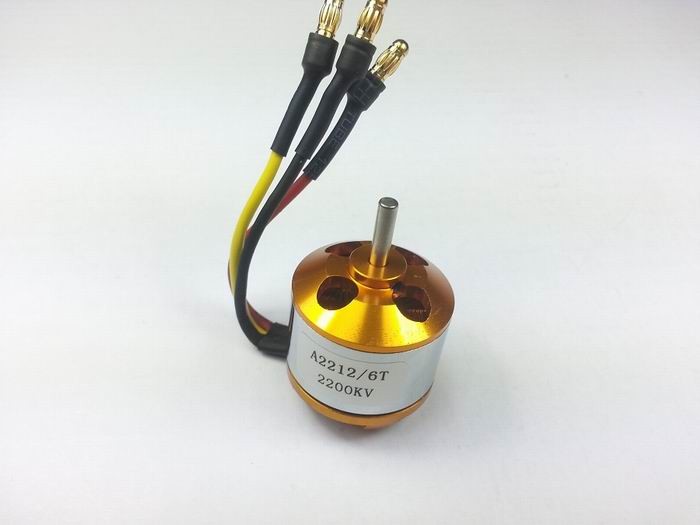
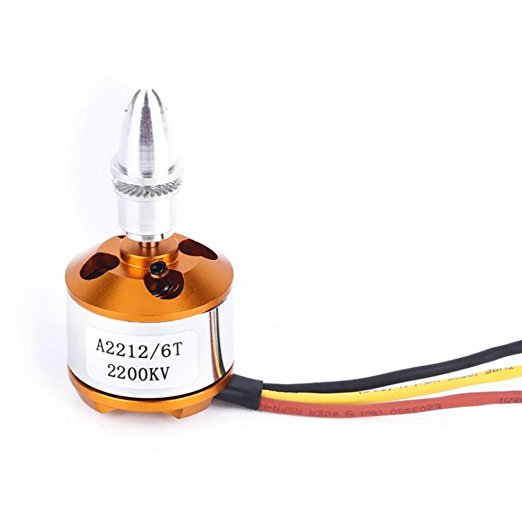
The A2212 6T 2200KV Brushless DC Outrunner Motor is designed for compact multirotor propulsion systems and compatible radio-controlled aircraft. Its 2200KV speed constant and 6T winding designation define the motor’s electrical configuration for compatible high-speed propulsion applications. The motor supports 2S–3S LiPo battery configurations and has a listed current-handling capacity of 12A, a maximum-efficiency current range of 4–10A, a no-load current of 500mA and a maximum efficiency of 80%.
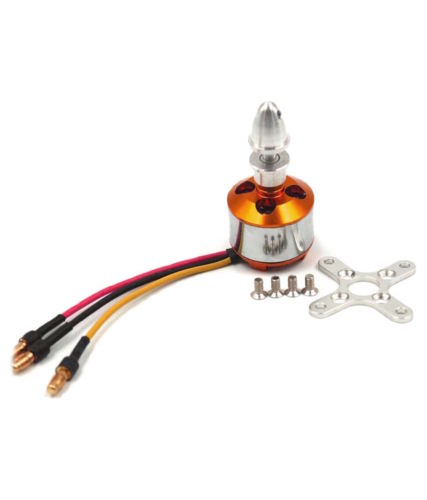
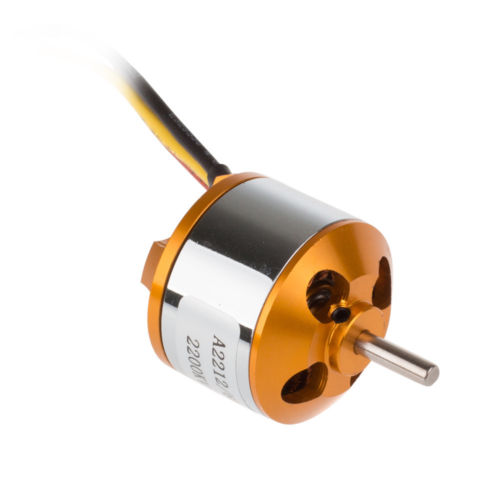
The motor features a 3.17mm output shaft and a compact body measuring 27 × 26mm, with a listed weight of 60g. Its metal construction provides mechanical support, while the supplied propeller adapter and X-type motor holder support installation in compatible aircraft frames. Motor rotation can be configured clockwise or counter-clockwise through appropriate three-phase motor connections and ESC settings.
The package includes one A2212 6T 2200KV brushless motor, one propeller adapter, one X-type motor holder and a set of mounting screws. The battery, ESC and propeller are not included.
A2212 6T Brushless Motor Design & Construction
The A2212 motor uses a brushless outrunner architecture intended for compact electrically controlled propulsion systems. Its 6T winding designation and 2200KV rating identify the motor configuration, while its metal construction provides the external mechanical structure for installation in compatible multirotor assemblies.
- A2212 Motor Format: Compact brushless outrunner configuration for compatible aircraft propulsion systems.
- 6T Winding Designation: Identifies the supplied motor’s listed winding configuration.
- 2200KV Rating: Nominal speed constant of 2200 RPM per volt under no-load reference conditions.
- Brushless Operation: Electronic commutation through a compatible three-phase ESC.
- Metal Construction: Metal housing provides mechanical support for the motor assembly.
- Compact Architecture: Suitable for compatible multirotor frame installations where dimensions and mounting interfaces match.
Electrical Characteristics & Motor Efficiency
The motor is specified for 2S–3S LiPo battery configurations. Its 12A current-handling capacity and 4–10A maximum-efficiency current range are relevant when selecting the ESC and propeller combination. The no-load current is listed as 500mA, while maximum efficiency is specified as 80%. Actual current consumption, speed and efficiency depend on battery voltage, propeller loading, ESC operation and motor temperature.
- Motor Speed Constant: 2200KV.
- Current-Handling Capacity: 12A, as listed.
- Maximum-Efficiency Current: 4–10A.
- No-Load Current: 500mA.
- Maximum Efficiency: 80%.
- Battery Chemistry: LiPo.
- Battery Configuration: 2S–3S.
- Propulsion Matching: Select the propeller and ESC according to measured current under the intended operating load.
Shaft Interface & Mounting Accessories
The A2212 motor features a 3.17mm output shaft for compatible propeller adapters and mounting accessories. The supplied package includes one propeller adapter, an X-type motor holder and a set of screws. Before installation, verify that the adapter matches the shaft and propeller hub, and that the motor holder aligns with the aircraft frame’s mounting arrangement.
- Output Shaft Diameter: 3.17mm.
- Propeller Adapter: One adapter included.
- Motor Holder: X-type cross holder.
- Mounting Hardware: One screw set included.
- Motor Length: 27mm.
- Motor Width: 26mm.
- Mechanical Compatibility: Depends on shaft-adapter fit, mounting-hole spacing and frame clearance.
Rotation Direction & ESC Control
The motor can be configured for clockwise or counter-clockwise rotation through the three-phase connections between the motor and ESC. On a conventional brushless ESC, reversing the motor’s rotation is achieved by swapping any two of the three motor phase connections or by using a supported ESC configuration. Battery input polarity must not be reversed to change motor direction.
- Rotation Capability: CW or CCW through appropriate ESC-controlled phase configuration.
- Phase Connections: Any two of the three motor phase connections can be swapped to reverse rotation on a conventional ESC.
- ESC Requirement: Compatible brushless ESC required for electronic commutation and throttle control.
- Propeller Matching: Use a propeller designed for the configured motor rotation direction.
Applications
The A2212 6T 2200KV motor is suitable for compatible brushless propulsion assemblies where its voltage range, current characteristics, shaft interface and mechanical mounting arrangement meet the aircraft’s requirements.
- Quadcopter Propulsion: Motor integration in compatible four-motor aircraft platforms.
- Hexacopter Propulsion: Use in compatible six-motor configurations after evaluating total propulsion-system power requirements.
- Multirotor Aircraft: Brushless propulsion for compatible multi-motor aerial platforms.
- RC Airplanes: Motor integration in compatible fixed-wing radio-controlled aircraft.
- UAV Development: Propulsion integration for compatible unmanned aerial vehicle designs.
- 2S LiPo Propulsion Systems: Use in aircraft designed around compatible two-cell LiPo power.
- 3S LiPo Propulsion Systems: Use in aircraft designed around compatible three-cell LiPo power.
- Compact Quadcopter Frames: Integration where motor dimensions, mounting and propulsion requirements match.
- Hexacopter Frame Assemblies: Motor installation in compatible multi-motor frame designs.
- Flight-Control System Integration: Use with compatible flight controllers and brushless ESCs.
- UAV Propulsion Prototyping: Evaluation of motor, ESC, battery and propeller combinations.
- Motor Performance Testing: Controlled measurement of current draw, speed, thrust and operating temperature.
- Brushless Motor Replacement: Replacement of compatible A2212-format motors after verifying winding variant, shaft and mounting interfaces.
- Aerial Photography Platforms: Propulsion integration in suitable camera-carrying multirotors, subject to aircraft load requirements.
- Engineering Test Platforms: Evaluation of brushless motor control and multirotor propulsion assemblies.
Package Includes
- 1 × A2212 6T 2200KV Brushless DC Outrunner Motor
- 1 × Propeller Adapter
- 1 × X-Type Motor Holder
- 1 Set Motor Holder Mounting Screws
Product Specifications
| Parameter | Specification |
|---|---|
| Product Type | Brushless DC Outrunner Motor |
| Motor Model | A2212 6T |
| Winding Designation | 6T |
| KV Rating | 2200KV |
| Nominal Speed Constant | 2200 RPM/V (no-load reference) |
| Current-Handling Capacity | 12A |
| Maximum-Efficiency Current | 4–10A |
| No-Load Current | 500mA |
| Maximum Efficiency | 80% |
| Battery Chemistry | LiPo |
| Compatible Battery Configuration | 2S–3S |
| Shaft Diameter | 3.17mm |
| Motor Housing | Metal construction |
| Rotation Configuration | CW or CCW through appropriate ESC-controlled phase configuration |
| Length | 27mm |
| Width | 26mm |
| Motor Weight | 60g |
| Propeller Adapter | 1 included |
| Motor Holder | X-type cross holder |
| Mounting Hardware | One screw set included |
Connection & Operating Recommendations
- Verify Battery Voltage: Operate within the specified 2S–3S LiPo range and confirm that the ESC supports the selected battery configuration.
- Select a Suitable ESC: Choose an ESC with adequate continuous and peak current ratings for the measured motor load.
- Check Propeller Loading: Verify current draw with the selected propeller before flight operation.
- Confirm Shaft Compatibility: Check that the propeller adapter matches the 3.17mm shaft and the selected propeller hub.
- Secure Motor Mounting: Verify that the X-type holder aligns with the frame and that the screws have suitable engagement.
- Configure Rotation: Set the required CW or CCW direction through motor phase connections or supported ESC settings.
- Match Propeller Direction: Ensure the propeller orientation corresponds to the configured motor rotation.
- Monitor Current and Temperature: Check electrical load and motor temperature during controlled initial testing.
- Inspect Mechanical Vibration: Check propeller balance, shaft condition and mounting security if abnormal vibration occurs.
- Perform Controlled Testing: Verify motor direction and throttle response without a propeller before conducting controlled propeller-load testing.