
SPIDER Automation | Q250 250mm Carbon Fibre Quadcopter Frame | FPV Racing & Aerial Camera Platform
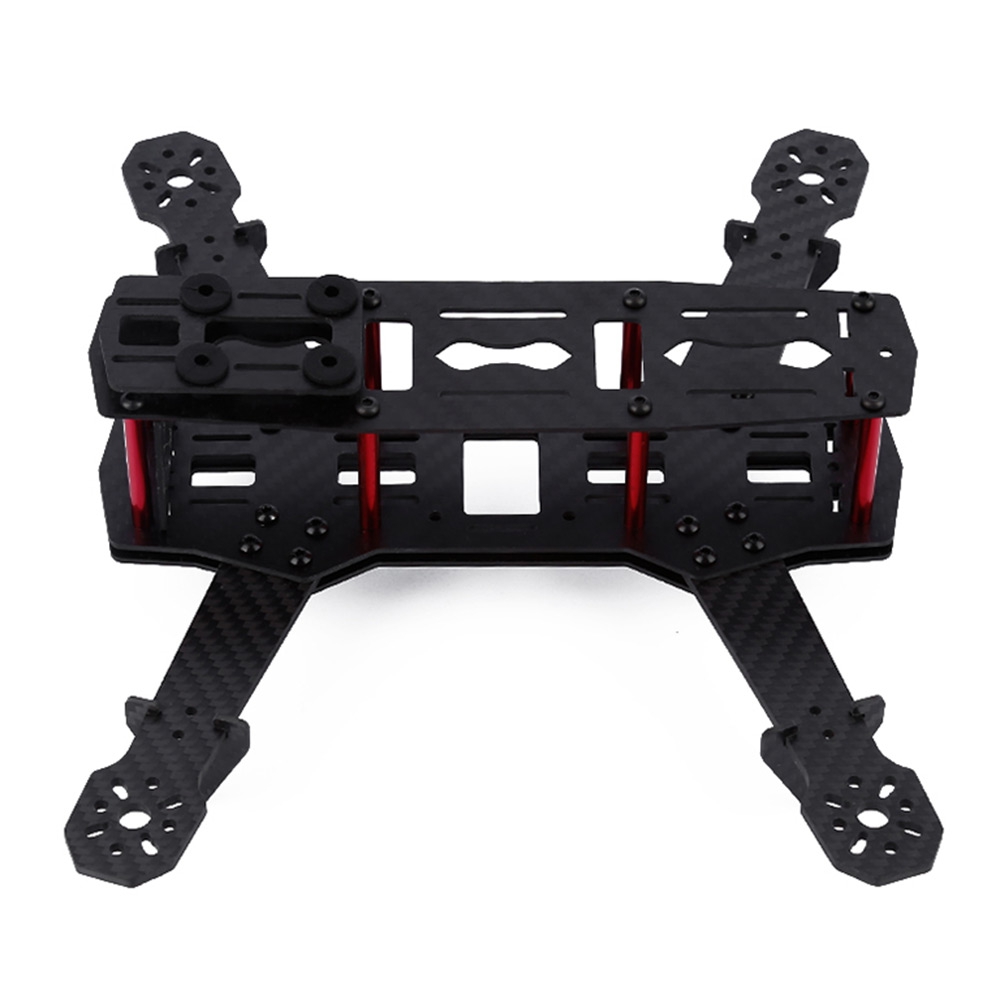
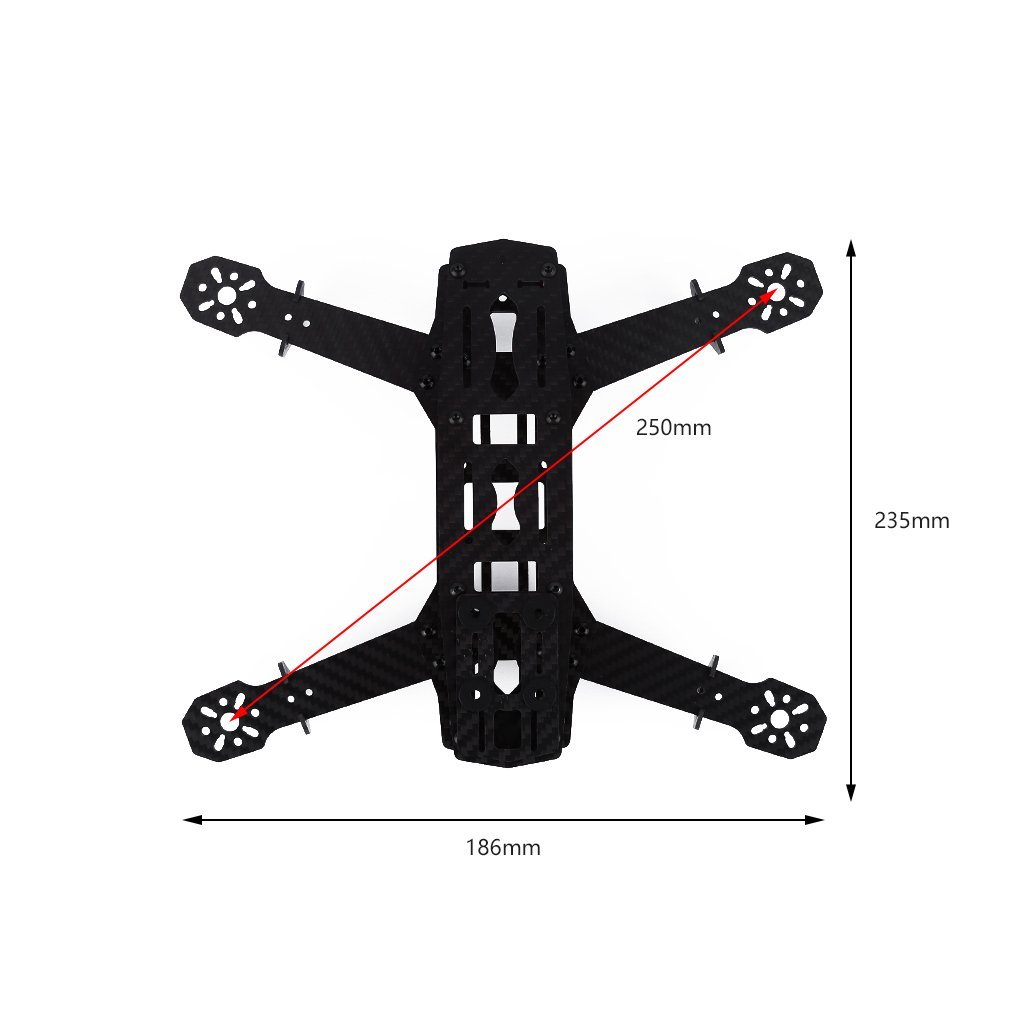
The Q250 250mm Carbon Fibre Quadcopter Frame is a compact multirotor airframe developed for FPV racing configurations and quadcopter builds intended for aerial video recording. Its carbon fibre construction, 4mm thick arms and extended frame plates provide a structural platform for mounting motors, battery packs, flight-control electronics and camera equipment. The frame has an approximate wheelbase of 250mm and an approximate weight of 160g, making it suitable for builds where airframe mass and component layout are important design considerations.
The Q250 incorporates multiple motor mounting holes, arm-end rubber shock-absorbing rings, anodized aluminium columns and a dedicated camera lens holder. Its extended top and bottom plates provide mounting area for onboard components, while the supplied assembly hardware supports mechanical construction. The frame is supplied as a structural kit and requires separately selected propulsion, power-distribution and flight-control components to complete a functional quadcopter.
Product Overview & Structural Design
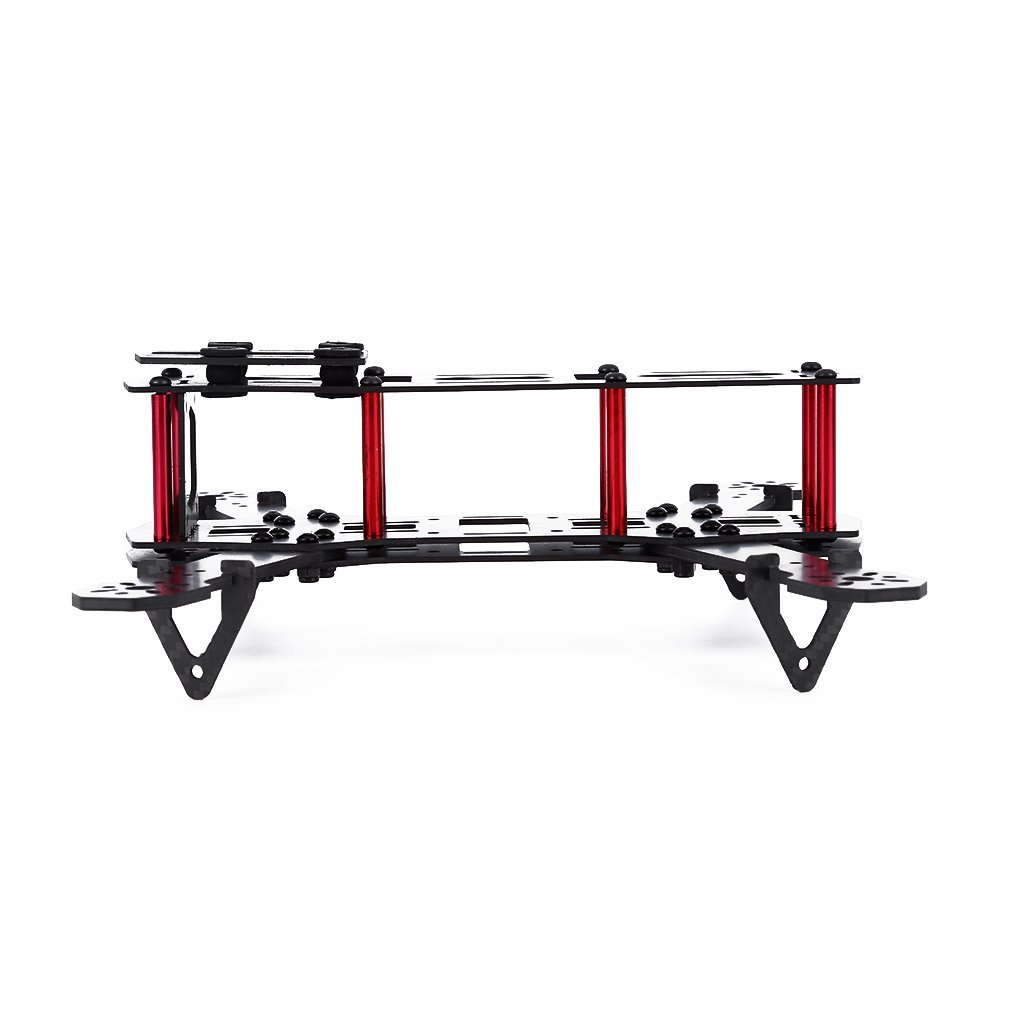
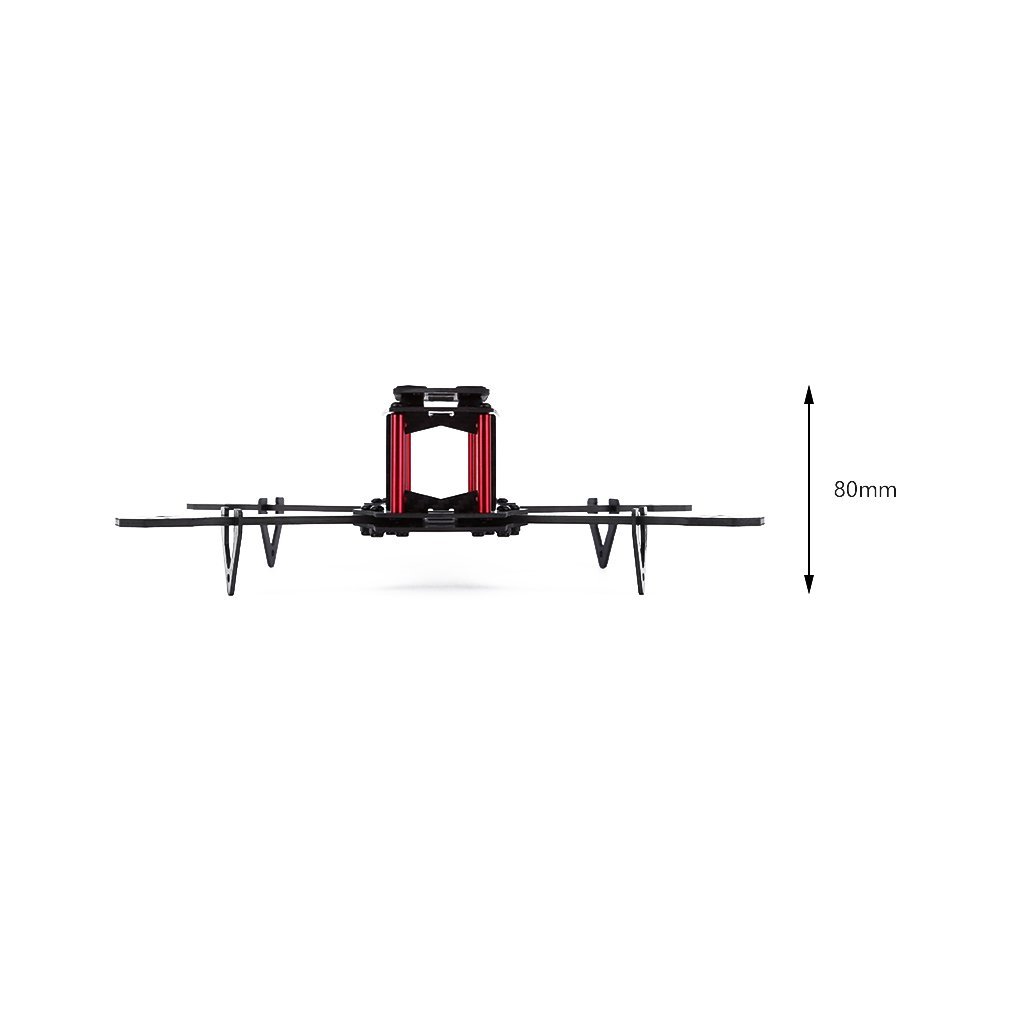
The Q250 uses a multi-plate frame arrangement consisting of top, bottom and centre plates, supported by four carbon fibre arms and an aluminium spacer assembly. This layout provides mounting locations for the propulsion system and onboard electronics while maintaining a compact 250mm wheelbase.
The 4mm thick carbon fibre arms form the primary motor-supporting sections of the frame. Carbon fibre is widely used in multirotor airframes because of its combination of structural stiffness and relatively low mass. The arm-end rubber rings add damping elements around the motor mounting areas, while the extended plates provide additional space for positioning the battery and camera equipment.
Technical Features & Functional Characteristics
- Carbon Fibre Airframe: Provides a rigid structural platform for compact multirotor assemblies while keeping the frame weight relatively low.
- Reinforced 4mm Arms: Thick carbon fibre arm sections provide the structural support required for mounting the four propulsion motors.
- Motor Mounting Flexibility: Multiple mounting holes allow different motor mounting arrangements where the selected motor’s hole pattern matches the frame.
- Arm-End Rubber Dampers: Four rubber shock-absorbing rings provide damping elements at the motor-end mounting areas.
- Extended Top and Bottom Plates: Provide usable mounting space for batteries, flight electronics and camera equipment.
- Aluminium Spacer Assembly: Eight anodized aluminium columns support the multi-plate frame arrangement.
- Camera Installation Provision: The included camera lens holder supports camera integration, with provision for 37mm board cameras and compatible camera units using mounting brackets.
- Assembly Hardware: A screw-and-nut set and carbon fibre spacer mountings are supplied for frame assembly.
Camera & Electronics Mounting
The Q250’s extended plate arrangement provides space for installing a camera system, flight controller, battery and other onboard electronics. The frame supports 37mm board cameras and cameras housed in compatible mounting brackets. A camera lens holder is included in the package to support camera installation.
The available mounting area can also be used to plan the placement of the flight controller, receiver, power distribution board and wiring. Actual component fitment depends on the dimensions, mounting-hole arrangement and connector clearance of the selected electronics. Check the mounting geometry and available space before finalising the component layout.
Motor Mounting & Propulsion Configuration
The four carbon fibre arms incorporate multiple motor mounting holes to accommodate different motor mounting patterns. The selected brushless DC motors must have a compatible mounting-hole arrangement and suitable physical clearance for the frame and propeller configuration.
The recommended build configuration includes 800–1000KV brushless DC motors, 5-inch or 6-inch propellers and 15A–25A ESCs. These are component-selection recommendations rather than included accessories or guaranteed compatibility specifications. Final motor, ESC and propeller selection should be based on the required thrust, battery voltage, propeller clearance and total aircraft mass.
Applications
The Q250 provides a compact structural platform for quadcopter projects involving FPV equipment, aerial cameras and custom multirotor electronics integration. Suitable applications include:
- FPV Racing Quadcopter Builds: Compact 250mm airframe platform for assembling FPV racing configurations.
- Aerial Video Recording: Frame platform for installing compatible onboard cameras and associated electronics.
- Camera-Equipped Multirotors: Extended mounting plates and camera-holder provision for compact camera-equipped builds.
- Custom Brushless Quadcopter Assemblies: Supports integration of four compatible brushless motors, ESCs and a flight controller.
- FPV Camera Integration: Suitable for installations using compatible 37mm board cameras and bracket-mounted camera units.
- Flight Controller Integration: Provides a mounting platform for a compatible flight controller and associated wiring.
- Multirotor Electronics Prototyping: Useful for assembling and evaluating compact power, control and video-system layouts.
- Custom Drone Development: Mechanical airframe foundation for developing quadcopter configurations with separately selected components.
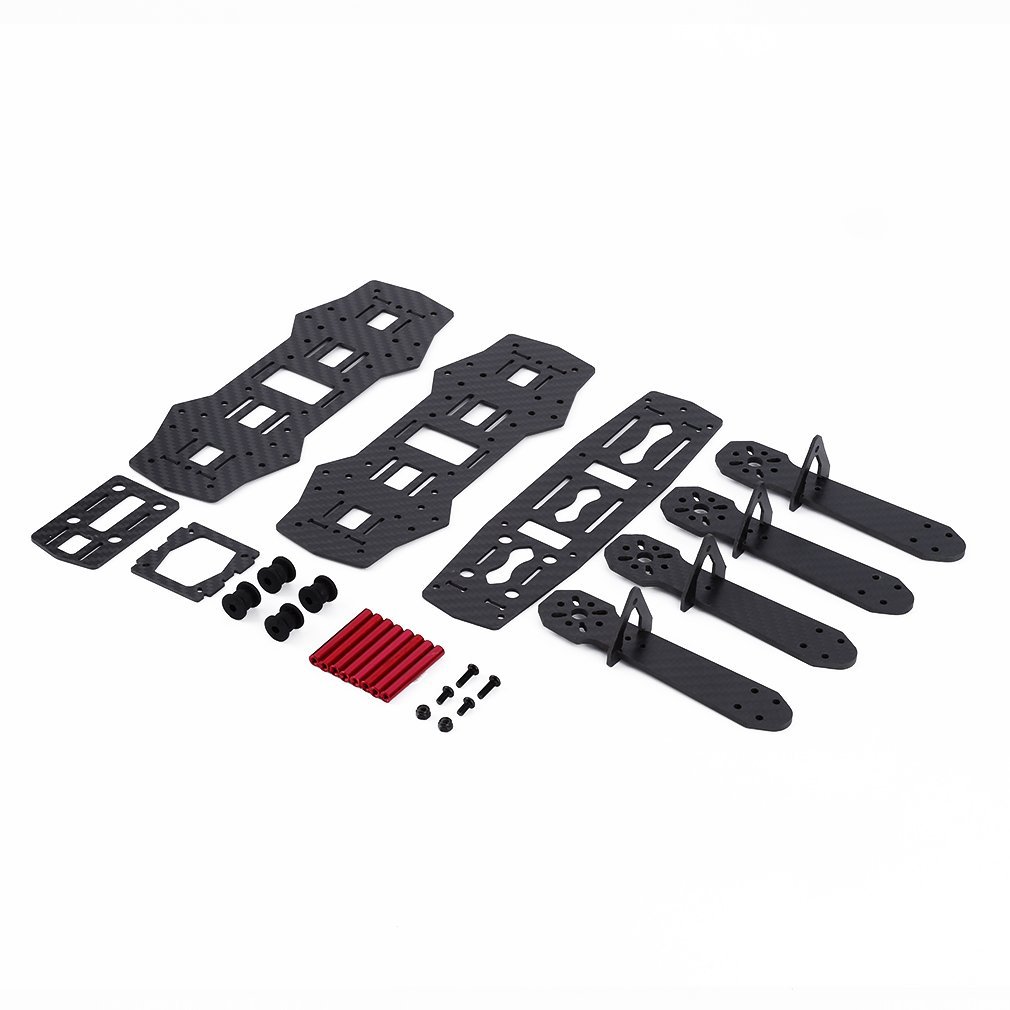
Package Includes
- 3 × Quadcopter frame plates (top, bottom and centre)
- 4 × Carbon fibre arms
- 8 × Aluminium columns
- 4 × Rubber shock-absorbing rings
- 1 × Camera lens holder
- 1 × Set of carbon fibre spacer mountings
- 1 × Set of screws and nuts
Note: The package contains the mechanical frame components and assembly hardware. Motors, ESCs, propellers, battery, flight controller, power distribution board, FPV camera electronics, transmitter and receiver are not included.
Product Specifications
| Parameter | Specification |
|---|---|
| Product Model | Q250 |
| Product Type | 250mm Quadcopter Frame Kit |
| Frame Material | Carbon fibre |
| Wheelbase | 250mm |
| Approximate Frame Weight | 160g |
| Arm Material | Carbon fibre |
| Arm Thickness | 4mm |
| Frame Plate Configuration | Top, bottom and centre plates |
| Motor Mounting | Multiple mounting holes on the arms |
| Arm-End Damping | Rubber shock-absorbing rings |
| Camera Compatibility | 37mm board cameras and compatible cameras with mounting brackets |
| Camera Mounting Component | Camera lens holder included |
| Spacer Material | Anodized aluminium |
| Number of Aluminium Columns | 8 |
| Recommended Propeller Size | 5-inch or 6-inch |
| Recommended Motor | 800–1000KV brushless DC motor |
| Recommended ESC Rating | 15A–25A |
| Recommended Battery | 3S LiPo, 1800–2200mAh |
| Recommended Power Distribution Board | Required for the intended build configuration; not included |
| Weight & Dimension Tolerance | ±2% |
Installation & Operating Recommendations
- Check Frame Assembly: Assemble the three frame plates, four arms and aluminium columns using the supplied hardware. Ensure that the frame components are correctly aligned before tightening the fasteners.
- Inspect Motor Mounting Patterns: Match each motor’s mounting-hole arrangement with the available holes on the corresponding arm before installation.
- Install Rubber Dampers: Position the supplied rubber shock-absorbing rings at the arm-end mounting areas as intended by the frame design.
- Plan Component Placement: Position the battery, flight controller, ESCs and camera with attention to available mounting space, wiring clearance and centre-of-gravity balance.
- Verify Camera Fitment: Confirm camera dimensions and bracket geometry before installation. The stated 37mm board-camera support does not establish compatibility with every camera enclosure or mounting pattern.
- Select Compatible Propulsion: Match motor KV, propeller diameter, ESC current rating and battery voltage as a complete propulsion system. Confirm propeller clearance before powering the motors.
- Use a Suitable Power Distribution Board: Select a PDB compatible with the battery voltage and total electrical load of the build. The frame itself does not provide power regulation or distribution circuitry.
- Check Fasteners Before Operation: Inspect arm, spacer, motor and plate fasteners for correct seating and secure assembly. Recheck the hardware after initial testing and maintenance.
- Inspect the Airframe Regularly: Examine carbon fibre arms, frame plates, mounting points and rubber rings for visible damage, cracks, deformation or loosening before operation.