
SPIDER Automation | 2WD Aluminium Smart Robot Car Chassis Kit | Dual-Motor Mobile Robotics Platform
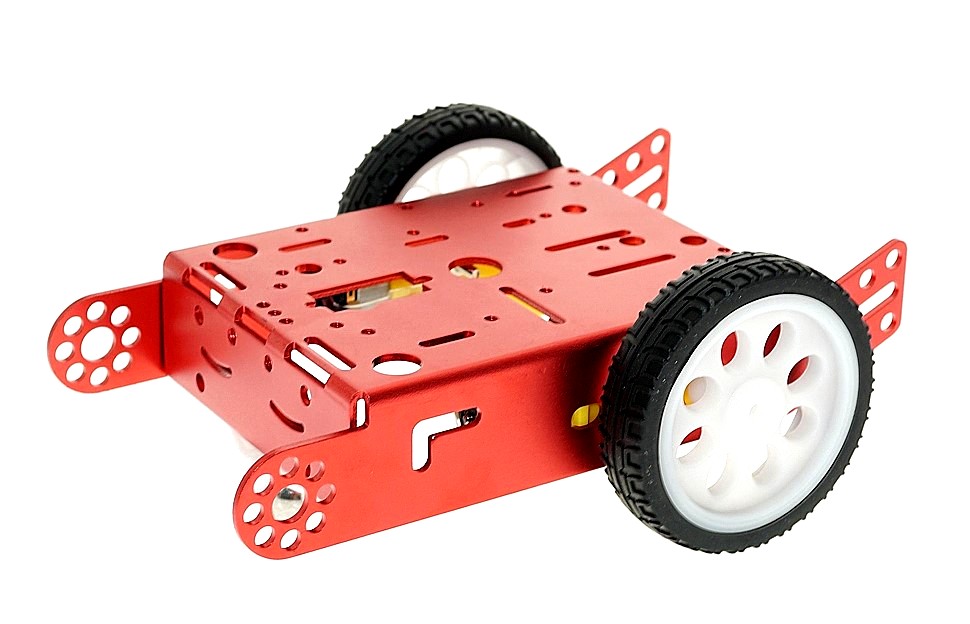
The SPIDER Automation 2WD Aluminium Smart Robot Car Chassis Kit is a compact mechanical platform for developing two-wheel-drive mobile robots and programmable robotic systems. It combines a 5051 aluminium alloy chassis, two independently driven DC geared motors, 60mm silicone-tyre wheels and a caster wheel in a single mobile-platform assembly. The differential-drive configuration provides the basic mechanical arrangement required for forward and reverse motion, turning and manoeuvring through independent control of the left and right drive motors.
The chassis measures 170 × 100 × 60mm and uses a 1.5mm aluminium alloy structure to provide a lightweight mounting framework for the drive assembly and additional electronics. Each supplied motor is specified for 100 RPM and 1.3 kg·cm torque, with a stated current rating of 800mA. The platform can be integrated with an Arduino-based controller or another suitable control system, allowing the mechanical assembly to be adapted for sensor-based navigation, motion-control development and other compact mobile robotics applications.
Product Overview & Mechanical Design
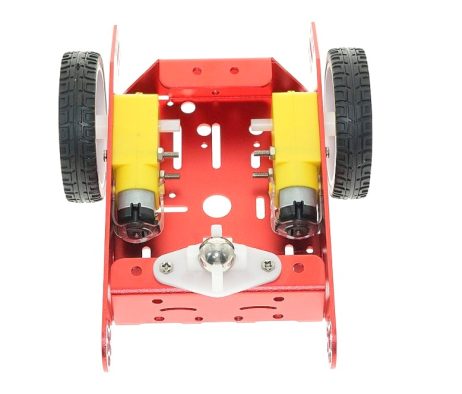
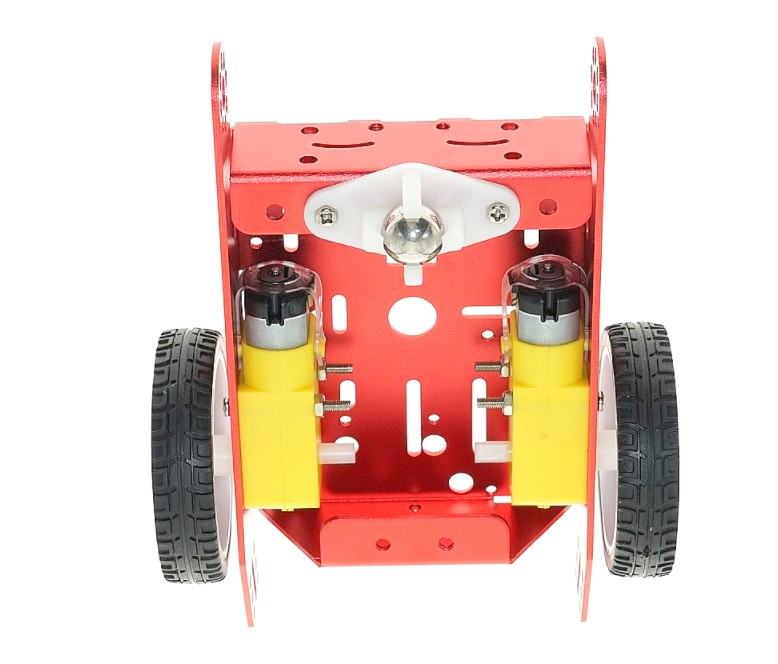
The platform uses a two-wheel differential-drive arrangement. Each DC geared motor drives one wheel independently, allowing the control system to vary the movement of each side for steering. The separate caster wheel provides passive support for the chassis, completing the mobile platform’s three-point wheel arrangement.
The 5051 aluminium alloy frame provides a compact structural base for the drive components and additional system hardware. Its 1.5mm frame thickness and 170 × 100mm footprint make it suitable for building small mobile robot assemblies where a metal chassis is preferred over a basic flat plastic platform. The stated overall platform dimensions are 170 × 100 × 60mm.
Drive System & Motor Characteristics
Two DC geared motors provide the powered movement of the robot platform. Each motor is specified at 100 RPM with a stated torque of 1.3 kg·cm and current of 800mA. The gearbox output shafts connect directly to the supplied press-fit wheels, forming a compact drive assembly without requiring a separate wheel hub arrangement.
- Independent Motor Operation: The left and right motors can be controlled separately through a suitable motor driver to implement differential steering.
- Forward and Reverse Movement: Reversing the drive direction of both motors enables forward and reverse travel, subject to the selected motor-control circuit.
- Differential Turning: Varying the relative speed or direction of the two motors allows the robot to turn and manoeuvre.
- Geared Output: The gearbox provides the motor-to-wheel drive interface required for moving the chassis.
Chassis, Wheels & Mechanical Assembly
The chassis is constructed from 1.5mm-thick 5051 aluminium alloy and forms the primary mechanical support for the mobile platform. The two powered wheels measure 60mm in diameter and incorporate silicone tyres. Their press-fit arrangement connects each wheel to its corresponding motor gearbox output shaft.
A separate caster wheel provides passive support for the non-driven side of the platform. The supplied fitting accessories are intended for mechanical assembly of the kit. Additional controller boards, sensors and electronic modules can be incorporated according to the required robot design and available mounting provisions.
Controller Integration & System Expansion
The platform can be used with an Arduino controller or another suitable control system. Since the two motors require independent direction and speed control, an appropriately rated dual-channel motor driver is required between the controller and the motors. The controller can then provide movement commands according to the programmed operating logic.
Additional sensors and electronic modules can be incorporated to extend the platform’s functionality. Depending on the controller, motor driver, power supply and sensor configuration, the chassis can be adapted for basic autonomous movement, line-navigation development or other mobile robotics functions.
Applications
The compact aluminium chassis and independent two-motor drive arrangement make this platform suitable as a mechanical foundation for a range of small-scale mobile robotics and control-system development tasks.
- Arduino-Based Mobile Robots: Development of two-wheel-drive robot platforms controlled by Arduino-compatible development boards.
- Differential-Drive Robotics: Implementation of independent left- and right-wheel movement for steering and manoeuvring.
- Sensor-Integrated Robot Platforms: Mechanical foundation for adding suitable sensors and associated electronic modules.
- Autonomous Navigation Prototypes: Development of compact mobile platforms using a separately selected controller, sensors and navigation logic.
- Line-Tracking Robot Development: Mechanical base for integrating a suitable line-detection sensor array and motor-control system.
- Obstacle-Detection Systems: Platform for incorporating ultrasonic or other suitable obstacle-detection sensors.
- Embedded Motion-Control Development: Testing of motor-control algorithms, direction switching and differential movement.
- Mobile Robotics Prototyping: Construction of compact wheeled robotic systems using a lightweight metal chassis.
- Robotics Training and Technical Demonstrations: Demonstration of geared motor operation, wheel drive, differential steering and controller integration.
- Custom Sensor-Based Machines: Base platform for application-specific mobile assemblies using additional electronics and mechanical fixtures.
Package Includes
- 1 × 5051 Aluminium Alloy Chassis – anodized finish described as orange in the kit contents.
- 2 × DC Geared Motors – stated 12V, 800mA, 1.3 kg·cm torque and 100 RPM.
- 2 × 60mm Wheels – white-and-black wheels with silicone tyres.
- 1 × Caster Wheel.
- 1 × Fitting Accessories Set.
Not Included: Arduino or other controller board, motor driver, battery cells, battery holder, sensors, wiring, programming accessories and other electronic modules are not included unless separately supplied.
Product Specifications
| Parameter | Specification |
|---|---|
| Product Type | 2WD Aluminium Smart Robot Car Chassis Kit |
| Platform Type | Mini robot mobile platform |
| Drive Configuration | 2WD (two-wheel drive) |
| Drive Mechanism | Two independently driven DC geared motors |
| Chassis Material | 5051 aluminium alloy |
| Frame Thickness | 1.5mm |
| Chassis Length | 170mm |
| Chassis Width | 100mm |
| Overall Platform Dimensions | 170 × 100 × 60mm |
| Drive Motor Quantity | 2 |
| Motor Type | DC geared motor |
| Motor Voltage Rating | 12V stated for the supplied motors; kit operating-voltage information requires verification |
| Motor Current Rating | 800mA stated per motor; operating condition not defined |
| Motor Speed | 100 RPM stated per motor |
| Motor Torque | 1.3 kg·cm stated per motor |
| Wheel Quantity | 2 powered wheels |
| Wheel Diameter | 60mm (2.36 inches) |
| Wheel Tyre Material | Silicone tyres |
| Wheel Mounting | Press-fit onto motor gearbox output shafts |
| Wheel Colour | White and black |
| Support Wheel | 1 caster wheel |
| Controller Compatibility | Arduino controller or another suitable control system, with an appropriately rated motor driver |
| Expansion | Additional sensors and electronic modules can be integrated |
| Product Weight | 107g (stated product weight) |
| Package Quantity | 1 chassis kit |
Installation & Operating Recommendations
- Verify Motor Supply Voltage: Confirm the actual motor voltage rating and the intended kit supply voltage before connecting a battery. The stated 12V motor rating and 4.5–6V kit operating specification are inconsistent and must be resolved before selecting the power supply.
- Use a Suitable Motor Driver: Connect the two motors through a dual-channel motor driver rated for the motors’ operating voltage and current. Do not connect the motors directly to microcontroller GPIO pins.
- Check Driver Current Capacity: Select a motor driver with sufficient current capacity for both motors, including their starting and stall-current requirements. The stated 800mA motor current alone is not enough to establish the required driver rating.
- Secure the Mechanical Assembly: Fit the motors, wheels and caster wheel securely using the supplied accessories. Check that both drive wheels rotate freely and that the caster is correctly positioned.
- Inspect Press-Fit Wheels: Ensure each wheel is seated correctly on its gearbox output shaft and does not rub against the chassis during rotation.
- Check Electrical Polarity: Verify motor wiring polarity and test each motor independently at a controlled supply setting before operating the complete platform.
- Balance the Platform: Position additional controllers, batteries and sensors so that the assembled robot remains mechanically stable and the caster wheel maintains contact with the operating surface.
- Test Movement Gradually: Begin with low-speed movement tests in a clear area. Verify forward, reverse and turning responses before adding autonomous control functions.
- Confirm Added Hardware Fitment: Check the mounting dimensions and clearance of additional controllers, sensors and accessories before installation.