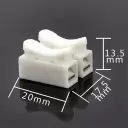

SPIDER Automation CH-2 Way Quick Push-Type Wire Connector Terminal Block | 250V, 10A Electrical Connector | Pack of 5
Description
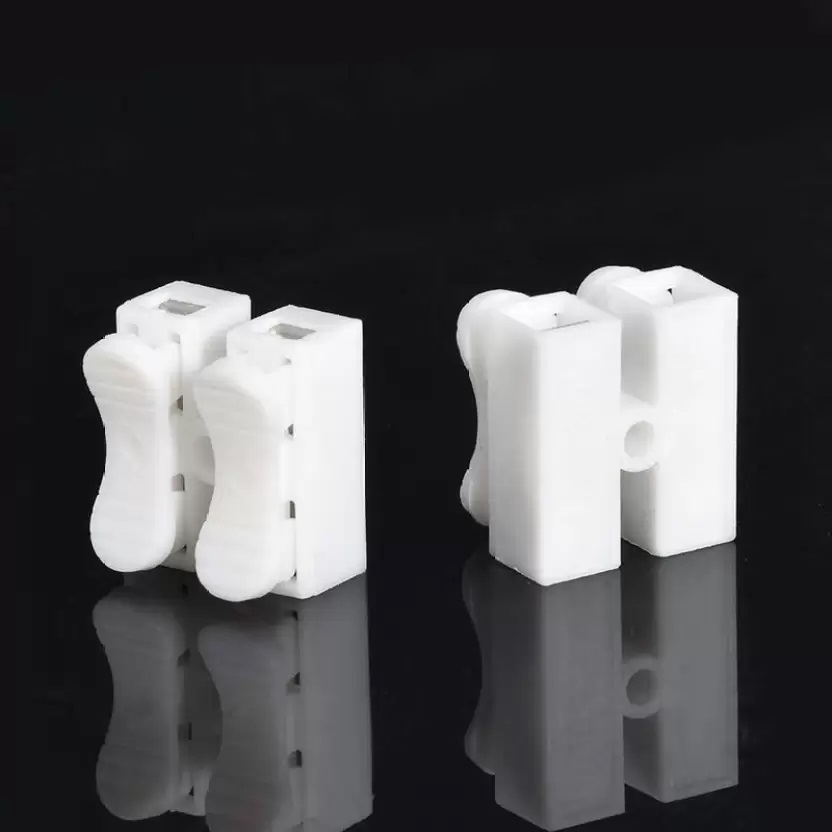
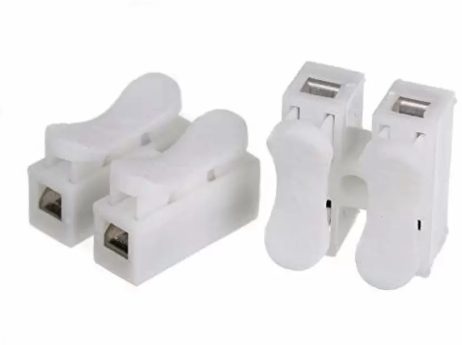
The SPIDER Automation CH-2 Way Quick Push-Type Lock Wire Connector Terminal Block is a compact electrical connection component designed to join two compatible conductors in equipment wiring, lighting systems, power supply assemblies and electrical control applications. Its push-type locking arrangement provides a simple method of making wire connections without using conventional screw-operated terminal clamps.
The connector consists of a polypropylene (PP) insulating housing with an internal conductive steel spring contact. The spring mechanism retains the inserted conductor, while the insulating body encloses the connection assembly. Its compact form supports organised wiring in electrical equipment and installations where space-efficient conductor connections are required.
The CH-2 Way connector has a stated rated voltage of 250V and rated current of 10A. The specified conductor range is AWG 20–12. Each pack contains five white connectors for use across multiple compatible wiring points.
Key Features
- Two-Wire Connection Design: Provides two conductor connection positions for joining compatible electrical wires.
- Push-In Locking Mechanism: Allows conductors to be inserted into the connector’s spring-operated connection positions.
- Conductive Steel Spring Contact: Uses a steel spring contact to retain the inserted conductor and establish electrical contact.
- Polypropylene Insulating Housing: Features a PP body that encloses the conductive contact assembly.
- 250V Rated Voltage: Provides a stated voltage rating for compatible electrical installations.
- 10A Rated Current: Offers a stated current rating, subject to conductor compatibility and installation conditions.
- AWG 20–12 Wire Range: Supports the stated American Wire Gauge range, subject to conductor construction and connector specifications.
- Compact Connector Body: Helps reduce the space required for individual wire connections.
- Screwless Connection Format: Uses a push-type spring connection rather than a conventional screw-tightened terminal arrangement.
- White Insulating Body: Provides a neutral housing colour for electrical wiring assemblies.
- Multi-Unit Supply: Supplied as a pack of five connectors for multiple connection points.
Construction & Connection Mechanism
The CH-2 Way connector uses a push-type spring connection mechanism. A compatible prepared conductor is inserted into the appropriate connection position, where the internal spring contact retains it and establishes electrical contact. The two connection positions are intended for joining compatible conductors.
The external housing is made from polypropylene (PP), while the internal pressing contact is identified as conductive steel spring material. The housing encloses the conductive components and provides the connector’s insulating structure.
- Connector Type: Two-way push-type wire connector.
- Connection Method: Push-in spring locking.
- Housing Material: Polypropylene (PP).
- Contact Construction: Conductive steel spring.
- Housing Colour: White.
Applications
- Motor Wiring: Joining compatible conductors in suitable motor connection assemblies.
- Electrical Control Systems: Organising wire connections in compatible electrical control equipment.
- Power Supply Assemblies: Connecting suitable conductors in power supply wiring arrangements.
- Home Appliances: Supporting internal wire connections in compatible electrical appliances.
- Lighting Systems: Joining compatible wires in lighting equipment and electrical fixtures.
- Industrial Machinery: Supporting conductor connections in suitable machinery wiring assemblies.
- Electrical Equipment Assembly: Providing compact wire joining points during equipment wiring and assembly.
- Control Panel Wiring: Organising compatible connections in electrical control enclosures.
- Junction Box Connections: Joining conductors within suitable electrical junction arrangements.
- Electrical Maintenance: Replacing or recreating compatible wire connections during equipment servicing.
- Lighting Control Connections: Connecting suitable conductors in compatible lighting control assemblies.
- Compact Wiring Assemblies: Supporting space-efficient conductor joining in equipment with limited wiring space.
- General Electrical Connections: Joining compatible wires in applications that remain within the connector’s electrical and conductor ratings.
Package Includes
- 5 × CH-2 Way Quick Push-Type Lock Wire Connector Terminals
Product Specifications
| Parameter | Specification |
|---|---|
| Product Type | Quick Push-Type Wire Connector Terminal |
| Model | CH-2 Way |
| Number of Connection Ways | 2 |
| Connection Mechanism | Push-in spring locking |
| Rated Voltage | 250V |
| Rated Current | 10A |
| Allowed Wire Size | AWG 20–12 |
| Housing Material | Polypropylene (PP) |
| Contact Material | Conductive steel spring |
| Colour | White |
| Package Quantity | 5 pieces |
Connection & Operating Recommendations
- Isolate the Electrical Supply: Disconnect power and verify that the circuit is de-energised before making or modifying connections.
- Check Conductor Compatibility: Use conductors within the stated AWG 20–12 range and confirm that their construction is suitable for this push-type connector.
- Prepare the Wire Ends: Remove insulation carefully and avoid cutting or damaging conductor strands. Confirm the correct stripping length before insertion.
- Insert the Conductor Fully: Push the prepared wire into its connection position until it is properly retained by the internal spring contact.
- Check Conductor Retention: Gently check that each inserted conductor is held securely before completing the wiring assembly.
- Observe Electrical Ratings: Keep the application within the stated 250V and 10A ratings and applicable installation requirements.
- Verify Circuit Connections: Confirm the intended electrical connection and polarity, where relevant, before energising the circuit.
- Inspect Insulation: Ensure that no unintended exposed conductor remains outside the connection area.
- Use a Suitable Enclosure: Install the connector in an enclosure appropriate for the electrical environment and applicable wiring requirements.
- Test Before Energising: Perform suitable continuity and electrical checks after completing the connections and before restoring power.