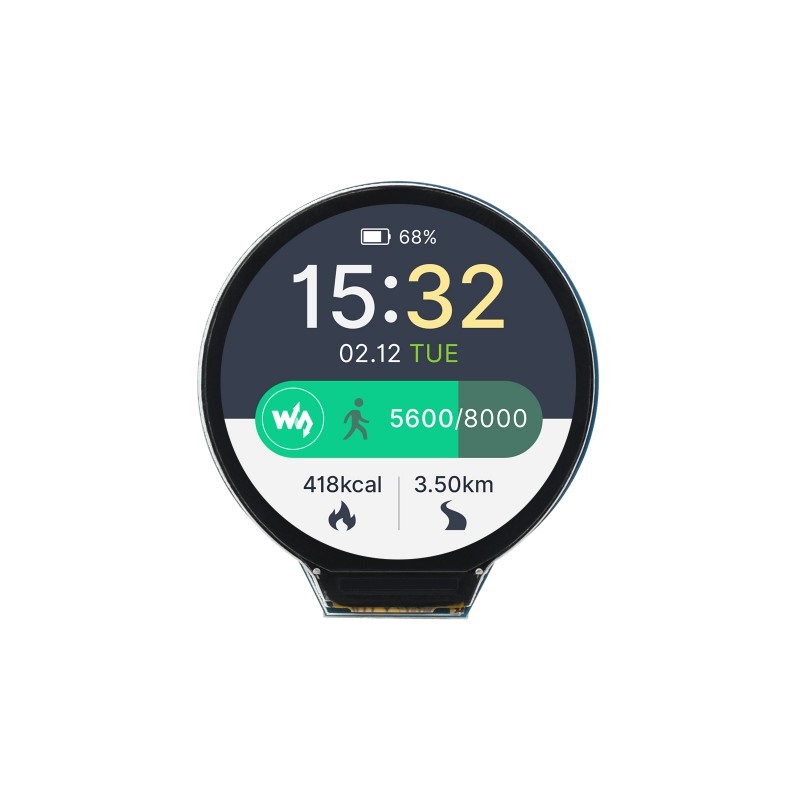
SPIDER Automation RP2350 MCU Development Board | 1.28-Inch Round IPS LCD | 30 GPIO | USB Type-C
Description
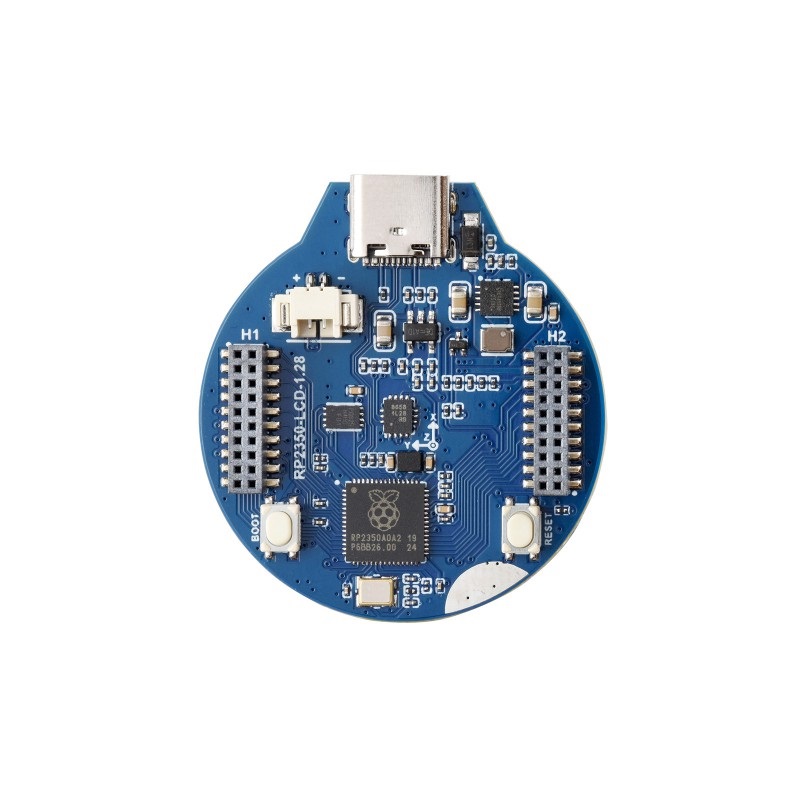
SPIDER Automation RP2350 MCU Development Board is a compact embedded computing and control platform based on the RP2350 microcontroller, combining dual-core Arm Cortex-M33 and dual-core Hazard3 RISC-V processor architectures. With clock operation up to 150 MHz, 520KB SRAM, and 4MB onboard Flash memory, the board provides a flexible processing platform for embedded control, instrumentation, industrial interface development, portable electronics, robotics, and engineering applications.
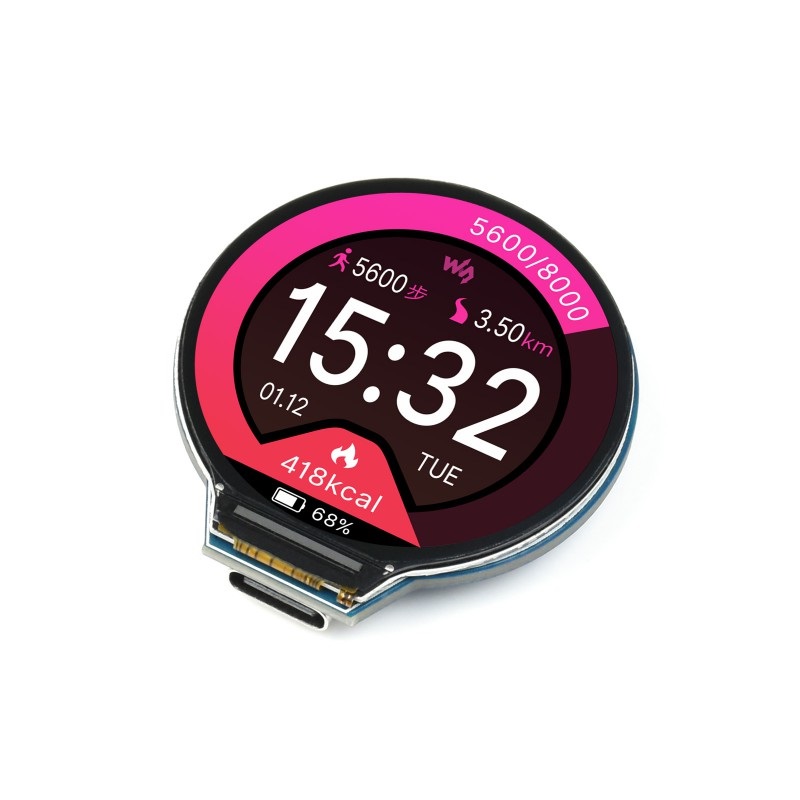
The board integrates a 1.28-inch round non-touch IPS LCD with 240 × 240 pixel resolution and 65K-color support, providing a compact graphical interface for displaying operating status, measurements, parameters, control information, and other application data. The USB Type-C interface supports USB 1.1 device and host functionality, while drag-and-drop programming through USB mass storage simplifies firmware deployment during development and maintenance.
For external system integration, the board provides 30 multi-function GPIO connections through 1.27mm-pitch female headers. Its peripheral resources include 2 × SPI, 2 × I2C, 2 × UART, 4 × 12-bit ADC, 24 controllable PWM channels, and 12 programmable I/O state machines. A lithium battery recharge/discharge header and low-power sleep and dormant modes further support portable and power-conscious embedded system designs.
Key Features
- RP2350 Microcontroller: Based on the RP2350 MCU platform designed by Raspberry Pi.
- Dual-Core Arm Architecture: Integrates dual-core Arm Cortex-M33 processing capability.
- Dual-Core RISC-V Architecture: Includes dual-core Hazard3 RISC-V processing architecture for flexible embedded development.
- 150 MHz Maximum Clock: Supports flexible processor clock operation up to 150 MHz.
- Integrated Round IPS LCD: Features a 1.28-inch non-touch IPS display with 240 × 240 pixel resolution and 65K colors.
- Onboard Memory: Provides 520KB SRAM and 4MB onboard Flash memory.
- 30 GPIO Connections: Provides 30 multi-function GPIO pins through 1.27mm-pitch female headers.
- Serial Communication Interfaces: Provides 2 × SPI, 2 × I2C, and 2 × UART interfaces.
- Analog & PWM Resources: Includes 4 × 12-bit ADC channels and 24 controllable PWM channels.
- Programmable I/O: Provides 12 PIO state machines for implementing custom peripheral functions.
- USB 1.1 Host & Device: Supports both USB host and device operation through a USB Type-C connector.
- Low-Power Operation: Supports sleep and dormant operating modes for power-conscious system designs.
- Battery Interface: Includes a lithium battery recharge/discharge header for portable embedded applications.
- Onboard Temperature Sensor: Provides integrated temperature sensing capability for embedded monitoring functions.
- USB Mass-Storage Programming: Supports drag-and-drop firmware programming through USB mass storage.
Benefits
- Flexible Processing Architecture: The dual-architecture RP2350 platform provides multiple processor architecture options for embedded application development.
- Integrated User Interface: The round IPS LCD enables compact graphical display functionality without requiring a separate display module.
- Extensive Hardware Integration: Multiple communication, analog, PWM, GPIO, and programmable I/O resources reduce the need for additional interface hardware.
- Portable System Ready: Lithium battery support and low-power operating modes make the platform suitable for battery-powered embedded equipment.
- Efficient Development Workflow: USB Type-C connectivity and drag-and-drop programming simplify firmware loading during engineering development and testing.
- Compact Embedded Platform: Combines processing, memory, display, connectivity, and expansion interfaces in a single development board.
Applications
- Industrial Embedded Systems: Suitable for developing compact embedded controllers, monitoring equipment, and control interfaces.
- Instrumentation & Measurement: Can be integrated into measurement and instrumentation systems requiring analog inputs and local graphical display.
- Industrial HMI Prototyping: The integrated round LCD can be used for compact status displays, parameter visualization, and operator-interface development.
- Robotics & Motion Control: GPIO, PWM, serial interfaces, and programmable I/O provide resources for integrating control peripherals and robotic subsystems.
- Portable Electronics: Battery interface and low-power operating modes support development of portable embedded equipment.
- IoT & Embedded Control: Multiple communication interfaces and GPIO resources support sensor, actuator, and peripheral integration.
- Engineering R&D: Suitable for embedded firmware development, hardware evaluation, interface testing, and proof-of-concept engineering platforms.
Package Includes
- 1 × RP2350 MCU Development Board with 1.28-inch Round Non-Touch LCD
Technical Specifications
| Parameter | Specification |
|---|---|
| Product Type | RP2350 MCU Development Board |
| MCU | RP2350 |
| Processor Architecture | Dual-core Arm Cortex-M33 and dual-core Hazard3 RISC-V |
| Maximum Clock Frequency | Up to 150 MHz |
| SRAM | 520KB |
| Onboard Flash | 4MB |
| Display Type | 1.28-inch round non-touch IPS LCD |
| Display Resolution | 240 × 240 pixels |
| Display Color Depth | 65K colors |
| GPIO | 30 multi-function GPIO pins |
| GPIO Header Pitch | 1.27mm female headers |
| SPI | 2 × SPI |
| I2C | 2 × I2C |
| UART | 2 × UART |
| ADC | 4 × 12-bit ADC |
| PWM | 24 controllable PWM channels |
| Programmable I/O | 12 × PIO state machines |
| USB | USB 1.1, host and device support |
| USB Connector | USB Type-C |
| Battery Support | Lithium battery recharge/discharge header |
| Low-Power Modes | Sleep and dormant modes |
| Temperature Sensing | Onboard temperature sensor |
| Programming Method | USB mass-storage drag-and-drop programming |