
SPIDER Automation | BeagleBoard Beagle Connect Freedom – CC1352P7 Wireless IoT Development Platform | Dual-Band Connectivity & mikroBUS Expansion
Product Overview & Wireless Development Platform
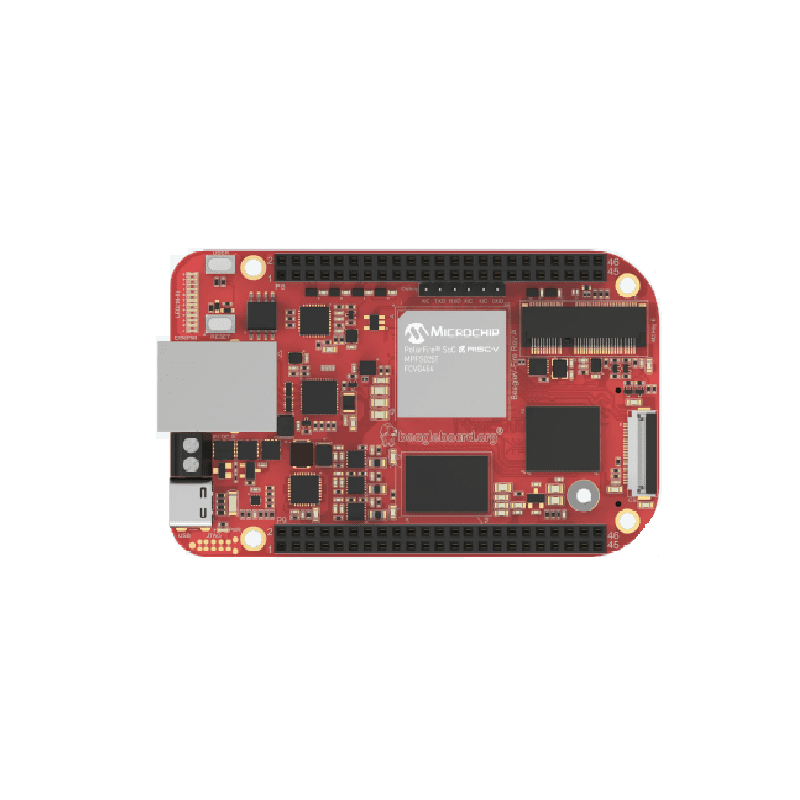
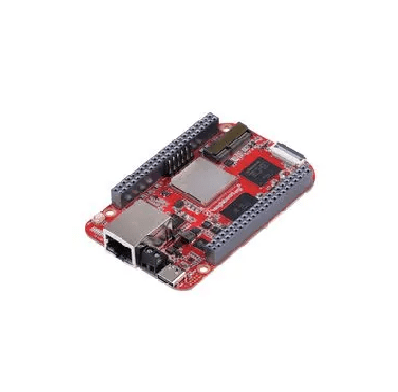
The BeagleBoard Beagle Connect Freedom (P/N 102110577) is an open-hardware wireless development platform designed to accelerate the development and prototyping of Internet of Things (IoT) applications. Developed by BeagleBoard.org, it is built around the Texas Instruments CC1352P7 microcontroller and supports both 2.4GHz and Sub-1GHz wireless protocols.
The processing platform features a 48MHz, 32-bit ARM Cortex-M4F processor, providing the foundation for embedded application development. Its wireless capabilities make it suitable for developing and evaluating connected devices, wireless sensor systems and low-power IoT applications.
Two onboard mikroBUS connectors provide expansion flexibility and compatibility with more than 1,000 mikroBUS add-on boards. Developers can extend the platform using compatible sensors, actuators, indicators, connectivity modules and storage options according to their application requirements.
The board also integrates temperature, humidity and light sensors, along with an MSP430F5503 controller for USB-to-UART functionality. Additional onboard hardware includes SPI flash, a battery charger, buzzer, LEDs and JTAG connections. Software support for the Zephyr scalable and modular real-time operating system and MicroPython provides flexible development options for embedded IoT applications.
Technical Features & Performance Characteristics
- TI CC1352P7 Wireless MCU: Built around the Texas Instruments CC1352P7 microcontroller for wireless embedded application development.
- 48MHz ARM Cortex-M4F Core: Features a 32-bit ARM Cortex-M4F processor operating at 48MHz.
- 2.4GHz Wireless Support: Supports wireless protocols operating in the 2.4GHz frequency band.
- Sub-1GHz Wireless Support: Provides support for Sub-1GHz wireless protocols designed for low-power and long-range wireless applications.
- Dual mikroBUS Expansion: Two mikroBUS connectors allow the integration of compatible peripheral and add-on boards.
- Extensive Add-On Compatibility: Supports an ecosystem of more than 1,000 mikroBUS add-ons, including sensors, actuators, indicators, connectivity and storage modules.
- Environmental Monitoring Sensors: Integrated temperature, humidity and light sensors support environmental data collection and monitoring.
- USB-to-UART Functionality: The onboard MSP430F5503 controller provides USB-to-UART functionality for development and communication.
- Onboard SPI Flash: Includes SPI flash storage as part of the integrated hardware platform.
- Battery Charging Circuit: Features an integrated battery charger for supported battery-powered configurations.
- Integrated User Peripherals: Includes a buzzer and LEDs for indication and application-level interaction.
- JTAG Connections: Provides JTAG connections for supported debugging and development workflows.
- USB Type-C Power: Uses a USB Type-C connection for board power.
- Zephyr RTOS Support: Supports the Zephyr modular real-time operating system for embedded application development.
- MicroPython Support: Provides MicroPython software support for supported development workflows.
Performance Advantages
- Flexible Wireless Development: Support for 2.4GHz and Sub-1GHz wireless protocols provides a platform for developing different wireless IoT applications.
- Expandable Hardware Architecture: Dual mikroBUS connectors simplify the integration of compatible sensors, actuators and additional communication modules.
- Integrated Sensor Functionality: Built-in temperature, humidity and light sensors allow environmental monitoring without requiring separate sensor boards for these functions.
- Development Interface Integration: USB-to-UART functionality and JTAG connections provide useful interfaces for development, communication and debugging.
- Multiple Software Development Options: Zephyr RTOS and MicroPython support offer flexibility when developing embedded applications.
- Integrated Peripheral Resources: Onboard SPI flash, battery charging circuitry, buzzer and LEDs provide additional hardware resources for prototyping.
Industrial, Commercial & Educational Applications
- Wireless IoT Development: Development and testing of connected embedded devices using supported wireless protocols.
- Environmental Monitoring Systems: Prototyping applications involving temperature, humidity and light-level monitoring.
- Low-Power Wireless Devices: Development of applications using supported Sub-1GHz wireless protocols.
- Wireless Sensor Networks: Prototyping sensor nodes and wireless monitoring architectures.
- Embedded Systems Engineering: Development, testing and evaluation of ARM Cortex-M4F-based embedded applications.
- Peripheral and Interface Prototyping: Expansion of embedded systems using compatible mikroBUS sensors, actuators and connectivity modules.
- RTOS-Based Application Development: Software development and evaluation using the Zephyr real-time operating system.
- MicroPython Development: Prototyping supported embedded applications using MicroPython.
Package Contents
- 1 × BeagleBoard Beagle Connect Freedom Development Board (P/N 102110577)
Product Specifications
| Parameter | Specification |
|---|---|
| Product Type | Wireless IoT Development Board |
| Brand / Platform | BeagleBoard / BeagleBoard.org |
| Model Series / P/N | 102110577 |
| Main Microcontroller | Texas Instruments CC1352P7 |
| Processor Architecture | 32-bit ARM Cortex-M4F |
| Processor Speed | 48MHz |
| Flash Memory | 704KB (listed in supplied specification) |
| ROM | 256KB |
| Wireless Frequency Support | 2.4GHz and Sub-1GHz |
| Expansion Connectors | 2 × mikroBUS |
| Add-On Compatibility | More than 1,000 mikroBUS add-ons |
| Environmental Sensors | Temperature, humidity and light sensors |
| USB-to-UART Controller | MSP430F5503 |
| Onboard Storage | SPI flash |
| Additional Hardware | Battery charger, buzzer, LEDs and JTAG connections |
| Power Interface | USB Type-C |
| Software Support | Zephyr RTOS and MicroPython |
| Shipping Weight | 0.109kg |
| Shipping Dimensions | 18 × 9 × 3cm |
Development & Integration Recommendations
- mikroBUS Expansion: Select compatible add-on boards according to the required sensor, actuator, connectivity or storage functionality.
- Wireless Protocol Selection: Choose the supported 2.4GHz or Sub-1GHz wireless protocol according to the intended application requirements.
- Software Environment: Use the supported Zephyr RTOS or MicroPython development workflow for application programming.
- Debugging Interface: Use the available JTAG connections where required by the development and debugging setup.
- Power Connection: Use the USB Type-C power interface as specified for the board.


